

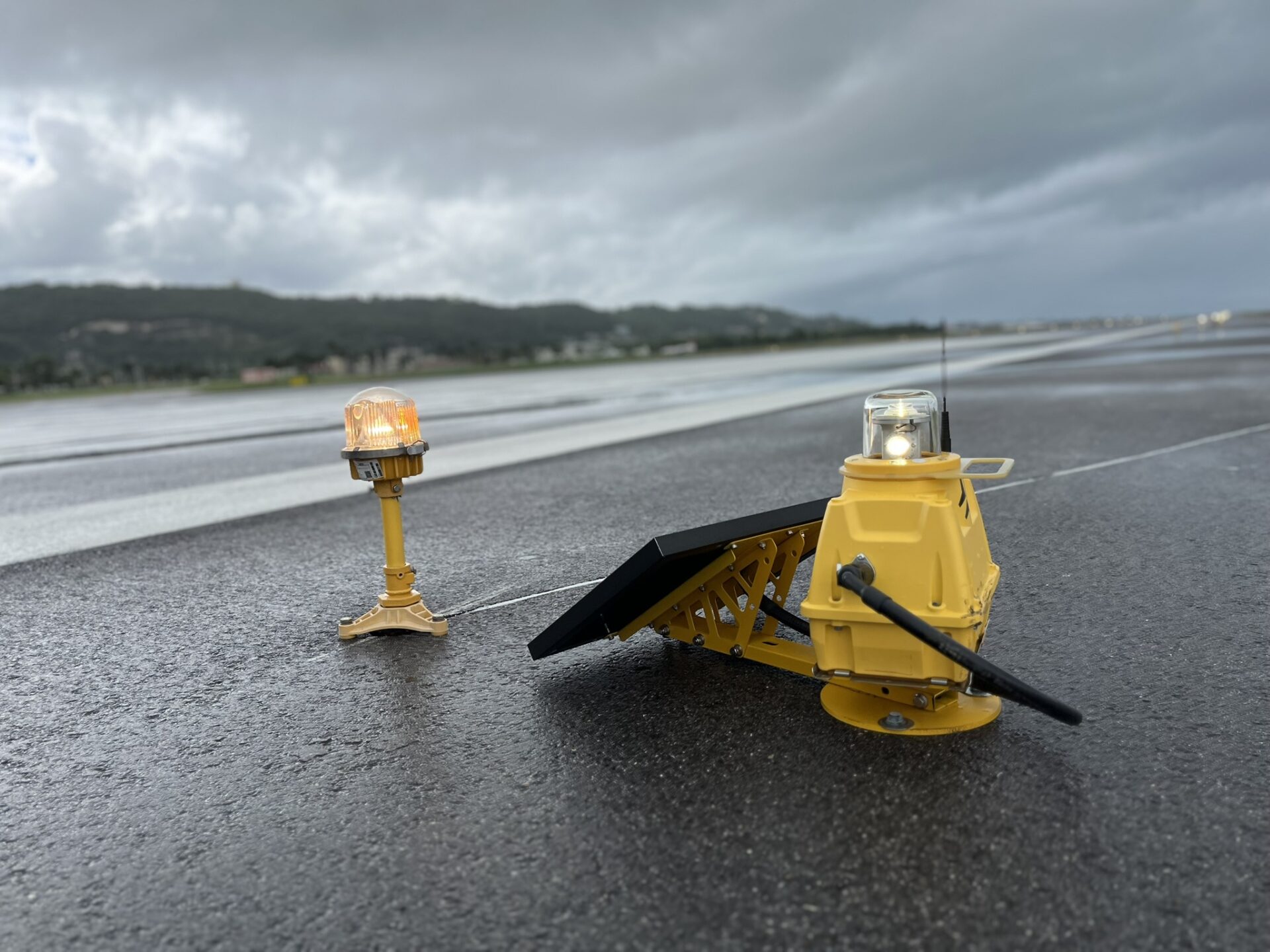
Solar airfield lighting did not enter aviation as a strategic choice. It entered as a necessity.
In its early years, solar was used to fill gaps during runway works, to cover areas without cabling, or as a temporary solution where infrastructure or budgets were limited. As a result, solar AGL was rarely evaluated with the same discipline as conventional wired systems. There were no clear standards, no shared assumptions, and little guidance on what “good” actually meant.
This led to a recurring pattern. Decision-makers wanted reliability, but with solar, it was often assumed rather than examined. The product looks simple, so the evaluation is treated as simple. A brief comparison of datasheets feels sufficient. Price becomes the dominant factor, because nothing clearly signals where the real limits are.
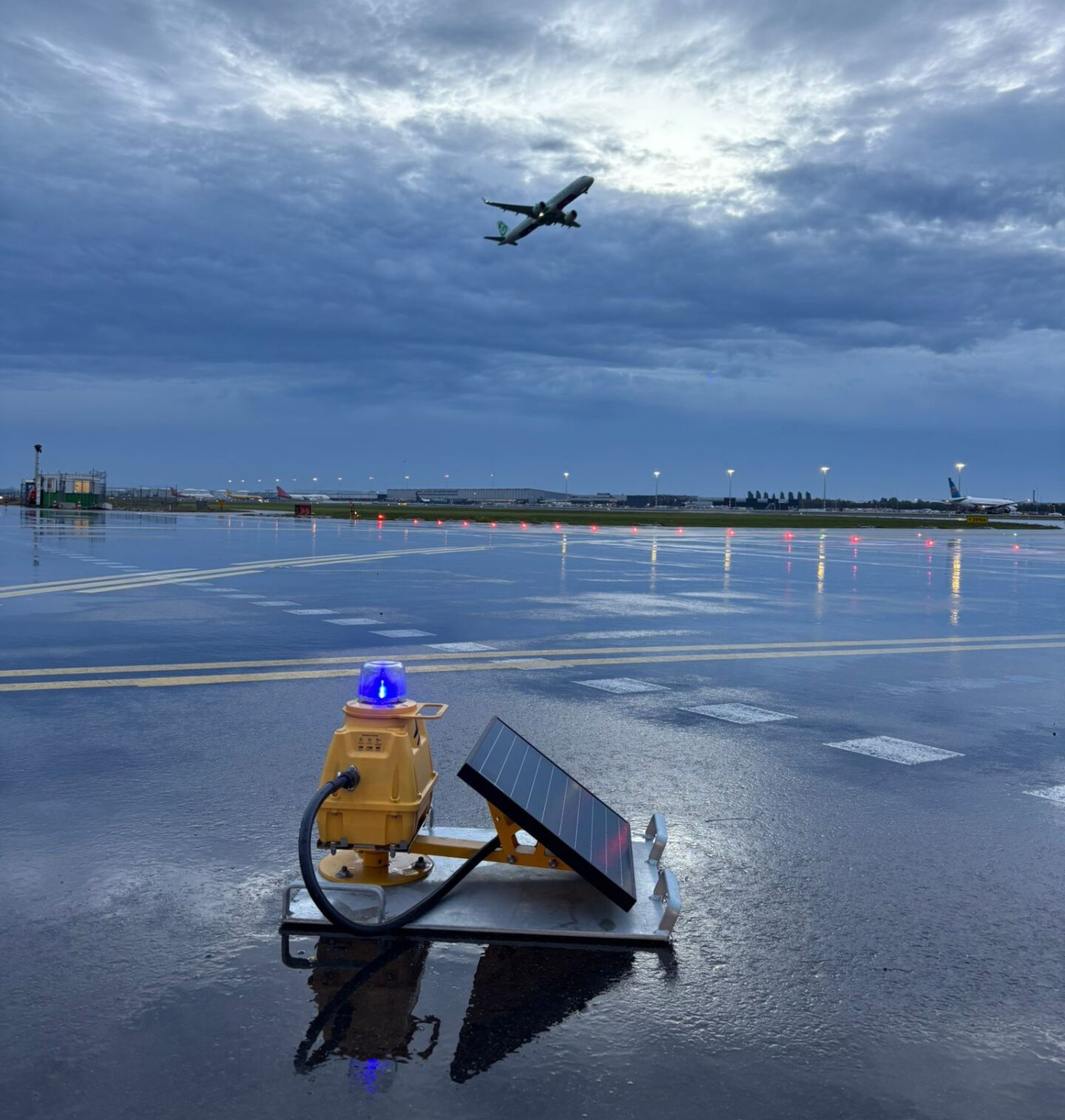
S4GA solar taxiway lighting at Amsterdam Schiphol Airport, Royal Schiphol Group, Netherlands
This is a human reaction, not negligence. When something appears simple from the outside, we instinctively believe it can be assessed quickly. With wired AGL, this shortcut is impossible — the system is visibly complex, custom-designed, and forces a slow, expert-driven process. With solar, much of the complexity is hidden inside the system, so the same discipline is not triggered.
At the same time, regulators historically provided little practical guidance on how solar AGL should be evaluated beyond basic compliance. In the absence of a clear framework, both airports and suppliers defaulted to what was easiest to compare.
As demand grew, this environment attracted new suppliers responding primarily to price-driven inquiries. Products were shaped to look familiar and “good enough” on paper. Two systems could appear similar, yet behave very differently after years of operation — something that only becomes visible long after installation.
What changed the conversation for us was data.
Today, S4GA systems represent over 20 million operating hours across almost every continent. That data shows not only where solar works, but also where it does not. Based on this experience, we actively work with airport operators and regulators to build a performance-based evaluation framework — one that makes the real questions explicit before a purchase decision is taken.
The goal is simple: solar should be chosen when it fits the airport’s operational profile and when the system itself is engineered with the same discipline as a wired AGL installation — with correctly sized power, defined backup, proven ability to cover real operational needs, and certification of every critical component.

S4GA solar airfield lighting system installed at Campbeltown Airport, HIAL, UK
That clarity is what enables solar AGL to scale responsibly — and it is why S4GA works closely with airport operators and aviation authorities, including regulators such as ANAC – Agência Nacional de Aviação Civil and within the EASA – European Union Aviation Safety Agency framework, to help define how solar AGL should be evaluated and adopted at scale.
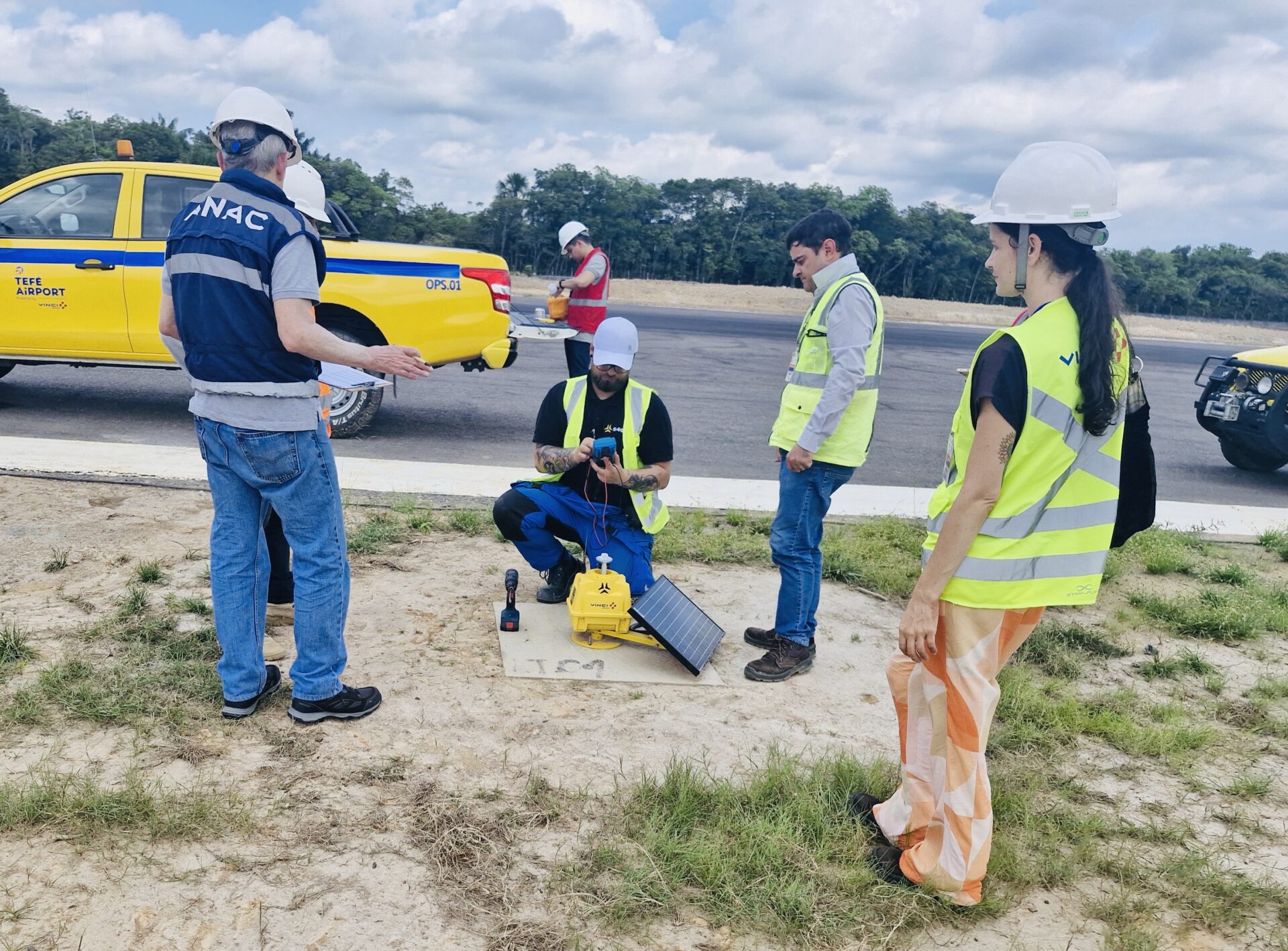
Installation and testing of S4GA solar airfield lighting at Tefe Airport, VINCI Brazil
Contact us for more information.
