
 World's safest runway lighting
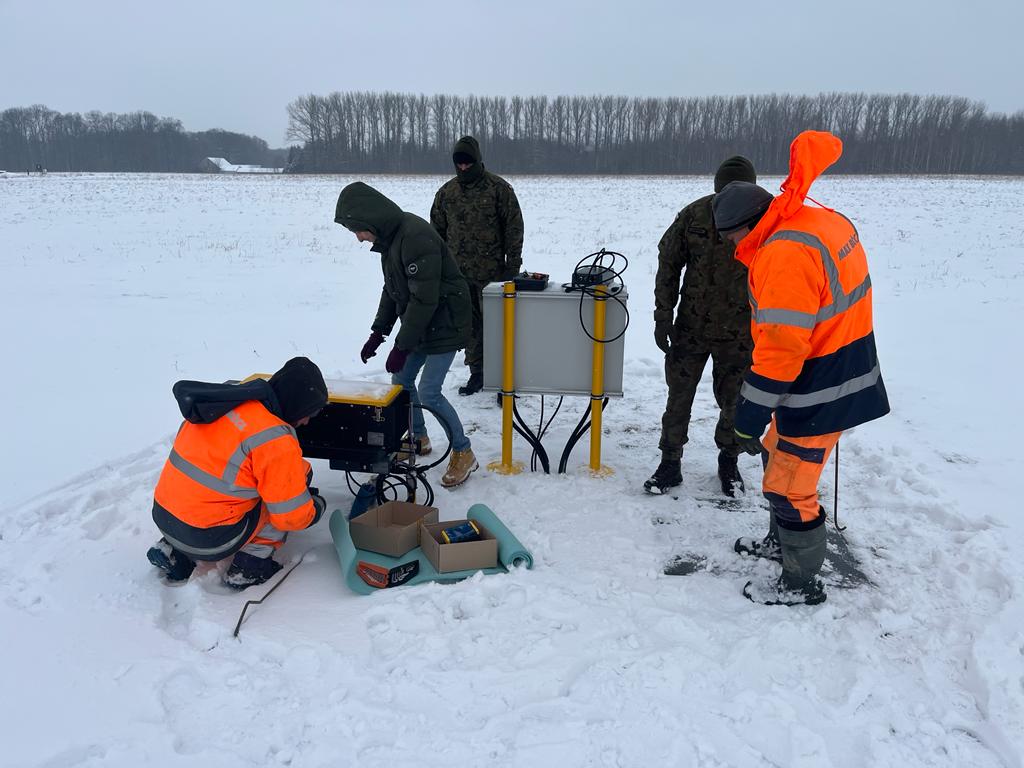
Short days, overcast skies, frequent rain, and freezing temperature can make airport operators question whether solar airfield lighting is suitable for Europe and other regions with similar climates. If sunlight is limited for weeks at a time, can solar AGL still meet an airport’s operational needs?
Here are a couple of examples that answer this question.
Highlands and Islands Airports Limited operates a network of regional airports across Scotland, connecting remote communities with the rest of the country. In recent years, HIAL has upgraded airfield lighting at two of its airports, Tiree and Campbeltown, with solar-powered solutions. Before the upgrade, personnel and pilots had relied on battery-powered lights for an extended period. While these provided the necessary lighting, they required regular recharging to remain operational, creating an ongoing maintenance task.
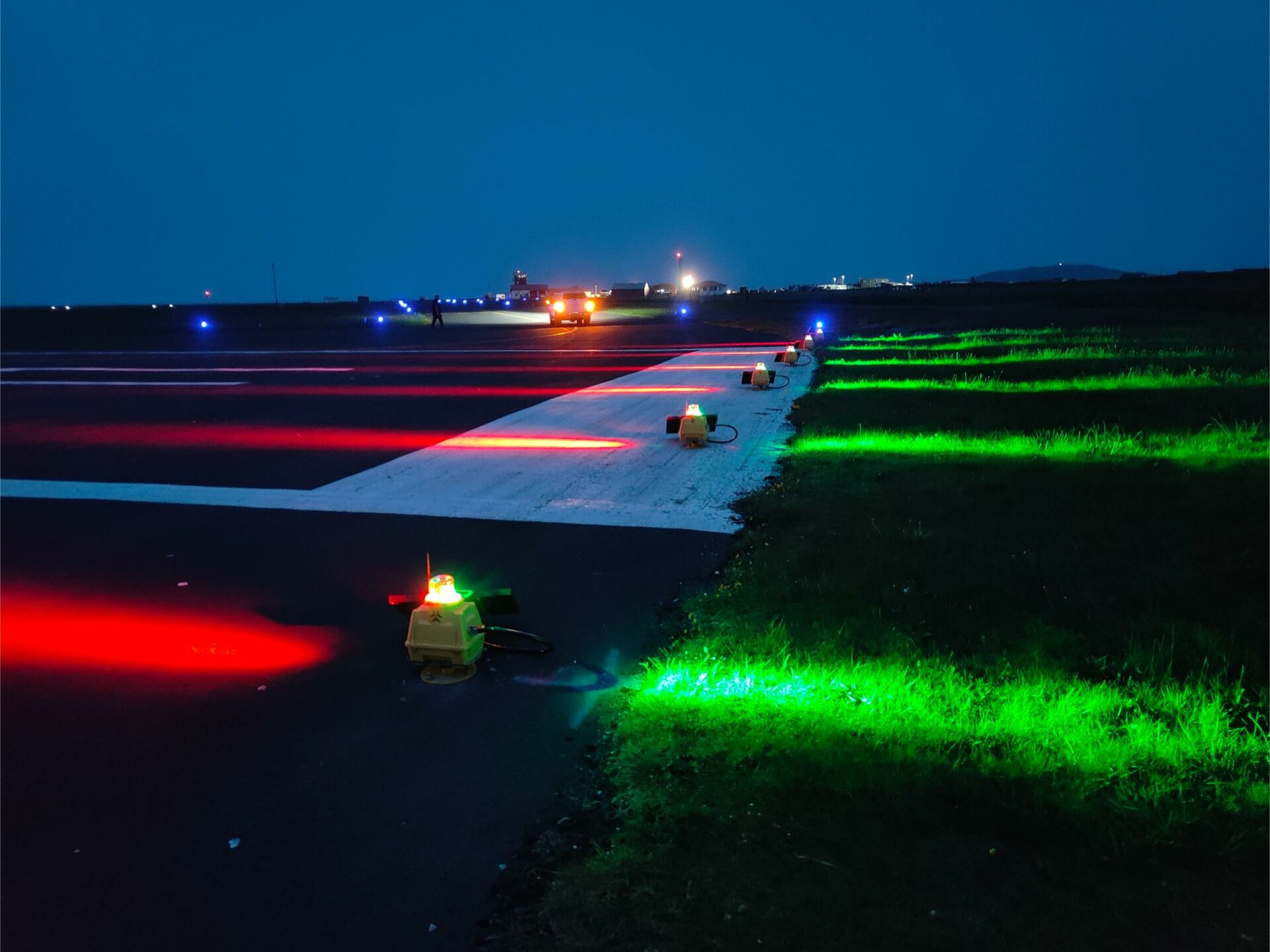
To reduce the need for routine recharging, HIAL began considering permanent airfield lighting as an alternative. After evaluating various options, the operator decided to invest in the S4GA Solar PRO Airfield Lighting System for both airports. Dewhurst Airfield Services was responsible for implementing the project.
Derek Calloway of Dewhurst Airfield Services explains:
The system now deployed, it saves them a lot of time. They never have to worry about charging battery lights. They have full confidence in the system.
So, does solar airfield lighting handle Scotland’s harsh winter conditions?
Yes, it does.
S4GA solar airfield lighting continues to function in Scotland’s harsh environment, supporting passenger transportation, as well as essential medical, lifeline, and emergency services. Despite challenging conditions, the system meets the airports’ operational needs without disruption or the routine recharging required by the previous battery-powered lights.
Chartres–Champhol Aerodrome has a long aviation history, from military to general aviation, flight training, and gliding. As the aerodrome continued to operate, modernizing its runway lighting became an important step in supporting its ongoing flights throughout the year.
The upgrade required a reliable, cost-effective system that met aviation standards. Solar AGL offered an alternative to conventional wired lighting, avoiding the need for cable installation and reducing investment costs.
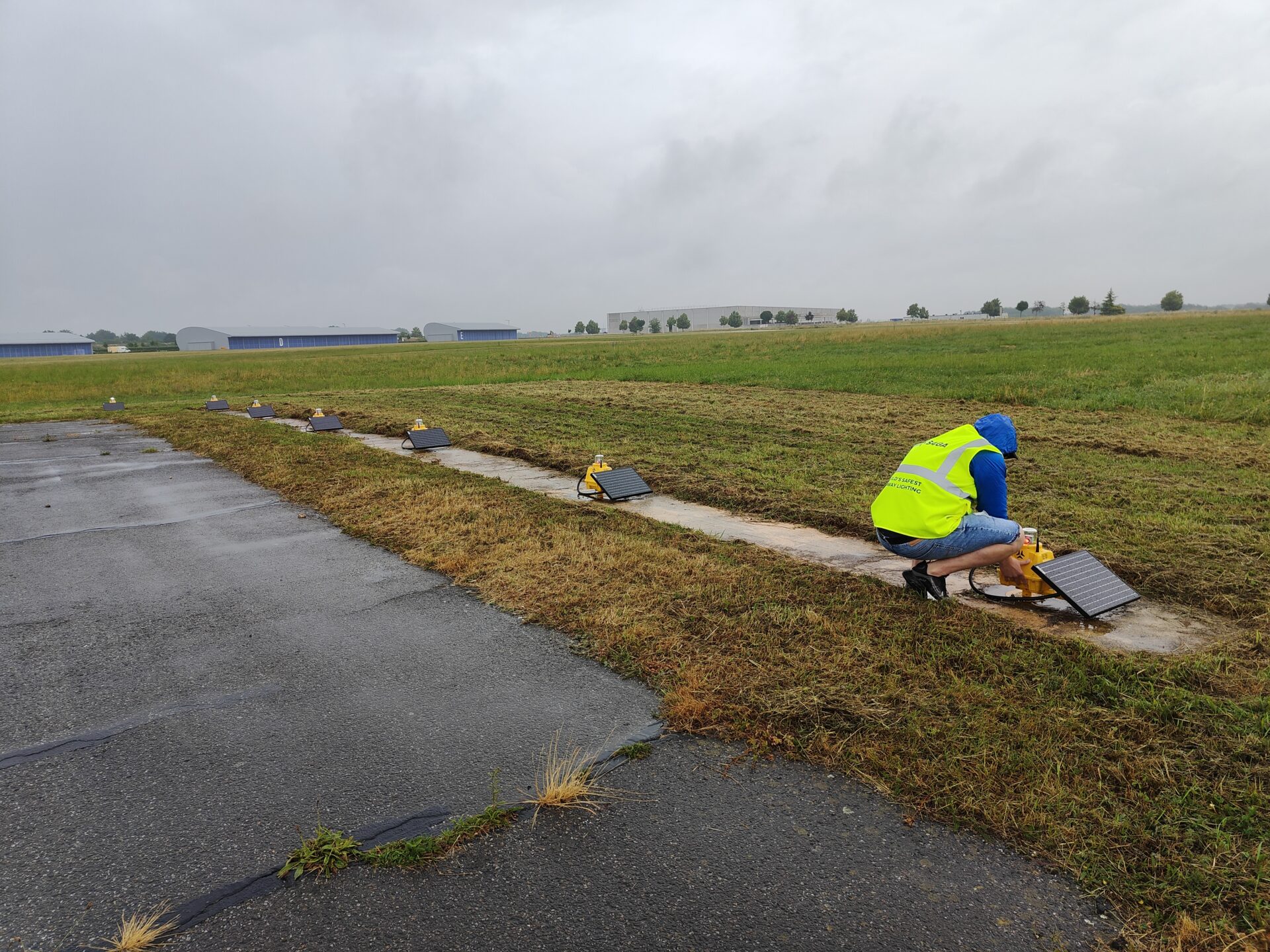
S4GA Solar PRO was selected for the project, bringing France’s first solar airfield lighting installation to Chartres–Champhol. The hybrid installation introduced solar lighting alongside the existing infrastructure while meeting EASA requirements. The solution operates throughout the year, including the colder days, when daylight hours are shorter and solar conditions are less favorable.
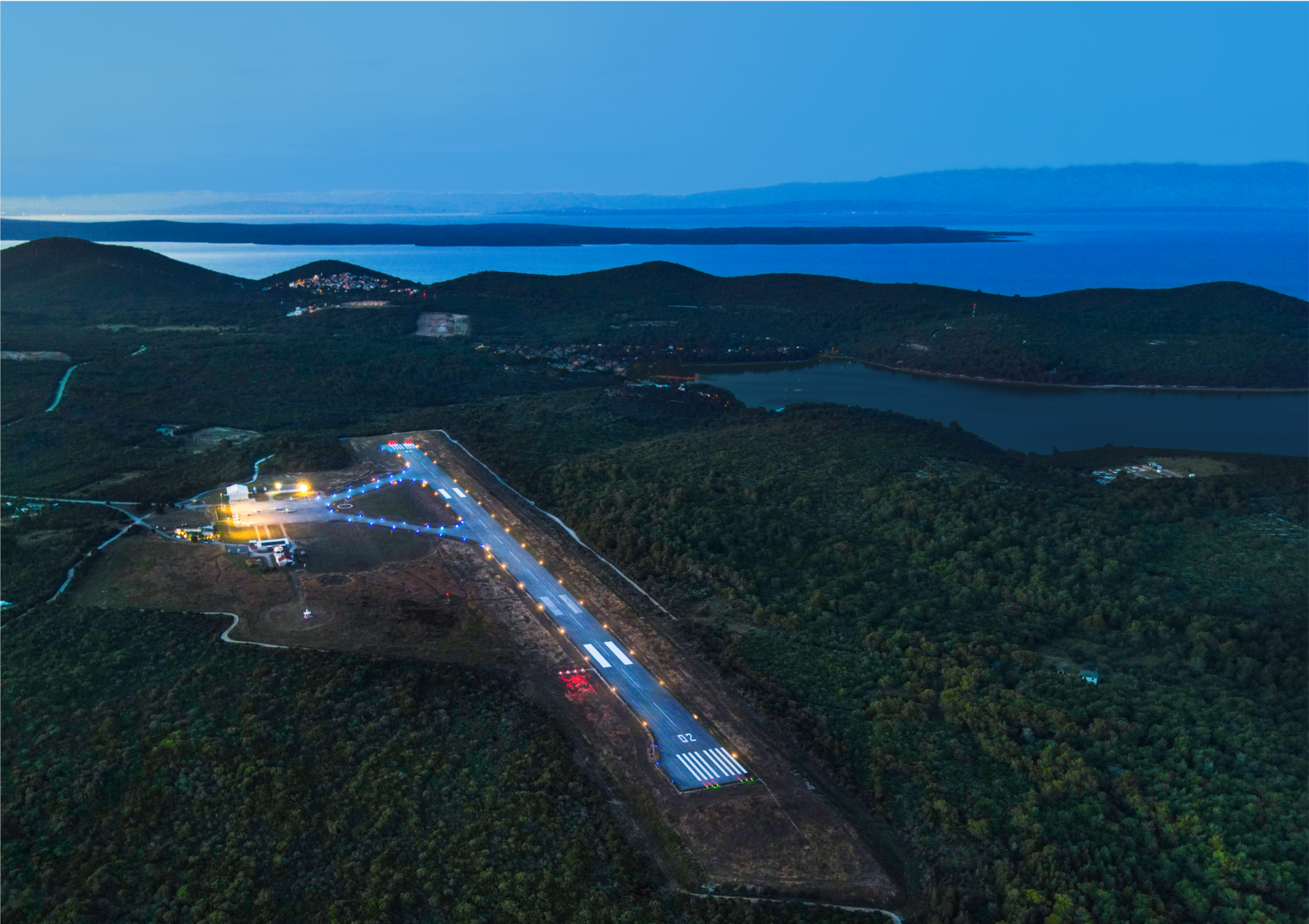
Airport Mali Lošinj is a private airport on the island of Lošinj, Croatia. It primarily handles local and charter flights, with traffic increasing during the tourist season. The airport needed permanent runway lighting to extend its operating hours beyond daylight.
Before investing in a full installation, the airport tested solar equipment through the S4GA Free Trial Program. Following the trial, the airport decided to install the S4GA Solar PRO system. Macula AERO, an aviation solutions company and S4GA partner in Croatia, was responsible for the system’s design, installation, and commissioning.
The new lighting allows Airport Mali Lošinj to accommodate night-time operations, including flights by aviation enthusiasts and HEMS operations (watch the video). It also provides greater flexibility in serving tourists arriving on the island. The system operates throughout all four seasons in a European climate under changing weather conditions and is approved by the Croatian Civil Aviation Authority.
Ruse Airport in Bulgaria was originally built in 1967 for the Bulgarian Air Force and later served domestic flights. As part of redevelopment, the airport needed a new AGL system alongside runway refurbishment and the modernization of navigational aids.
The project came with two important constraints: the lighting had to be installed and commissioned within just a few months, and the airport needed a cost-effective option that would not compromise quality. With such a tight timeline, conventional wired AGL was not a viable option. To address the requirements, the airport opted for an off-grid solar-powered system, choosing S4GA as a supplier.
“The solar power means we don’t have to do a lot of upkeep, and it keeps running reliably. Overall, it’s been a great choice for updating our airport,” shared the Project Manager at STRAPLAN responsible for the design, installation, and commissioning of S4GA airfield lighting at Ruse Airport.
The application demonstrates that solar airfield lighting can meet the needs of regional airports facing tight project deadlines and budget constraints. At Ruse Airport, the system provides reliable lighting through the European winter without requiring extensive routine maintenance.
The examples above are far from the only solar airfield lighting installations in Europe.
Airports in Lithuania, Poland, the Netherlands (Amsterdam Airport operated by Schiphol Group), and Greece (Thessaloniki Airport operated by Fraport Greece) have all used S4GA solar lighting systems — and continue to do so today.
This experience provides a practical reference for airports concerned about using solar AGL in regions with limited winter daylight.
The question is not whether an airport gets sunshine every day, but whether a solar lighting system can meet its operational requirements under the conditions it actually experiences.
This can be assessed before making an investment:
Another useful step is to speak directly with airports already operating solar AGL. Their experience can help answer practical questions about installation, daily operation, and performance in different environments. Get in touch with S4GA to request official customer references.