

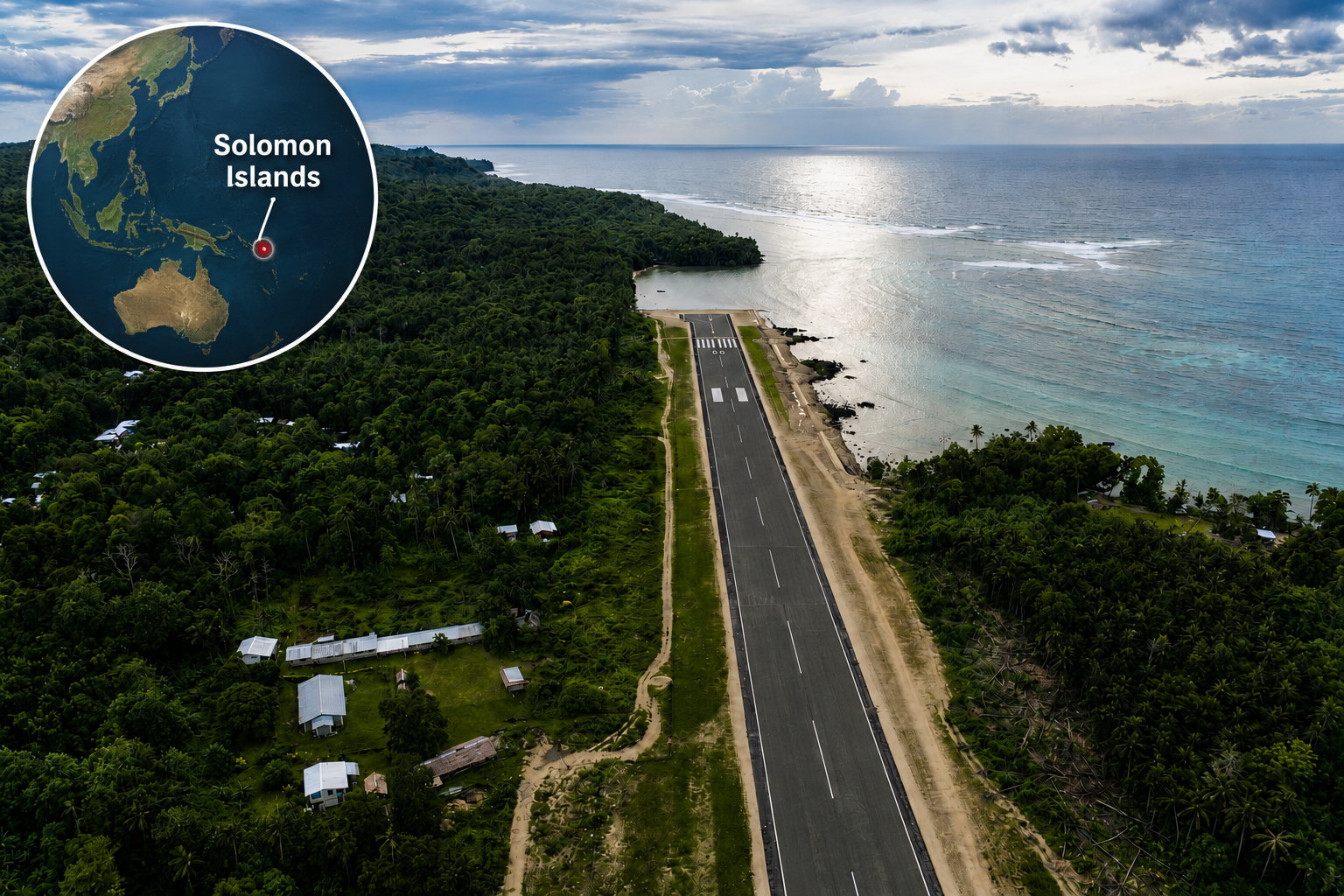
Santa Cruz Island is located in the South Pacific near Vanuatu in one of the world’s most remote island regions. As part of the Solomon Islands archipelago, the island has severely limited and irregular transport links, with supply barges arriving only every few weeks, while access to stable electricity remains a major challenge.
For the Solomon Islands Airport Corporation, improving Santa Cruz Airport’s infrastructure represented an opportunity to strengthen one of the island’s key connections with the outside world and create better conditions for local communities, visitors, and future tourism development.
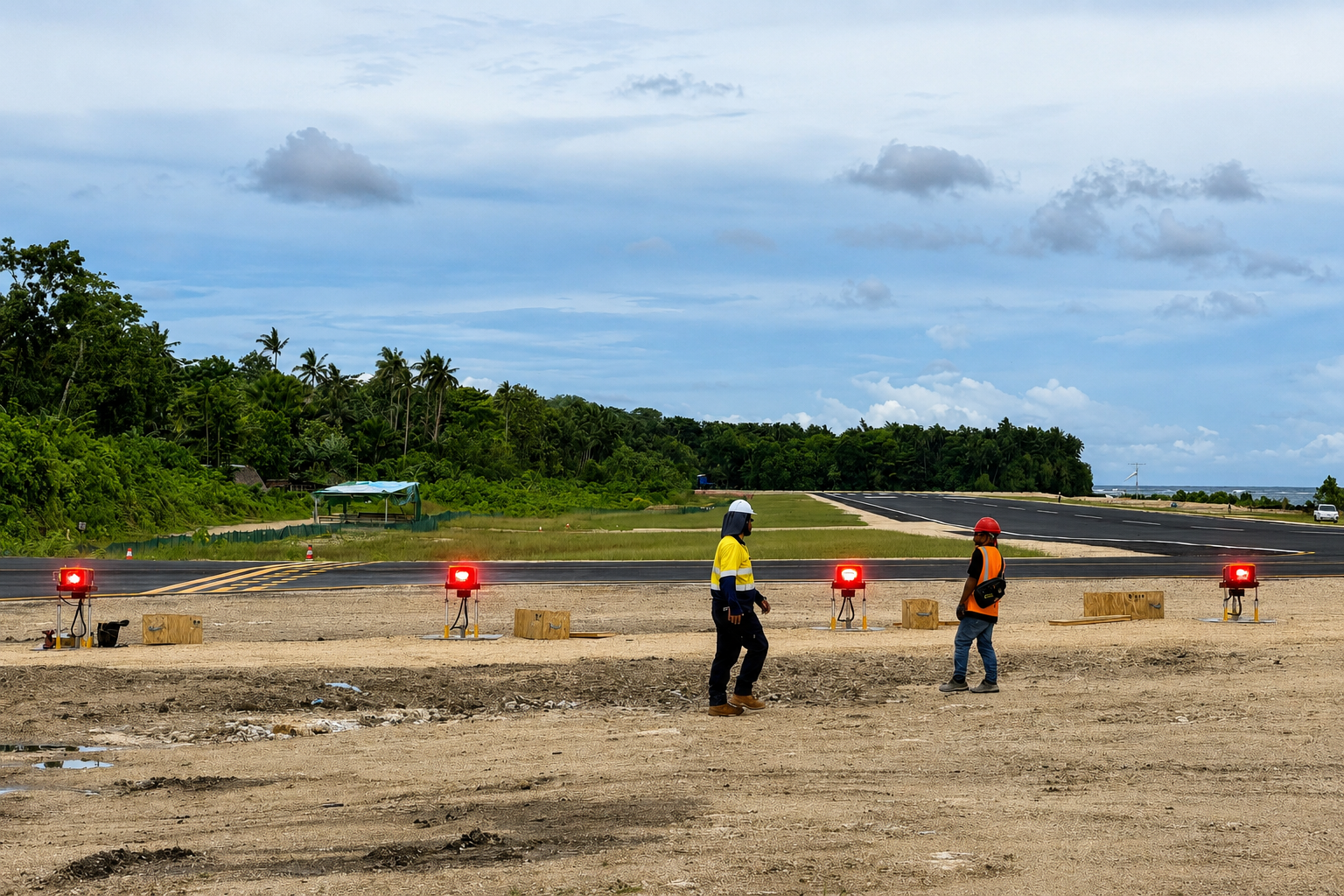
Santa Cruz Airport’s solar AGL installation was part of a much larger effort to restore and strengthen a critical transport link for Temotu Province, according to the World Bank Group P176548 – Second Solomon Islands Roads and Aviation Project.
The airport had already experienced disruption: in 2022, Solomon Airlines suspended flights until the runway could be restored to a safe condition. The airline later described Lata as a key air route, with runway restoration enabling the return of larger Dash 8 aircraft and improved passenger service.
In 2025, the operator selected a complete performance-based S4GA solar airfield lighting system to upgrade its airfield lighting infrastructure and support the airport’s development. Designed in accordance with ICAO requirements and SALA solar AGL standards, it included solar runway and taxiway lighting, a solar-powered full PAPI system, and an AGL control & monitoring system (ALCMS).
The independence of solar airfield lighting was especially important for Santa Cruz Airport. Without the need for extensive electrical infrastructure, the airport could establish a modern AGL system in a location where conventional installations were not feasible.
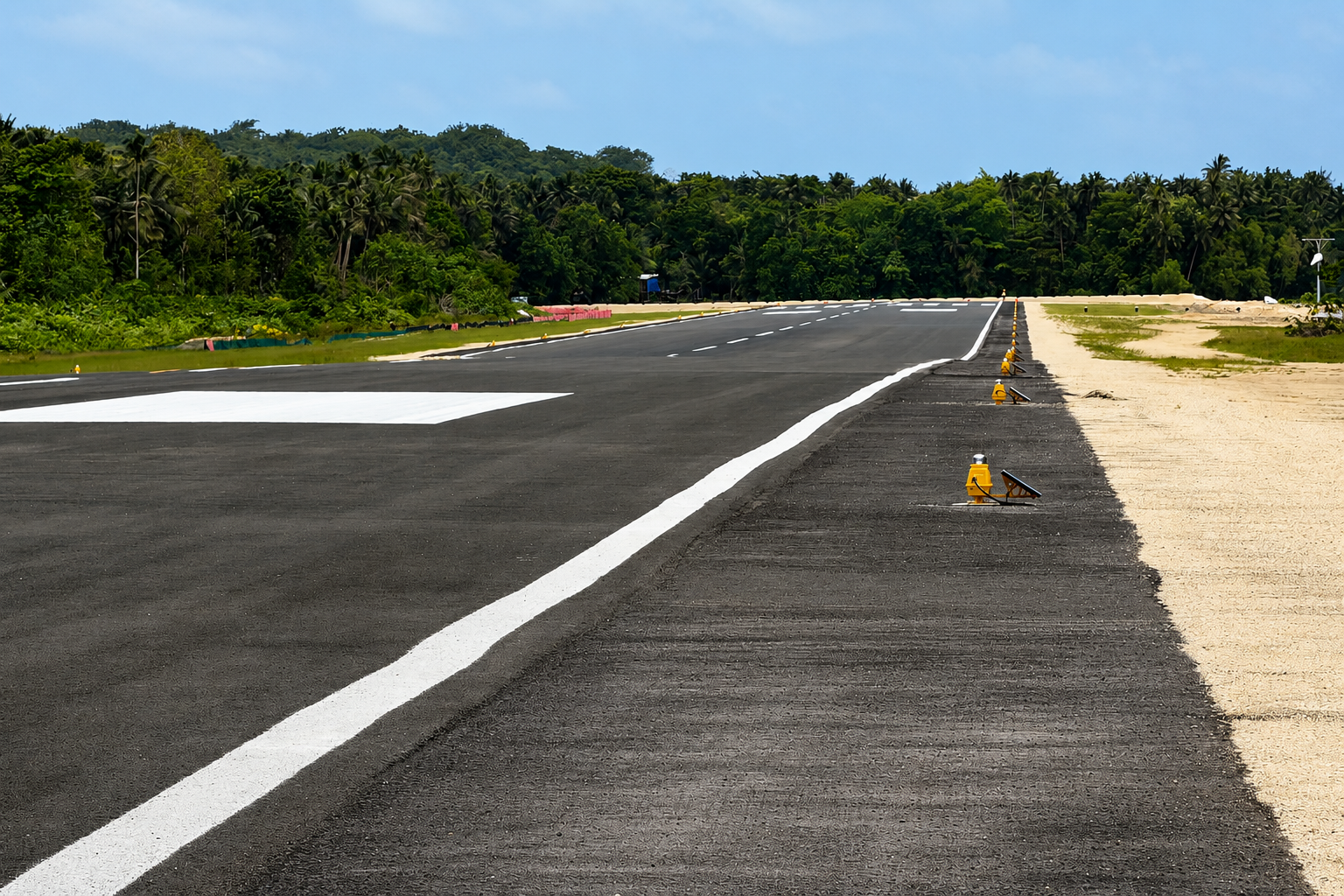
Solar AGL was not installed as a standalone upgrade. It was part of a broader effort to make the airfield more reliable on the island. The requirements were:
S4GA’s solar-powered AGL approach matched these requirements by providing an independent lighting system without the need for extensive electrical infrastructure. This made the installation more suitable for an isolated island location where access to construction resources and technical support is limited.
S4GA system’s standalone design also reduced dependence on external logistics, such as fuel deliveries and frequent maintenance visits. This helped align the airfield lighting infrastructure with the realities of operating in Temotu Province.
Moreover, solar airfield lights manufactured by S4GA are flood-resistant, allowing them to withstand temporary water exposure caused by heavy rainfall and runway water accumulation — conditions typical of the tropical island environment of Santa Cruz.
The installed system provided Santa Cruz Airport with modern airfield lighting infrastructure adapted to its environmental and operational conditions.
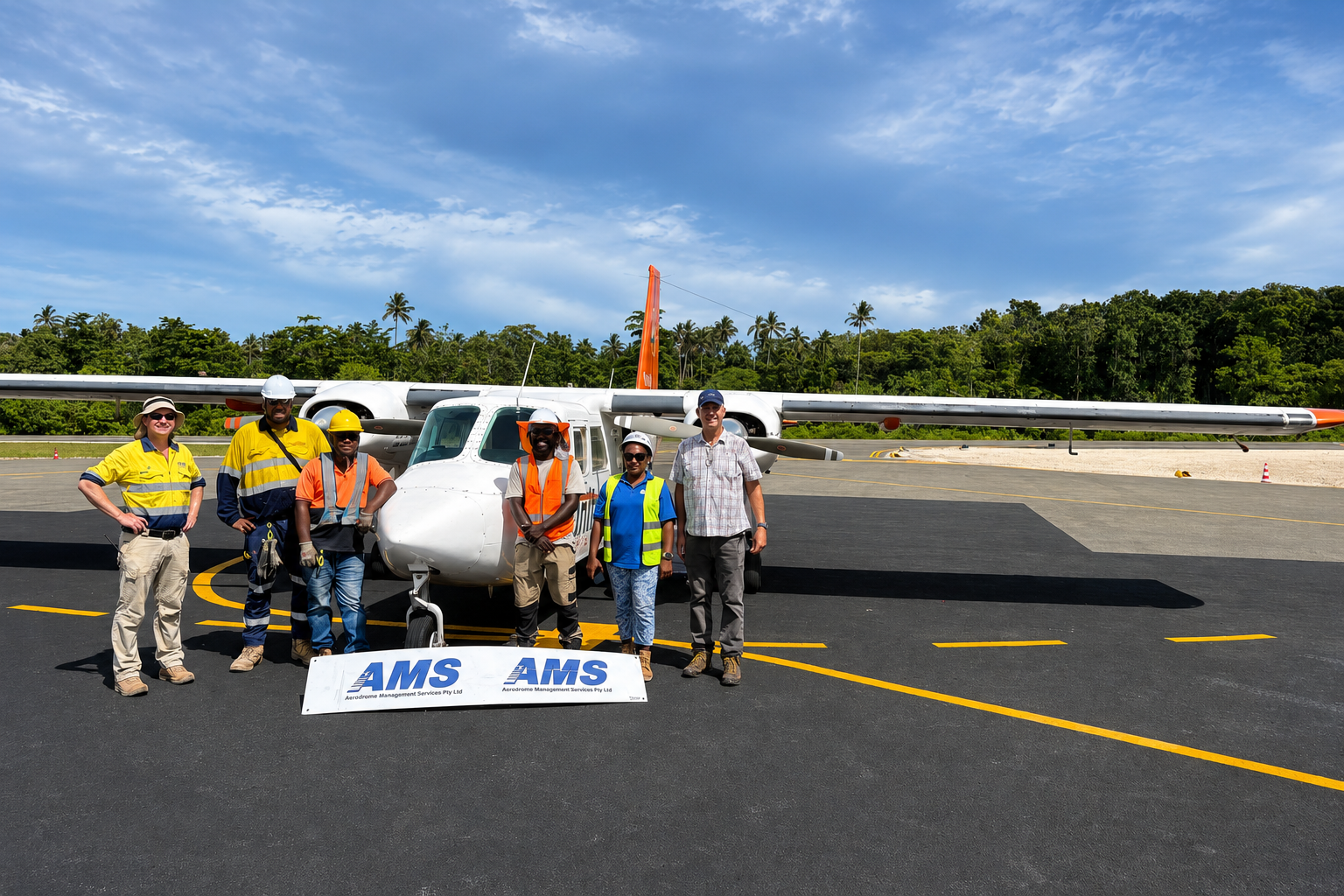
The installation and commissioning of the solar airfield lighting system were carried out by AMS, S4GA’s official partner in the region and an experienced airfield lighting integrator, with support from Guadalcanal Electrical Limited (GEL), a local electrical company.
The cooperation helped ensure that the new system was properly implemented and adapted to the airport’s specific conditions.
For islands and isolated regions, aviation infrastructure plays an important role in enabling access, supporting tourism, and strengthening economic opportunities. Santa Cruz Airport received an independent performance-based airfield lighting system that reduces reliance on unstable power sources and supports more predictable airport operations in a remote island environment.
The decision by Solomon Islands Airport Corporation represents a step toward making remote locations more accessible and better prepared for future growth.
Get a quote
