



Santa Cruz Island is located in the South Pacific near Vanuatu in one of the world’s most remote island regions. As part of the Solomon Islands archipelago, the island has severely limited and irregular transport links, with supply barges arriving only every few weeks, while access to stable electricity remains a major challenge.
For the Solomon Islands Airport Corporation, improving Santa Cruz Airport’s infrastructure represented an opportunity to strengthen one of the island’s key connections with the outside world and create better conditions for local communities, visitors, and future tourism development.
Taking a Remote Island Airport Toward Greater Connectivity
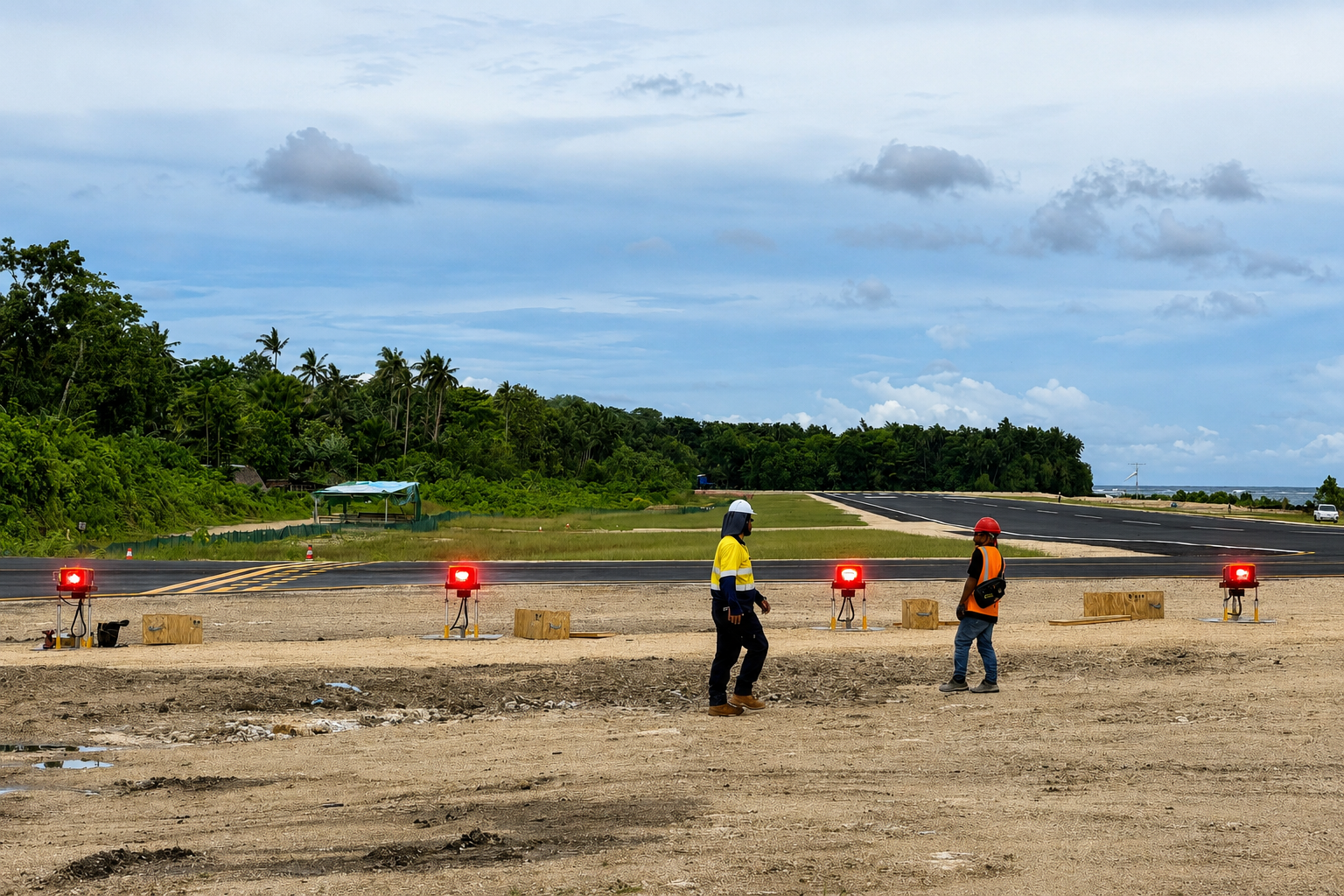
Santa Cruz Airport’s solar AGL installation was part of a much larger effort to restore and strengthen a critical transport link for Temotu Province, according to the World Bank Group P176548 – Second Solomon Islands Roads and Aviation Project.
The airport had already experienced disruption: in 2022, Solomon Airlines suspended flights until the runway could be restored to a safe condition. The airline later described Lata as a key air route, with runway restoration enabling the return of larger Dash 8 aircraft and improved passenger service.
In 2025, the operator selected a complete performance-based S4GA solar airfield lighting system to upgrade its airfield lighting infrastructure and support the airport’s development. Designed in accordance with ICAO requirements and SALA solar AGL standards, it included solar runway and taxiway lighting, a solar-powered full PAPI system, and an AGL control & monitoring system (ALCMS).
The independence of solar airfield lighting was especially important for Santa Cruz Airport. Without the need for extensive electrical infrastructure, the airport could establish a modern AGL system in a location where conventional installations were not feasible.
How S4GA Met the Operational Requirements
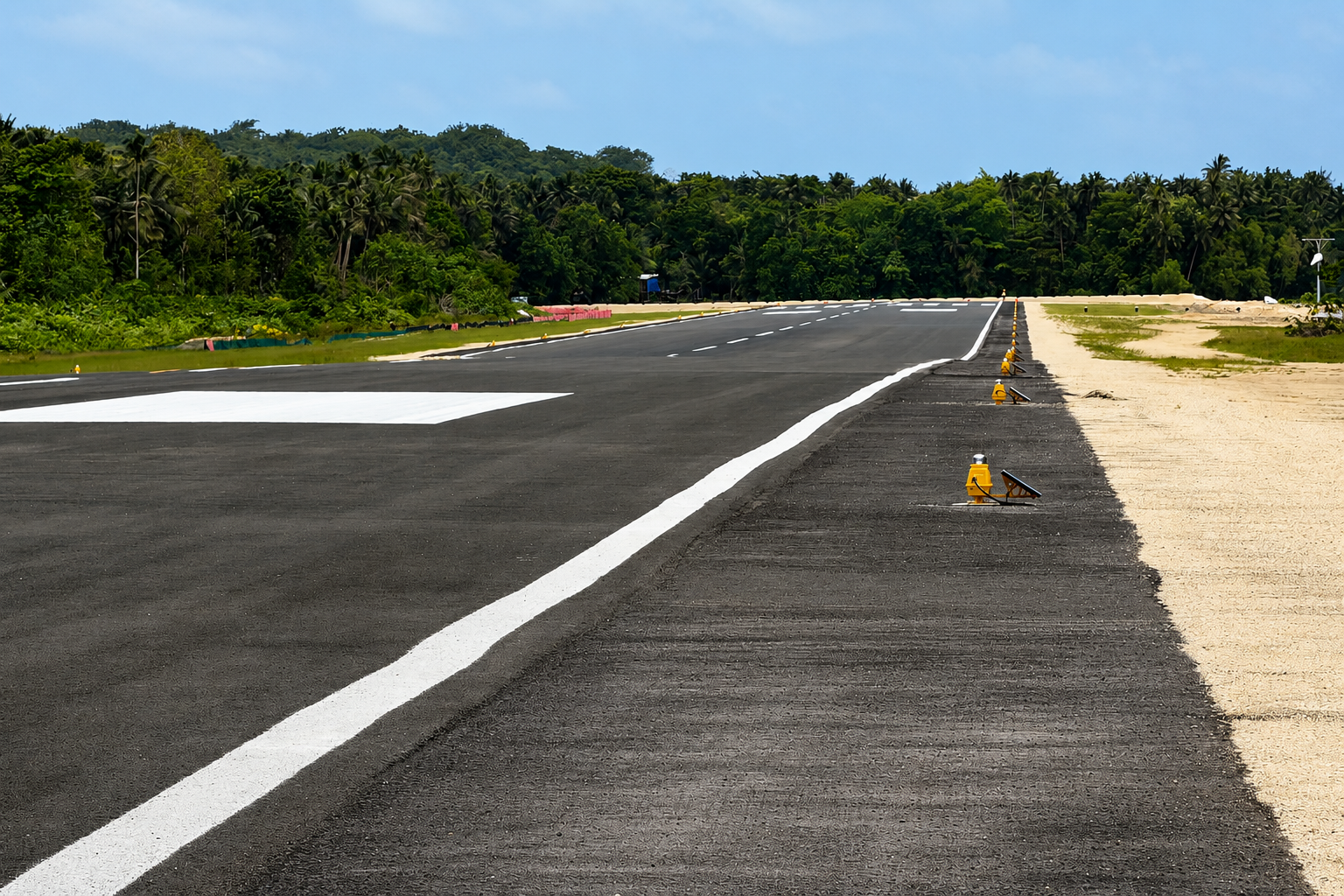
Solar AGL was not installed as a standalone upgrade. It was part of a broader effort to make the airfield more reliable on the island. The requirements were:
- Independence from external power infrastructure — the airport had no connection to a reliable electrical grid, making conventional AGL installations difficult to implement.
- Suitability for remote logistics — irregular maritime transport to Temotu Province made systems requiring extensive cabling, frequent spare parts deliveries, fuel supplies, or regular technical visits difficult to support.
- Operations in a demanding climate — heavy rainfall and runway water accumulation created additional challenges for airfield operations.
- Airport-grade performance — previous experience with another supplier’s product showed the need for a system better adapted to the airport’s difficult operating environment, including severe tropical weather, heavy rainfall, and temporary runway water accumulation.
S4GA’s solar-powered AGL approach matched these requirements by providing an independent lighting system without the need for extensive electrical infrastructure. This made the installation more suitable for an isolated island location where access to construction resources and technical support is limited.
S4GA system’s standalone design also reduced dependence on external logistics, such as fuel deliveries and frequent maintenance visits. This helped align the airfield lighting infrastructure with the realities of operating in Temotu Province.
Moreover, solar airfield lights manufactured by S4GA are flood-resistant, allowing them to withstand temporary water exposure caused by heavy rainfall and runway water accumulation — conditions typical of the tropical island environment of Santa Cruz.
The installed system provided Santa Cruz Airport with modern airfield lighting infrastructure adapted to its environmental and operational conditions.
Local Expertise Supporting Successful Implementation
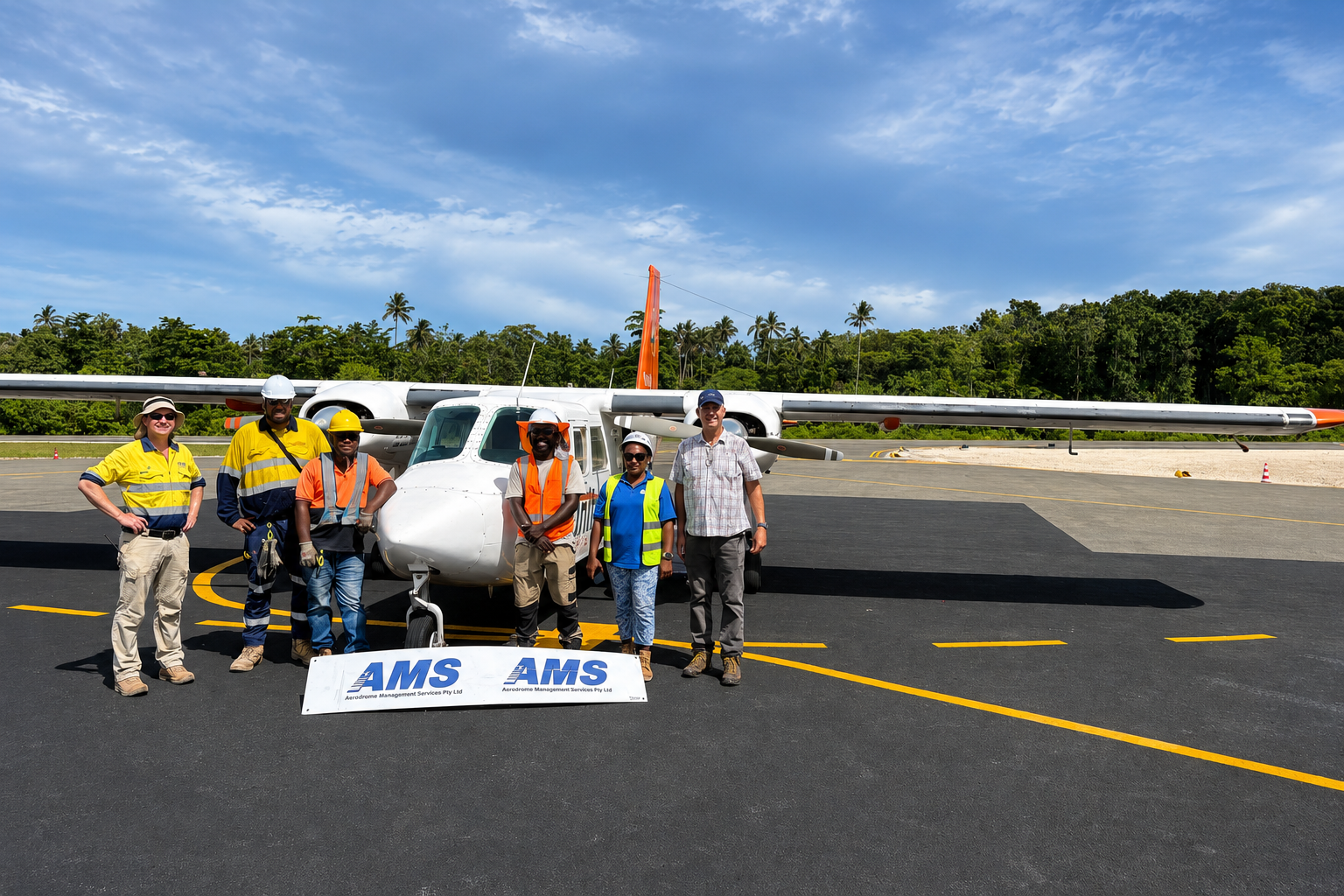
The installation and commissioning of the solar airfield lighting system were carried out by AMS, S4GA’s official partner in the region and an experienced airfield lighting integrator, with support from Guadalcanal Electrical Limited (GEL), a local electrical company.
The cooperation helped ensure that the new system was properly implemented and adapted to the airport’s specific conditions.
Solomon Islands Airport Corporation Sets a New Direction for Remote Airport Development
For islands and isolated regions, aviation infrastructure plays an important role in enabling access, supporting tourism, and strengthening economic opportunities. Santa Cruz Airport received an independent performance-based airfield lighting system that reduces reliance on unstable power sources and supports more predictable airport operations in a remote island environment.
The decision by Solomon Islands Airport Corporation represents a step toward making remote locations more accessible and better prepared for future growth.
Get a quote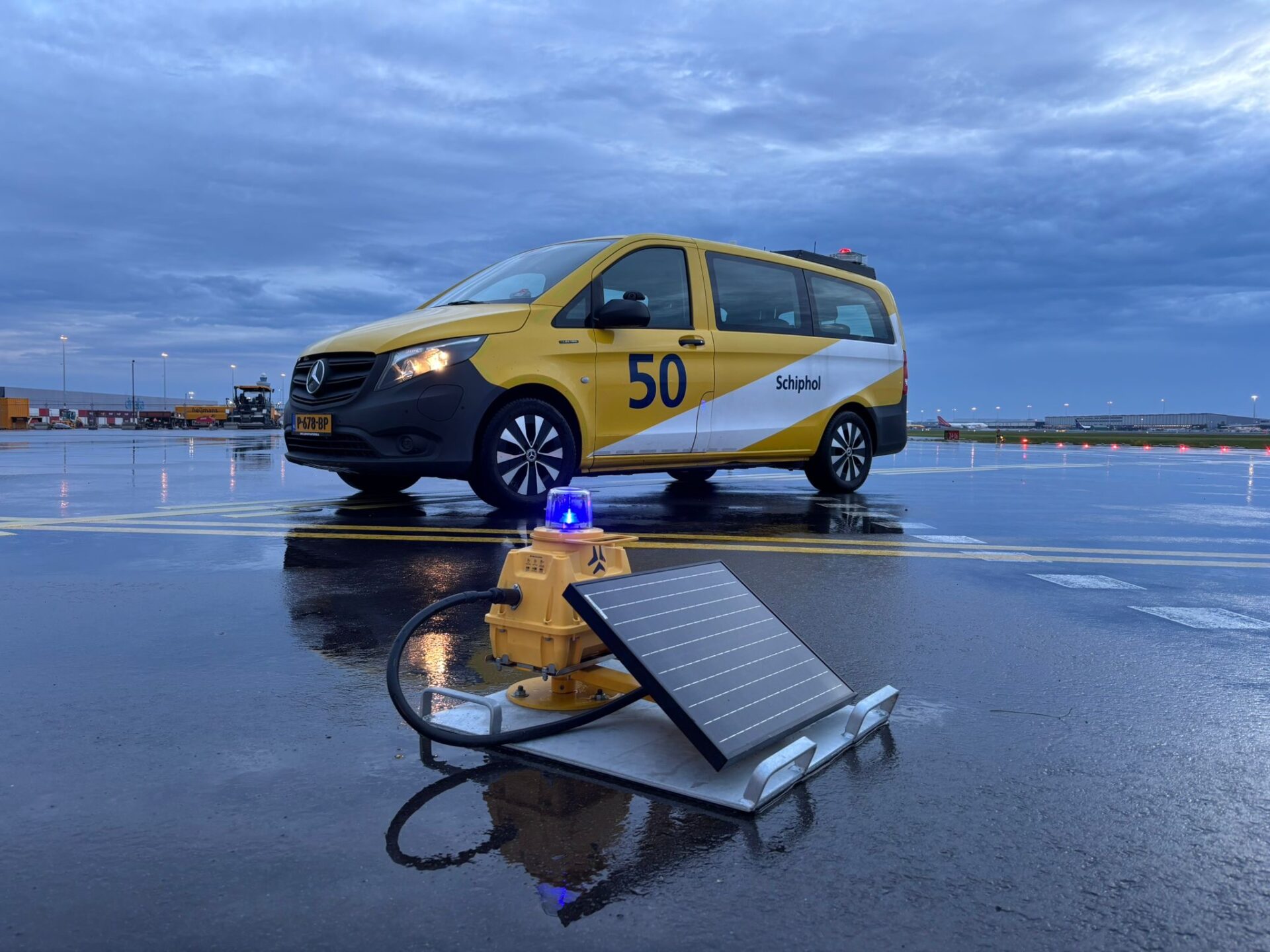
 When a major hub carries out large-scale runway reconstruction without stopping flight operations, the real question is which solution can operate for months under live traffic, without creating additional risks or turning into a constant burden for the technical team. Royal Schiphol Group faced exactly this question during another phase of reconstruction at Amsterdam Airport.
Using Temporary AGL Systems During Renovation: Potential Risks
At a large airport, any dependence on manual setup, generators, or temporary cable networks quickly becomes a problem. Continuous system monitoring and the risk of failures pull attention away from flight safety — one of the most important factors in airport operations.
At the same time, increased manual involvement introduces a higher risk of human error. Repetitive setup, frequent interventions, and operational pressure can lead to small mistakes that may affect system performance or create additional safety risks.
What Solution Schiphol Chose
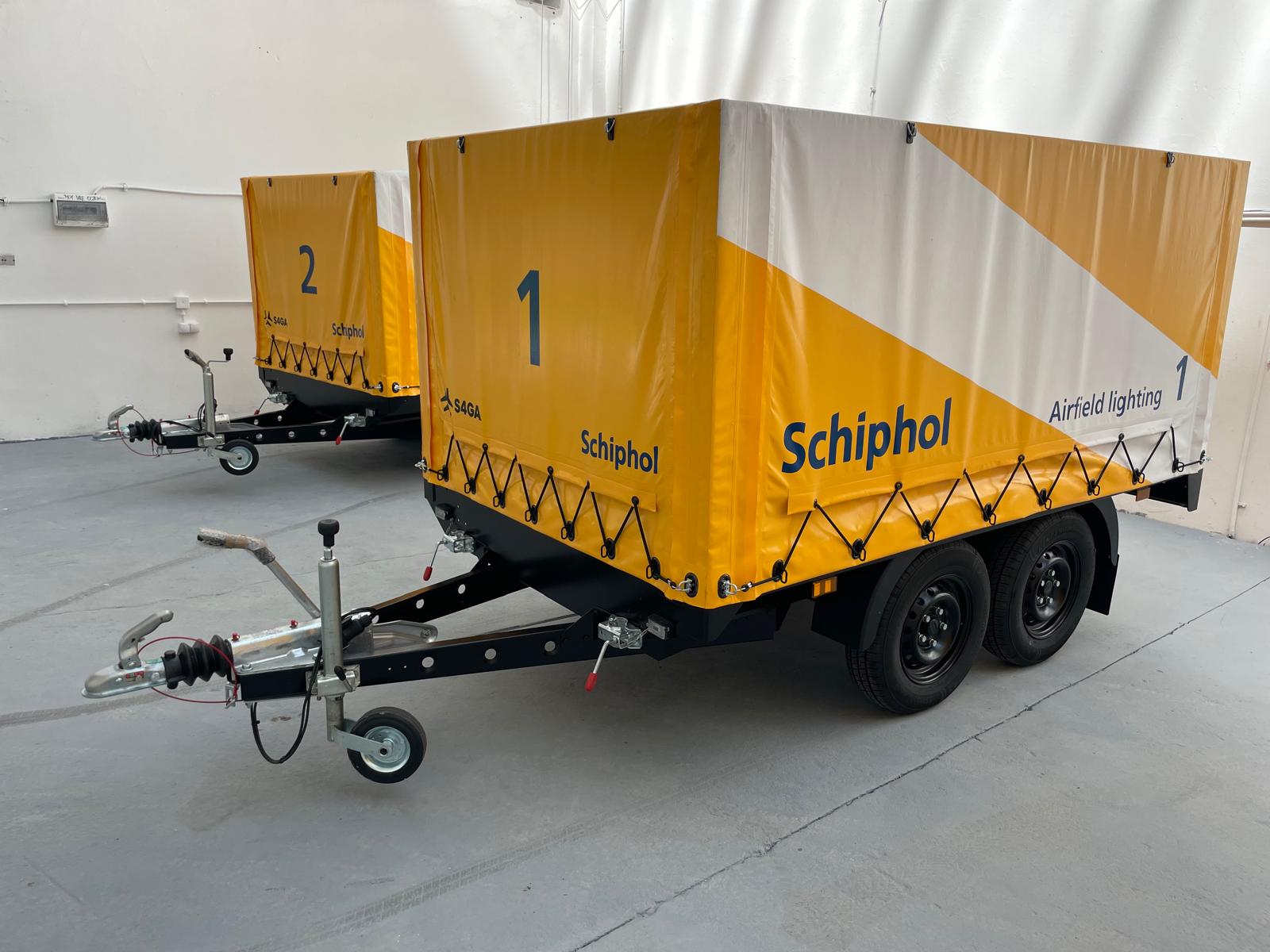
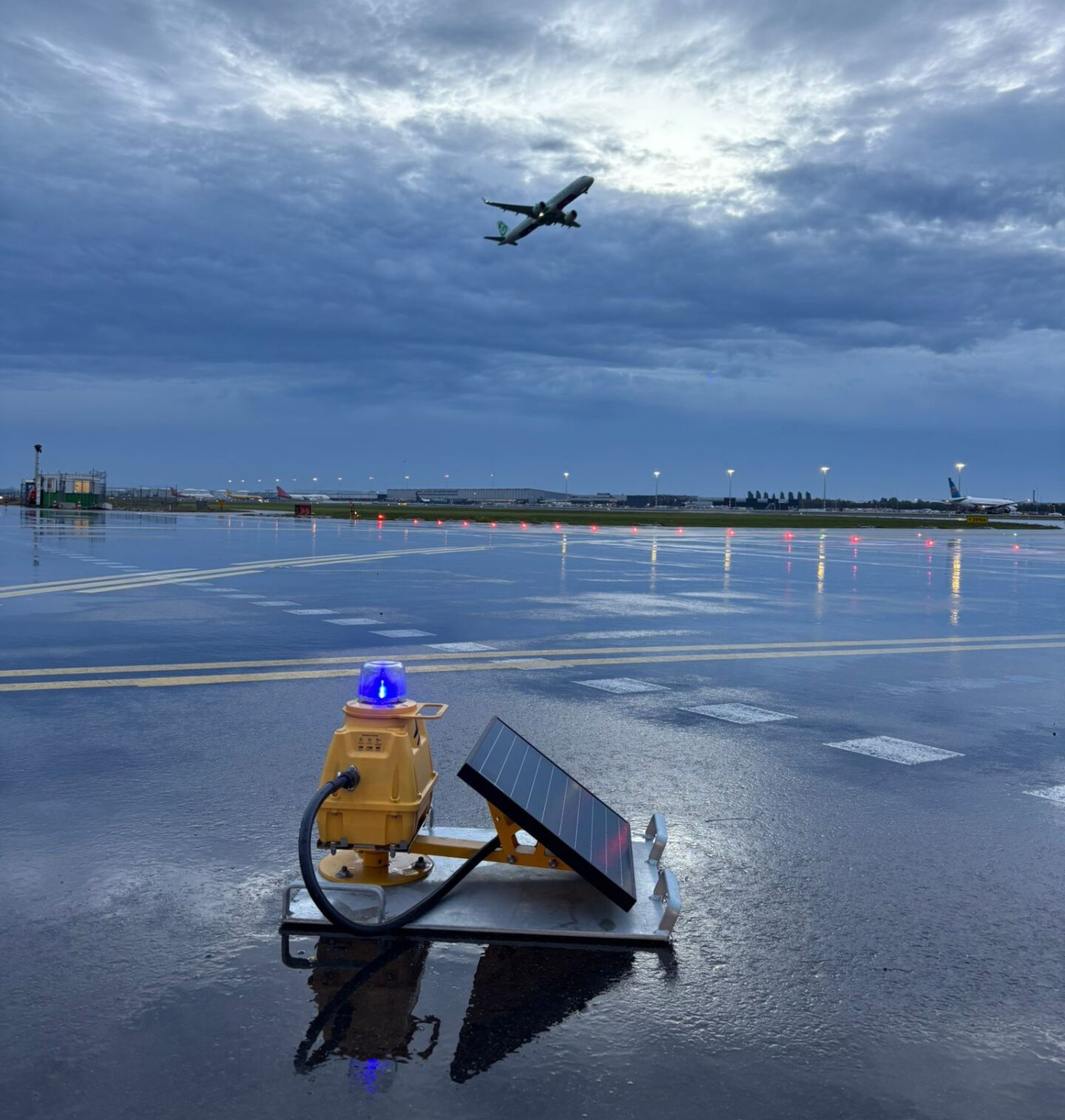
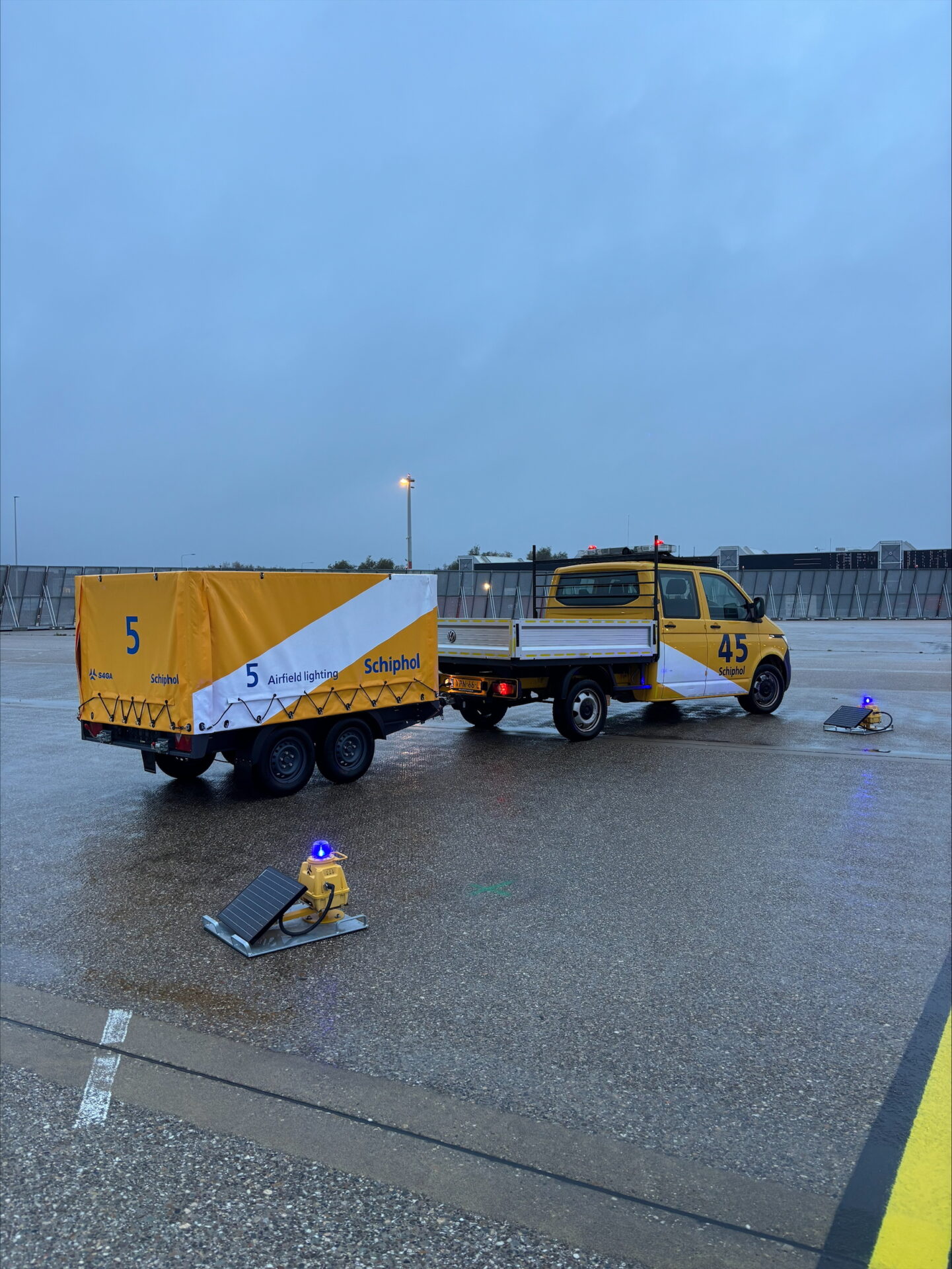
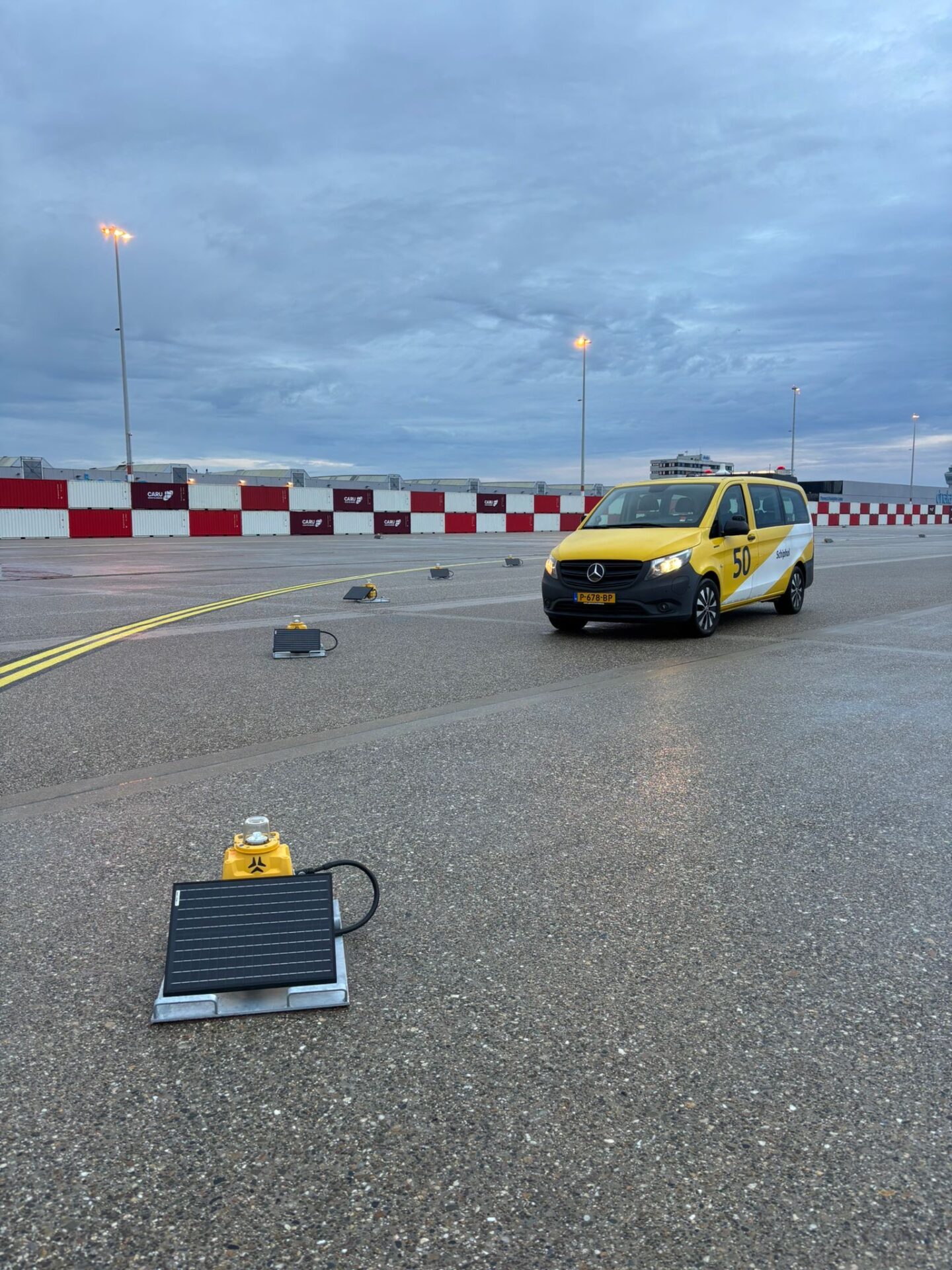
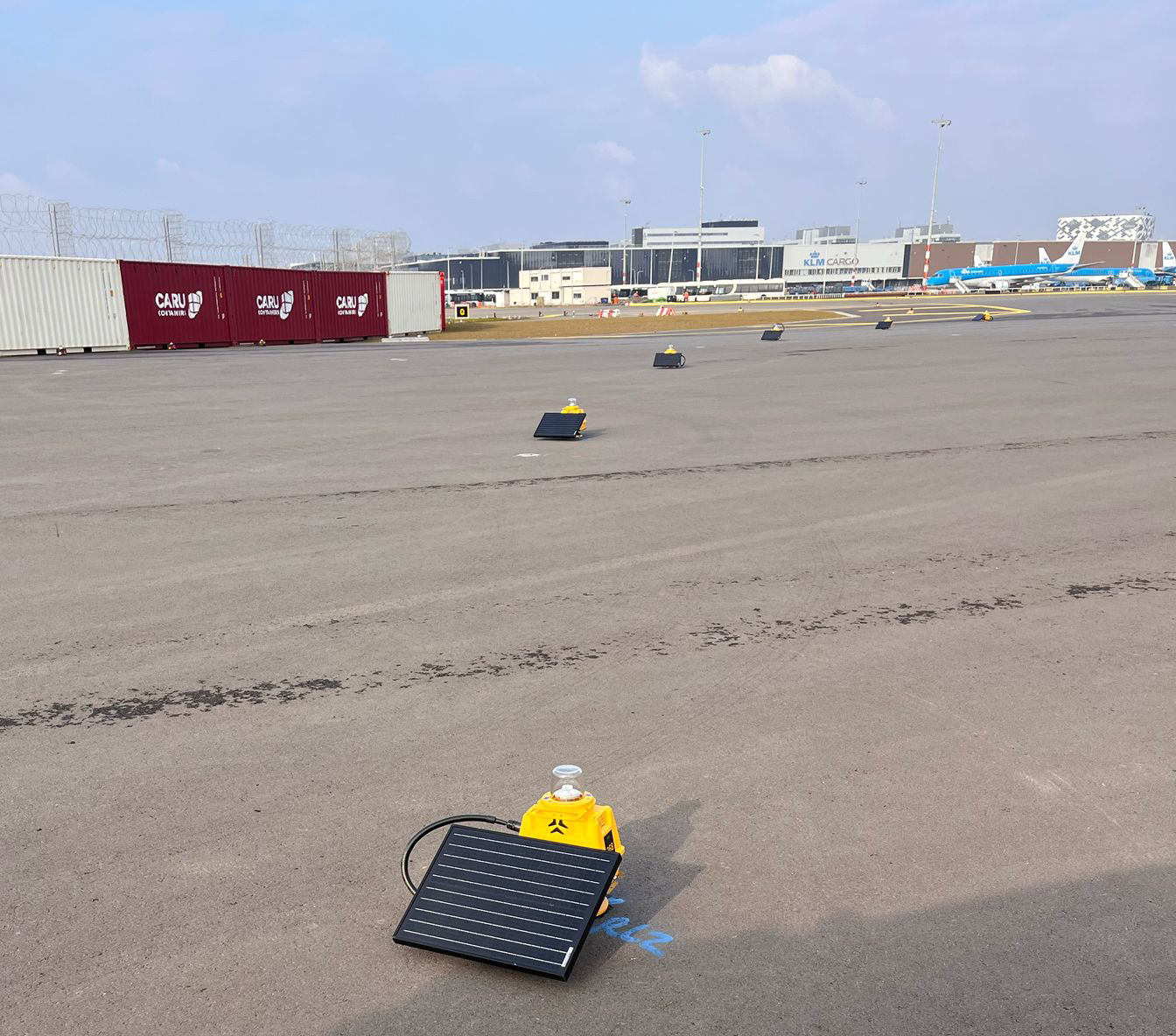
The airport was looking for taxiway lights to temporarily reroute its taxiways on the airside, as well as obstruction lights to clearly mark unserviceable and restricted zones around construction areas.
John Spanjaard, Royal Schiphol Group Service Manager, described the requirement this way:
We needed a solution that could operate continuously over a long period, be easy to manage and maintain, and ensure operational safety.
After a thorough evaluation of different AGL suppliers, Royal Schiphol Group selected a company willing to take responsibility for how the system performs in real operations over time — together with a solution designed to flawlessly support these operations.
To minimize the risk of disruption even further, S4GA customized the lights according to the operator’s request. A One-Touch Lifetime Activation function was added: one press of a button, and the light operates fully autonomously throughout its service life. No daily decisions, no dependence on the duty shift, no additional maintenance.
This gave Schiphol what was critical during long-term reconstruction under live traffic conditions:
- fast deployment without disrupting the flight schedule
- minimal workload for technical and operational staff
- stable performance in challenging conditions, such as bad weather or heavy traffic
- reduced dependence on traditional power supply
- full compliance with ICAO and EASA requirements
As a result, the airfield lighting remained fully reliable and safe throughout the reconstruction phase, even under the maximum workload of one of Europe’s busiest airports.
Royal Schiphol Group’s Choice Shapes Safe and Continuous Operations in the Netherlands and Beyond
By selecting S4GA’s solutions, Royal Schiphol Group once again demonstrated its responsibility as a major airport operator. The decision ensured that Amsterdam Airport’s hub operations remained safe and continuous throughout extensive renovation phases, even under the pressure of high traffic.
The operator prioritized an approach and solution that keeps the airport running smoothly while minimizing operational risk — a strong example of leadership in modern airfield management.
Get a quote
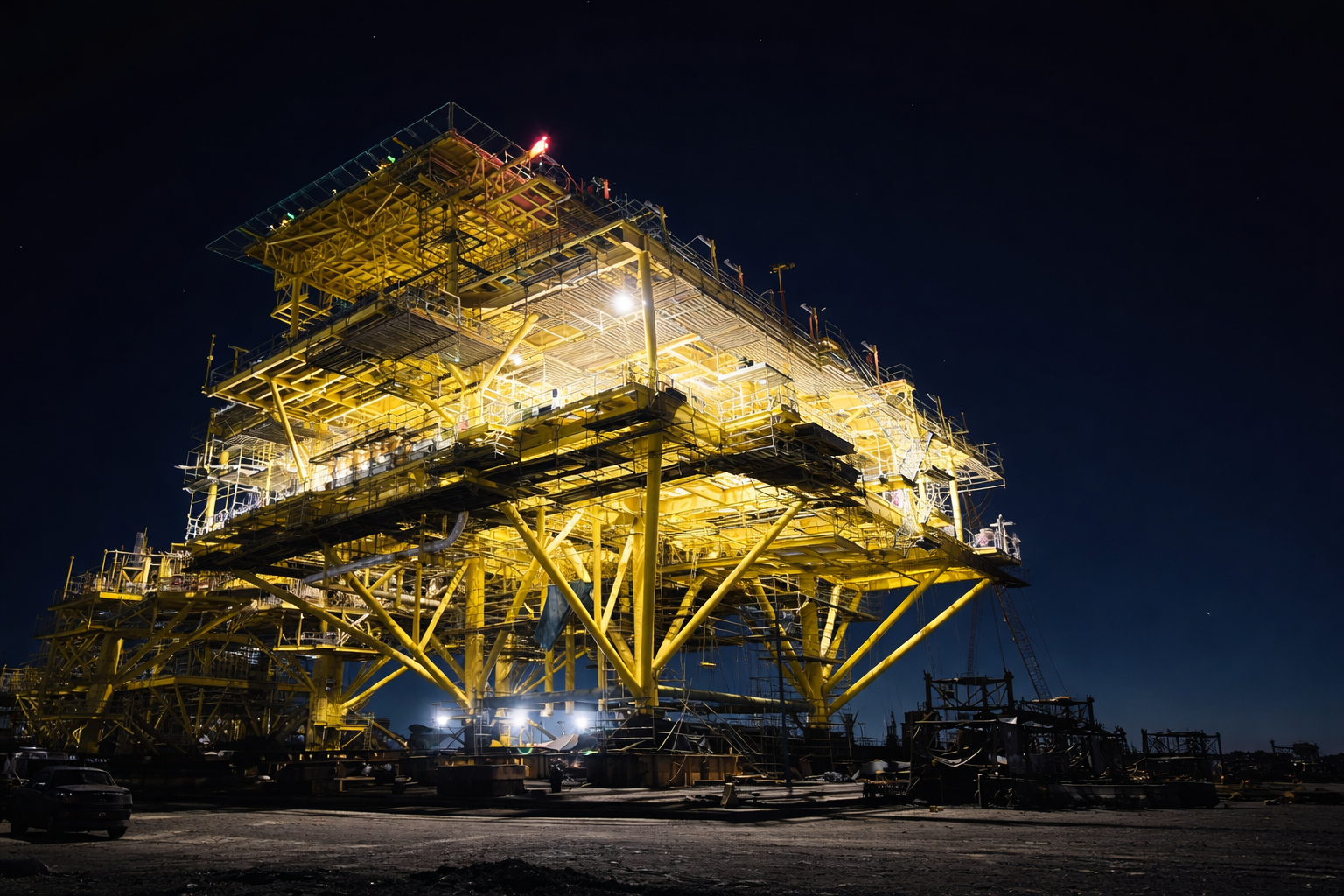
Petróleos Mexicanos (PEMEX) is Mexico’s state-owned petroleum corporation, established in 1938 after the nationalization of the country’s oil industry. For decades, it has operated as a strategic pillar of Mexico’s economy, managing complex industrial assets across offshore platforms, refineries, logistics hubs, and remote operational sites.
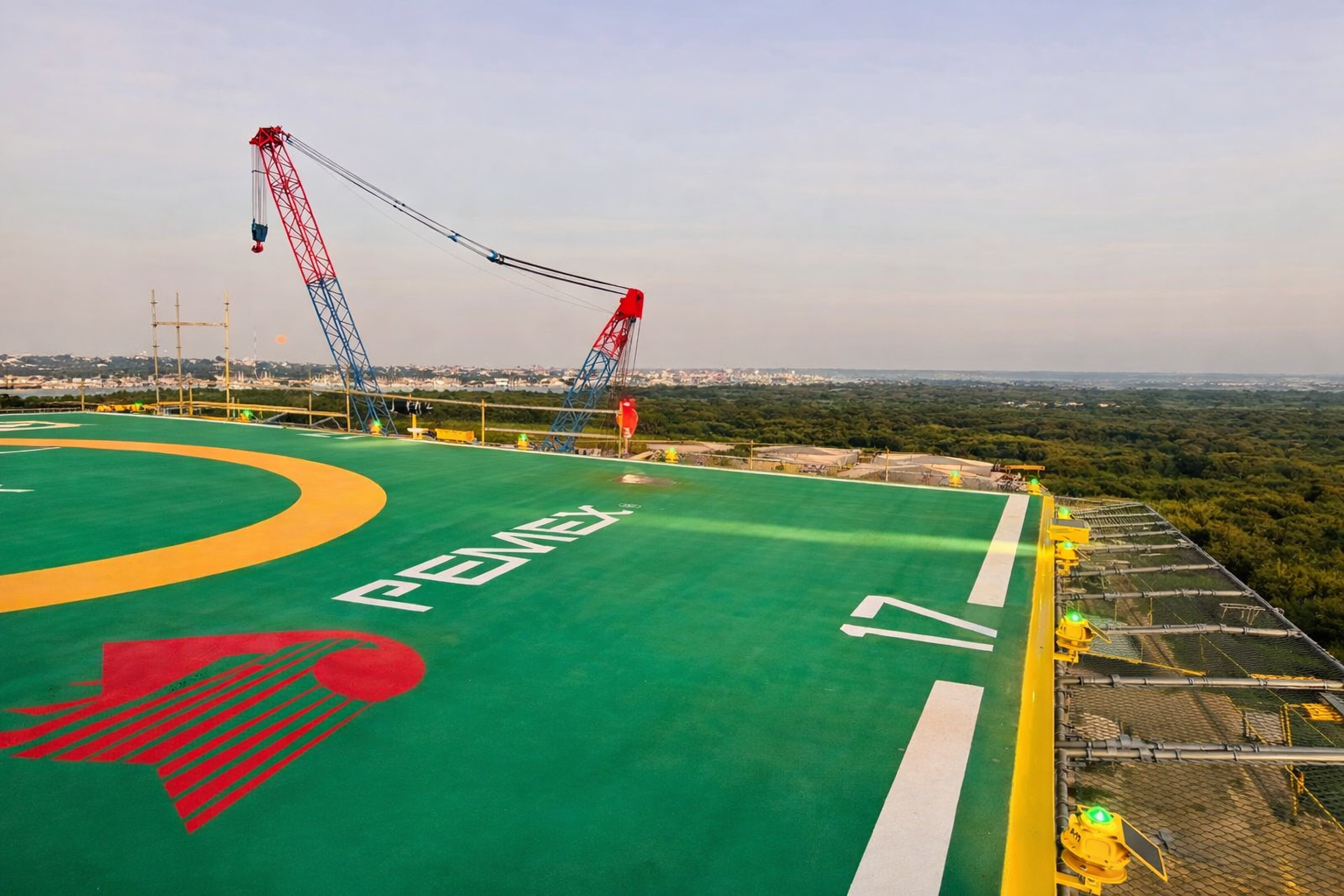
In such environments, aviation is not optional. Helicopter operations support the movement of personnel, equipment, and urgent supplies between offshore platforms and remote facilities. Helipad lighting systems at these locations must function predictably, often far from stable grid infrastructure and without the luxury of frequent technical intervention.
The Requirement: Full Autonomy Without Reliance on External Grid Power
The company was looking for an autonomous lighting system for one of its helipads. The system had to operate independently of the electric grid. The requirements were clear:
- Full autonomy without reliance on external grid power
- Minimal maintenance exposure
- Long service life in demanding conditions
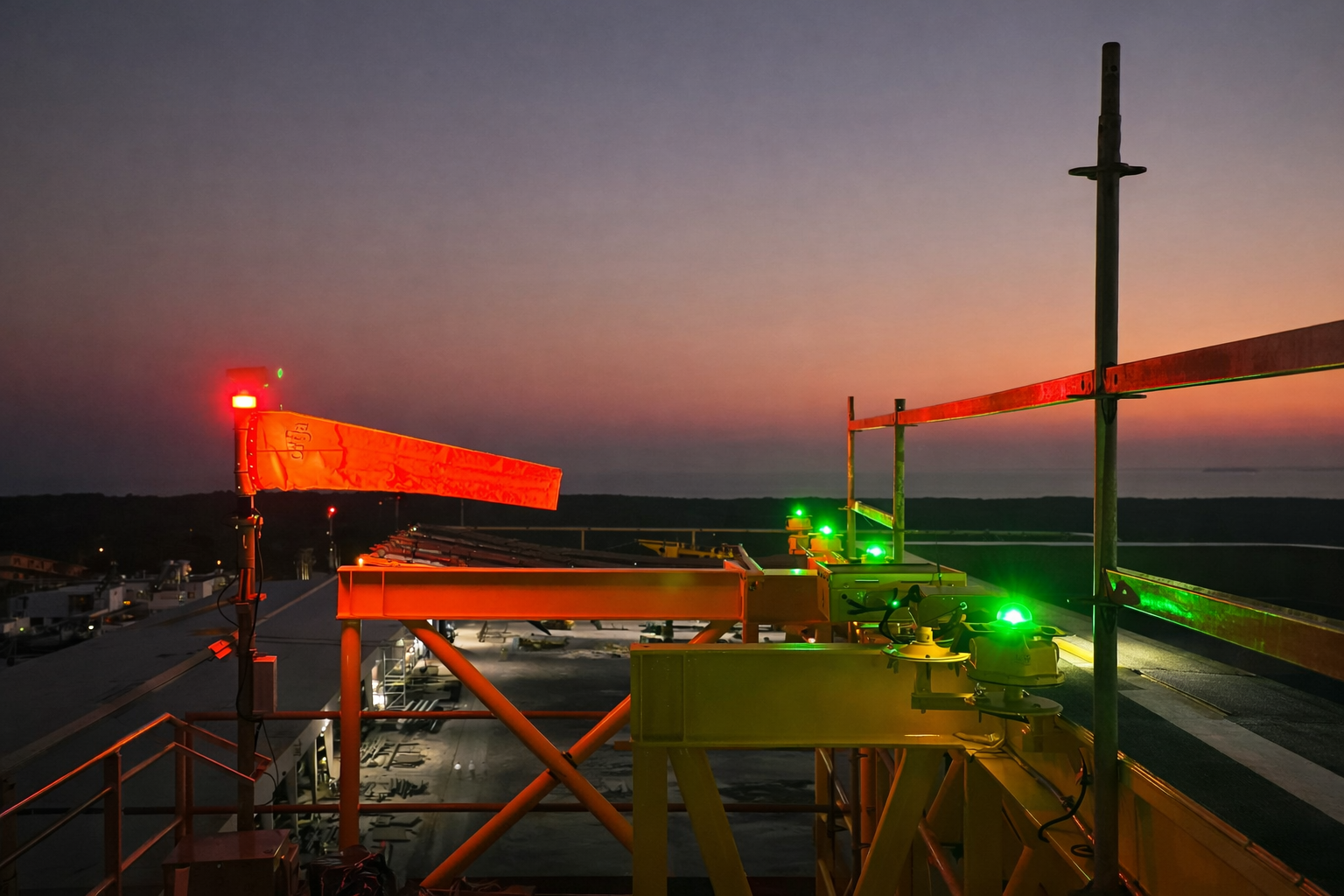
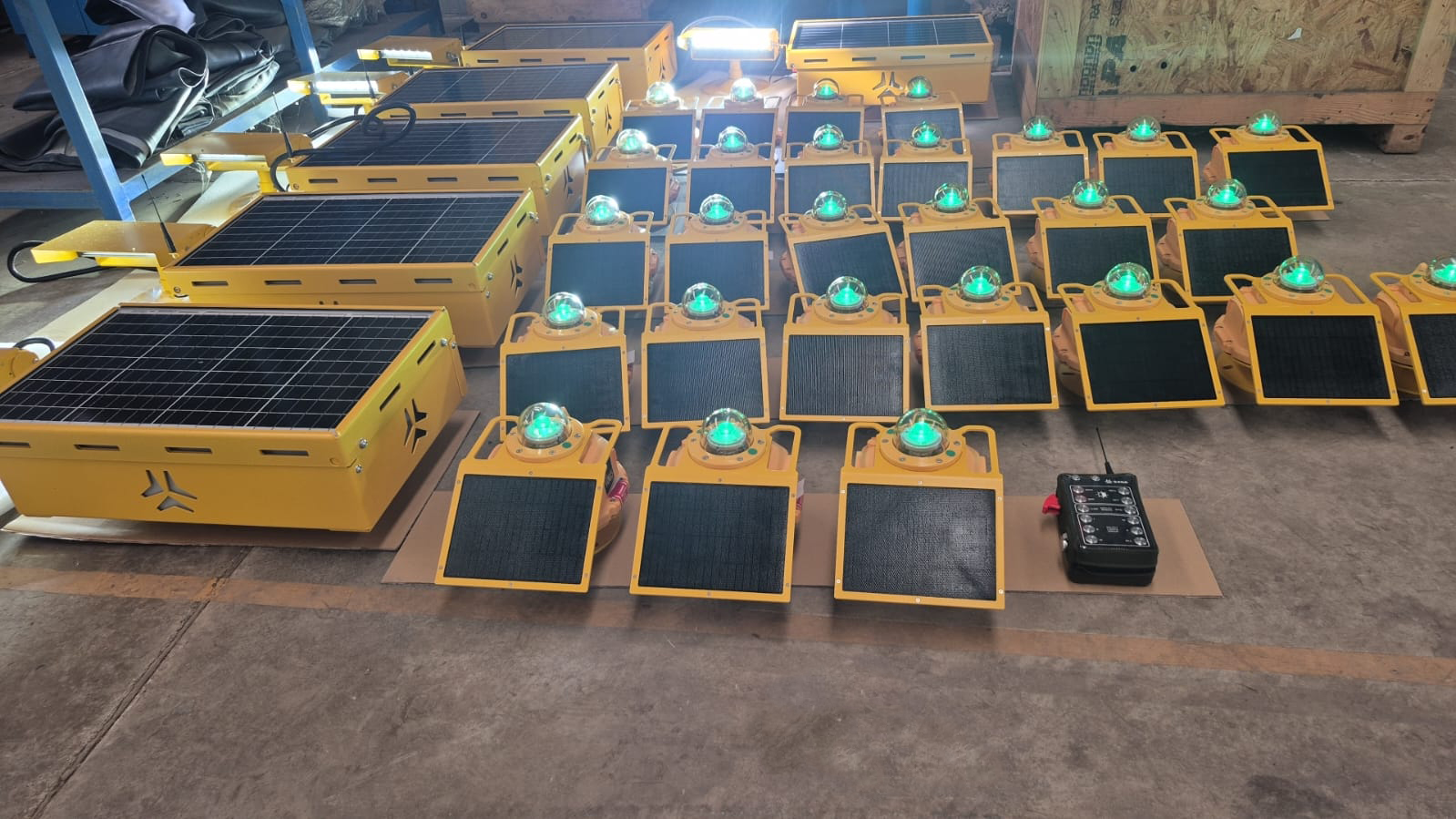
At the time, the helipad was already equipped with solar-powered lights from another manufacturer. While the concept was promising, the performance did not meet their operational expectations. So, the team started searching for a more reliable solution.
PEMEX contacted S4GA. Our approach is always customer-focused. After understanding the operational needs and requirements, we proposed not individual lights but a complete solar-powered helipad lighting system. Following a feasibility study that validated the solution met all requirements, the system was successfully implemented in cooperation with our Mexican sales representative TD&IS.
The results exceeded expectations. One of the first reactions from the company representatives was direct:
The equipment looks like it will be there forever.

The PEMEX Case: Why Heliport Lighting Continuity Matters in the Oil Industry
The PEMEX case shows that continuous heliport lighting is essential for oil industry operations and that solar power is an effective solution in such environments. Solar helipad lighting works reliably in remote and offshore locations when the system is properly designed for the specific conditions. The key is selecting equipment that matches the environment and the way the heliport is used. When the system is correctly aligned with operational needs, it performs consistently and as intended.
Get a quote
Reyes Murillo (Nuquí) Airport serves the remote coastal town of Nuquí on Colombia’s Pacific coast in the Department of Chocó, a humid tropical environment with limited access. Operated by Aeronáutica Civil (Aerocivil), the airport plays a vital role in regional connectivity, medical transport, and eco-tourism — especially during the internationally recognized humpback whale migration season.
Following a major runway expansion completed in 2023, the airport’s weekly capacity increased to over 1,400 seats through airlines like SATENA, Pacifica de Aviación, and San Germán Express. So, the Reyes Murillo Airport required a reliable, autonomous runway lighting system capable of supporting increased traffic. Conventional wired AGL was not feasible due to cost, maintenance complexity, and grid limitations.
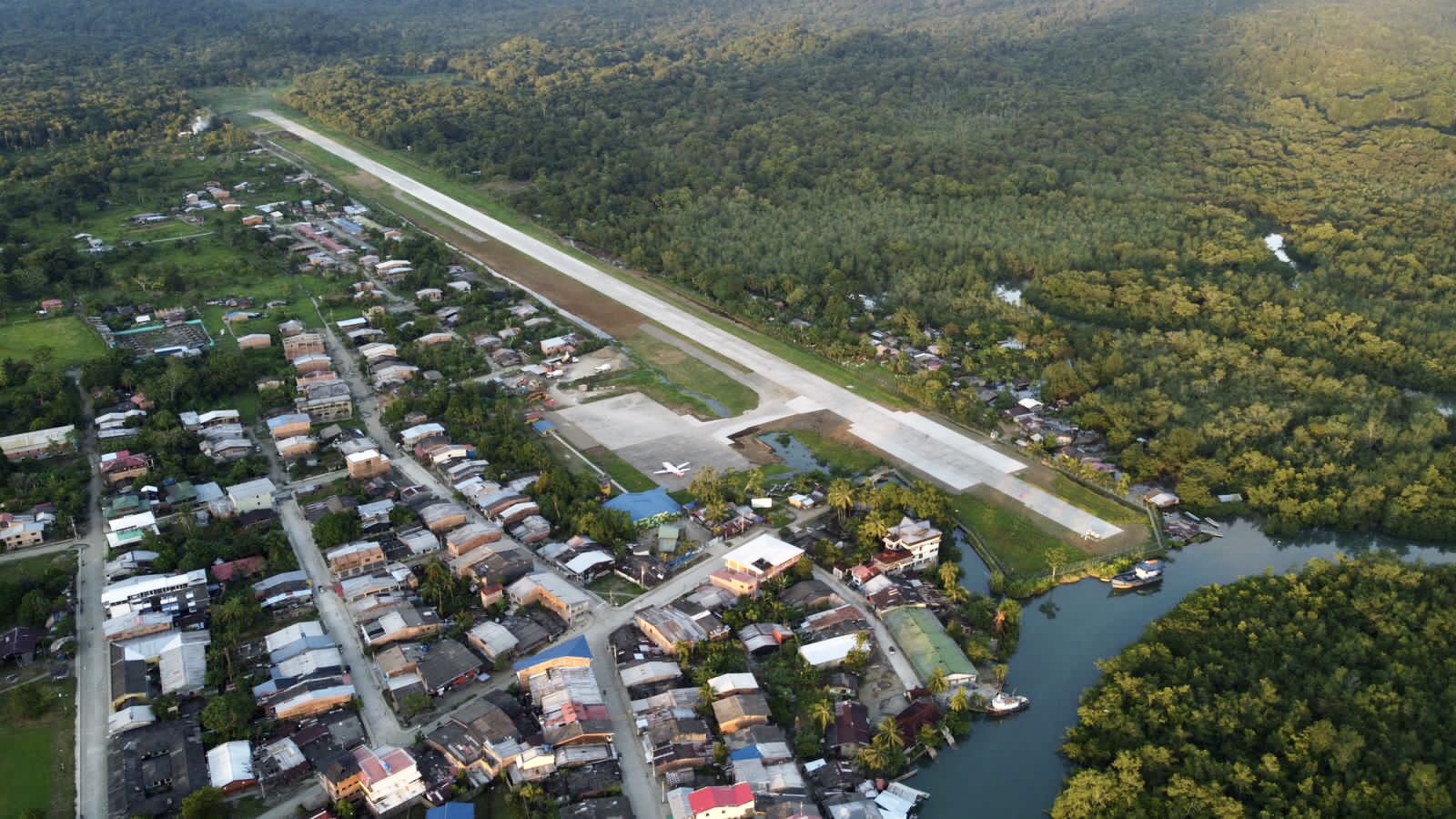
Image source: mintransporte.gov.co
Aerocivil Requirements and Technical Constraints at Nuquí Airport
The requirements for airfield lighting included full independence from electrical power, immunity to tropical humidity and corrosion, and minimal civil works. The system had to fit the economic profile of a remote regional airport, as well as support increased traffic after the runway expansion.
Thus, Aerocivil did not consider traditional wired AGL solutions for Reyes Murillo Airport’s operations due to several vital constraints, such as:
- high CAPEX linked to civil works
- limited maintenance capabilities at the airport
- high risk of runway lighting outages because of an unstable power supply
As a result, alternative solutions, such as solar airfield lighting systems, were identified and evaluated.
Final Decision: ICAO-Compliant, Off-Grid Airfield Lighting System
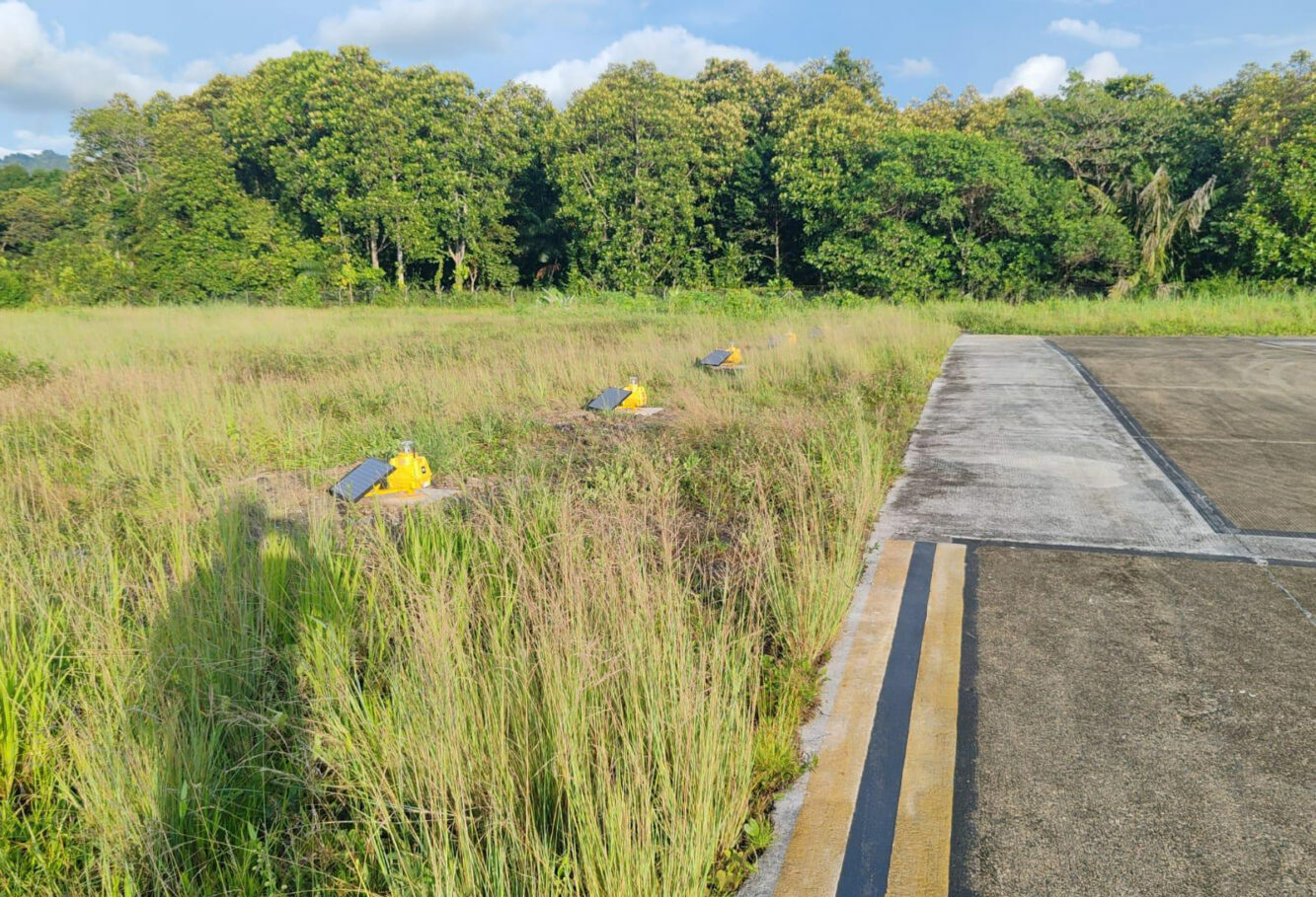
To identify the most suitable solution for the airport, Aerocivil conducted a comprehensive analysis of available solar airfield lighting systems, including a detailed feasibility study covering operational, performance, and financial criteria. Based on the assessment, S4GA’s solar airfield lighting solution demonstrated the strongest overall results among the evaluated options.
As a result, Aerocivil selected the S4GA system, enabling 100% grid-independent operation and suitability for tropical, high-humidity operating conditions. Additionally, it offered:
- grid independence
- compliance with ICAO
- low maintenance requirements
- strong technical support
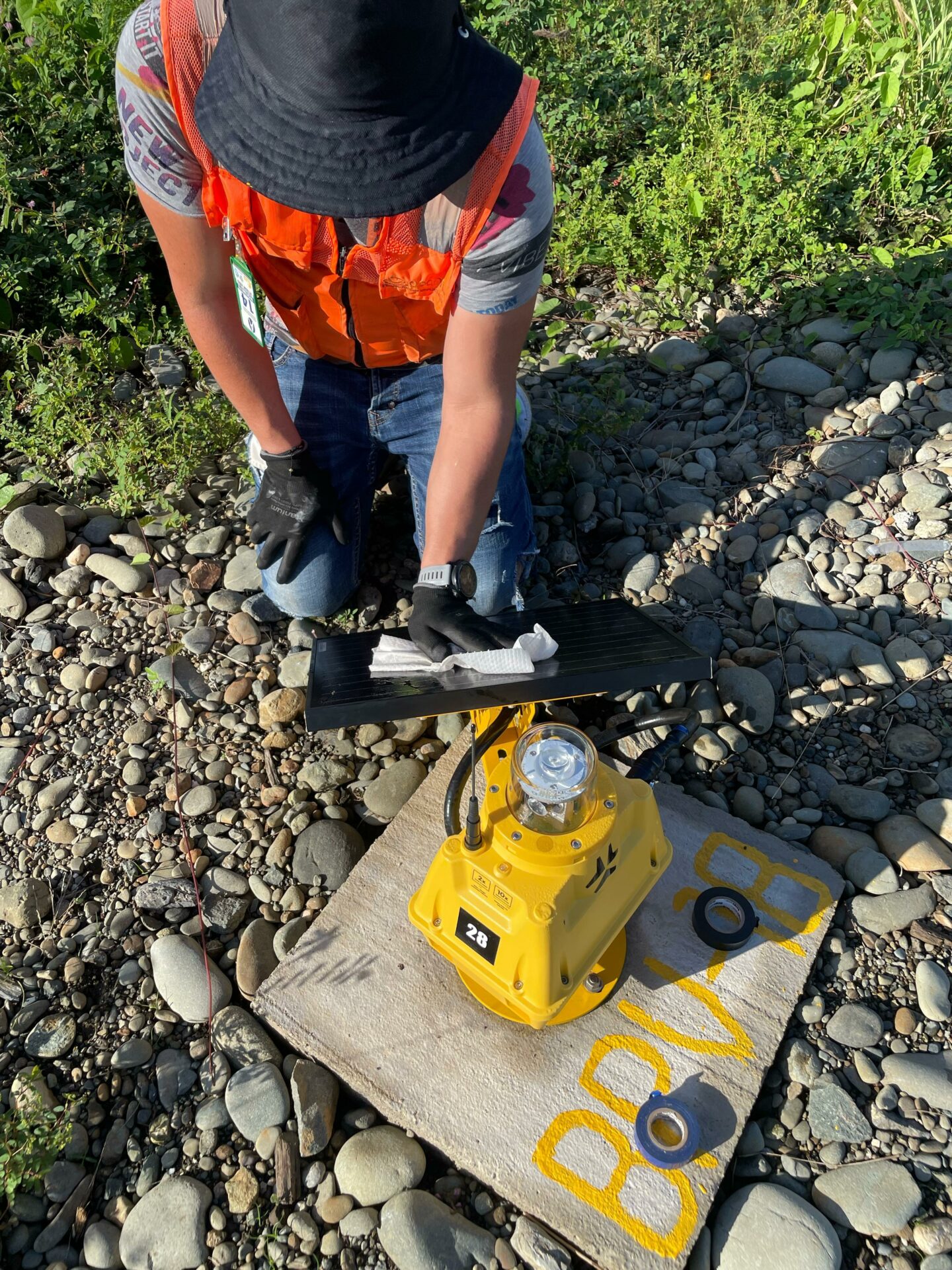
Installation and commissioning were provided by MC Universal, the reputable AGL integrator and S4GA official partner in the region. The team is also responsible for ongoing maintenance support. Their professional capability in working with solar AGL is further demonstrated through the successful completion of comprehensive product training at the S4GA Centre of Excellence in Poland.
A Measured Step in Aerocivil’s Role as a National Airport Operating Company
By deploying solar runway lighting at Nuquí, Aerocivil strengthened its role as a responsible national operator supporting regional development through reliable air connectivity — the airport now offers more regular flights both for locals and tourists.
The system enables safe and predictable operations at a remote airport, ensuring continued access for passenger transport, medical flights, and essential services in a region where conventional infrastructure is limited.
This decision reflects Aerocivil’s broader responsibility to develop and sustain regional connectivity by investing in infrastructure suited to real operating conditions.
For more information about this project, please contact Dmytro Kuczeruk, Aviation Infrastructure & AGL Systems Expert.
Cottbus-Neuhausen Airport in eastern Germany has recently upgraded its Precision Approach Path Indicator (PAPI) system to meet the latest EASA technical requirements. The airport selected S4GA’s double-projector LED PAPI, a solution fully compliant with EASA standards and designed for safe, modern, and energy-efficient airfield operations.

The project was delivered in collaboration with Innovence Airport Systems GmbH, S4GA’s local partner in Germany, while system integration with the Airfield Lighting Control and Monitoring System (ALCMS) was completed by AP-Tech.
The upgrade was initiated to comply with the EASA multi-lamp requirement, enhancing safety and operational reliability for pilots during approach. Cottbus Airport required a modern PAPI system that would not only meet all new regulations but also provide long-term efficiency and straightforward maintenance.
Cottbus Airport PAPI upgrade challenges
The project team faced several technical challenges during implementation:
- Compliance with SELV IEC 61820-3-4 requirements using 24 VDC safe extra-low voltage power supply.
- Integration of radio communication for flexible and reliable system control.
- Ensuring automatic switchover between primary and secondary PAPI units to maintain continuous operation.
S4GA LED PAPI installation
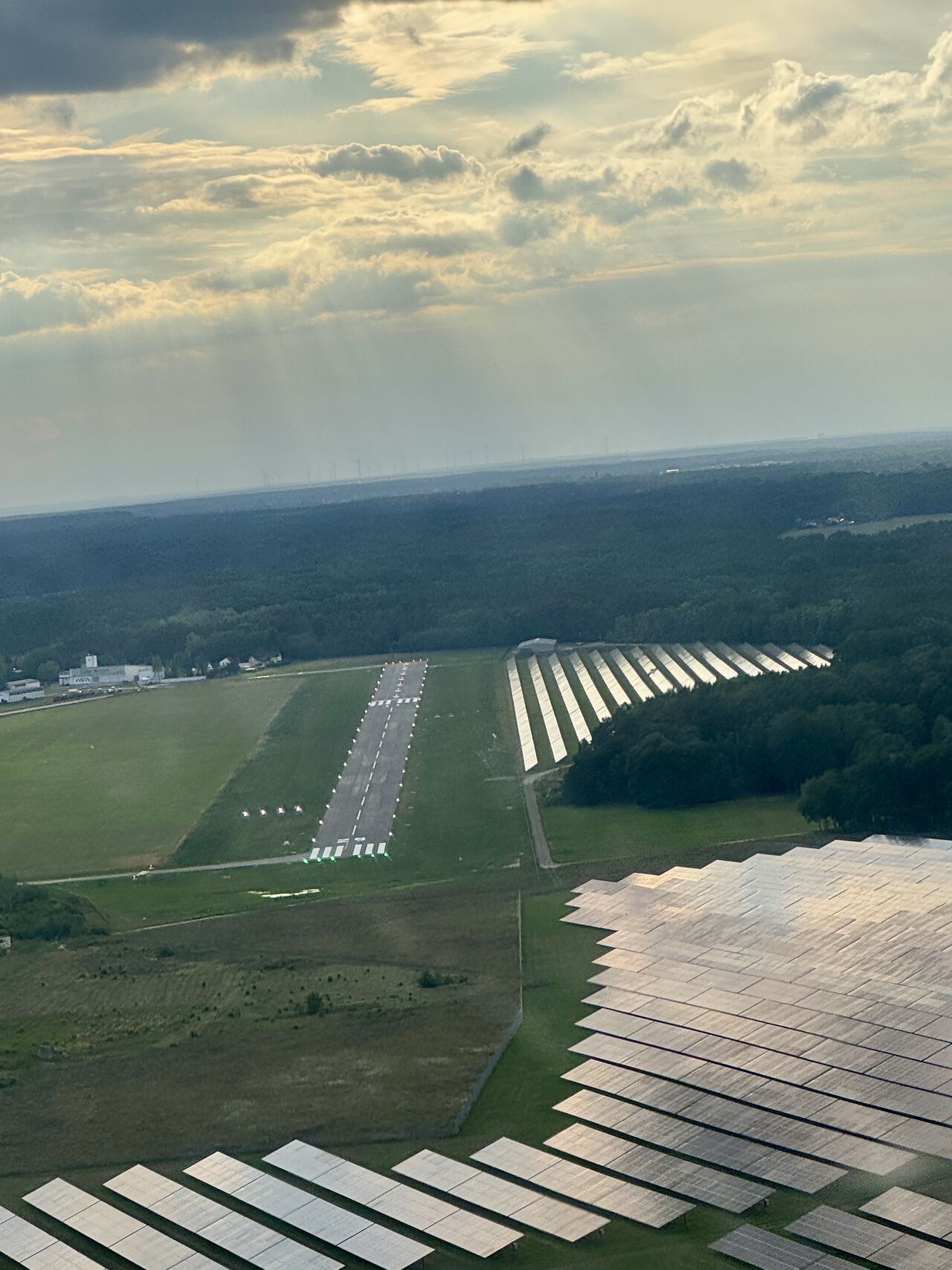
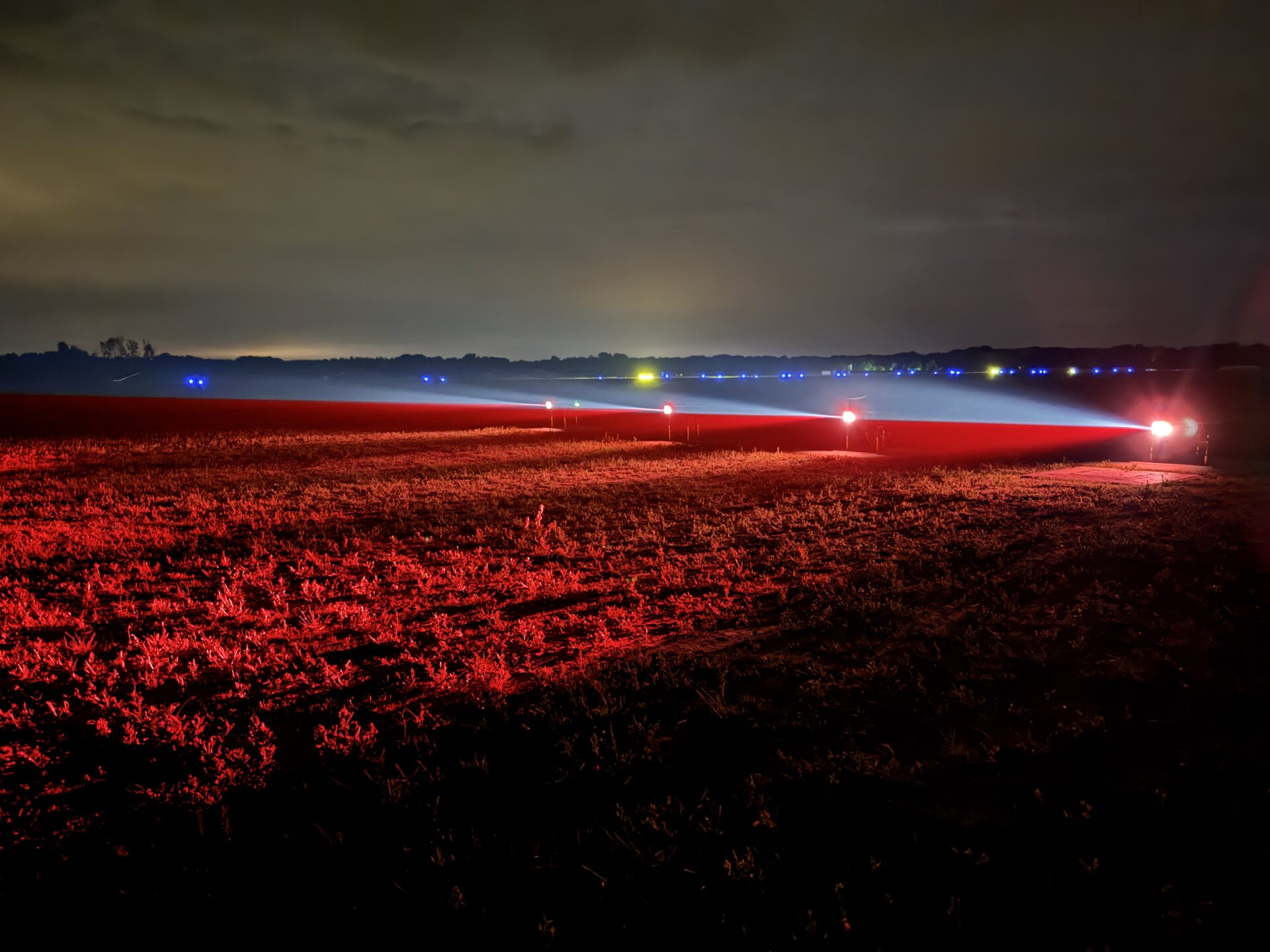
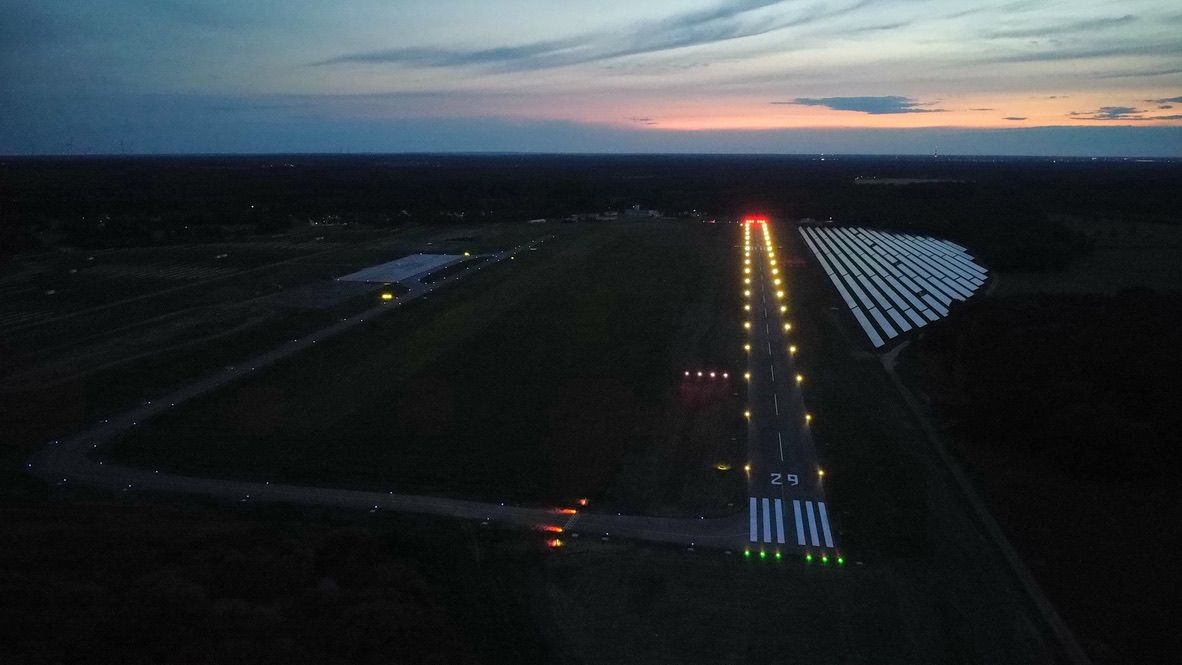
EASA-compliant LED PAPI system
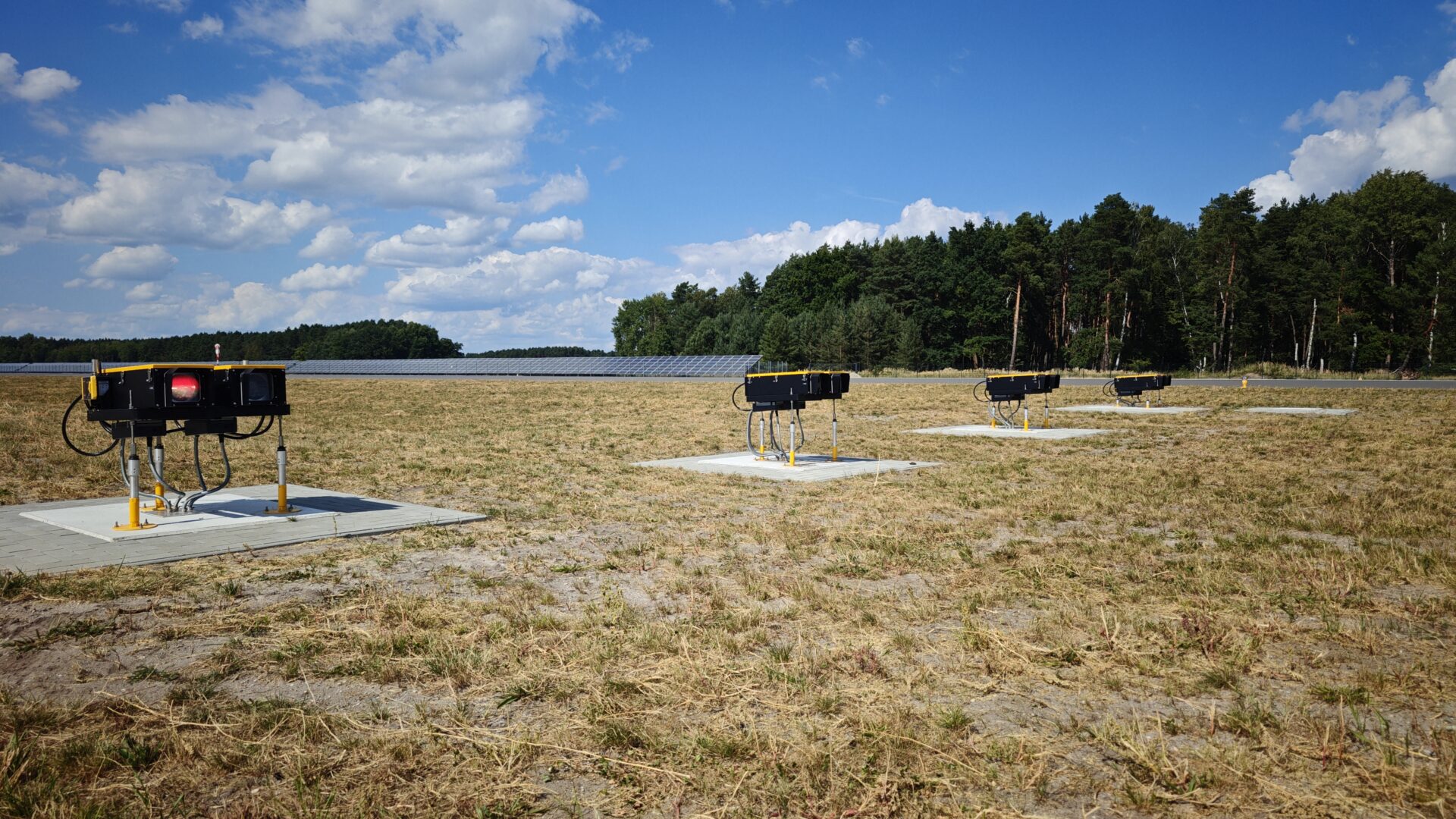
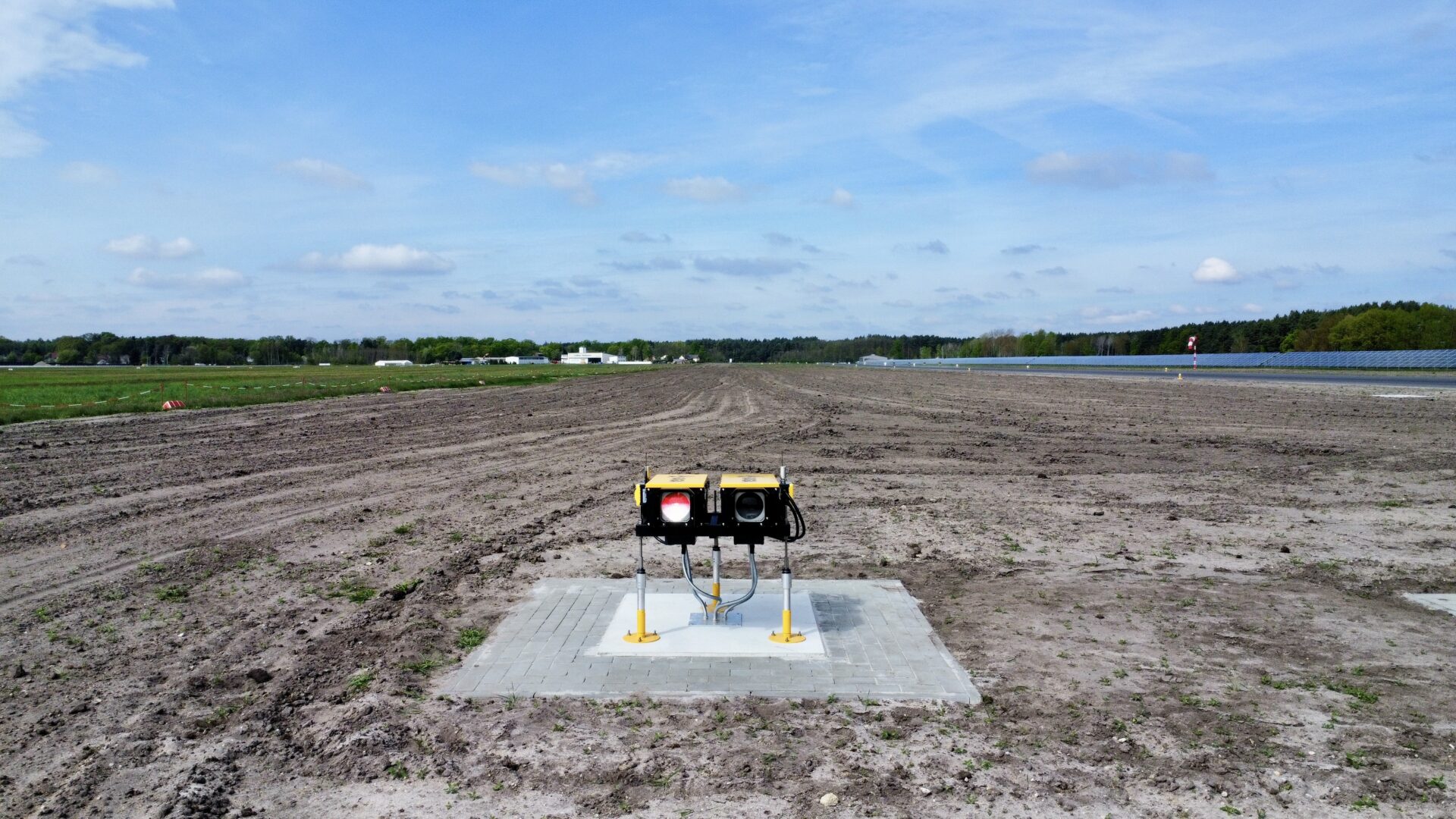
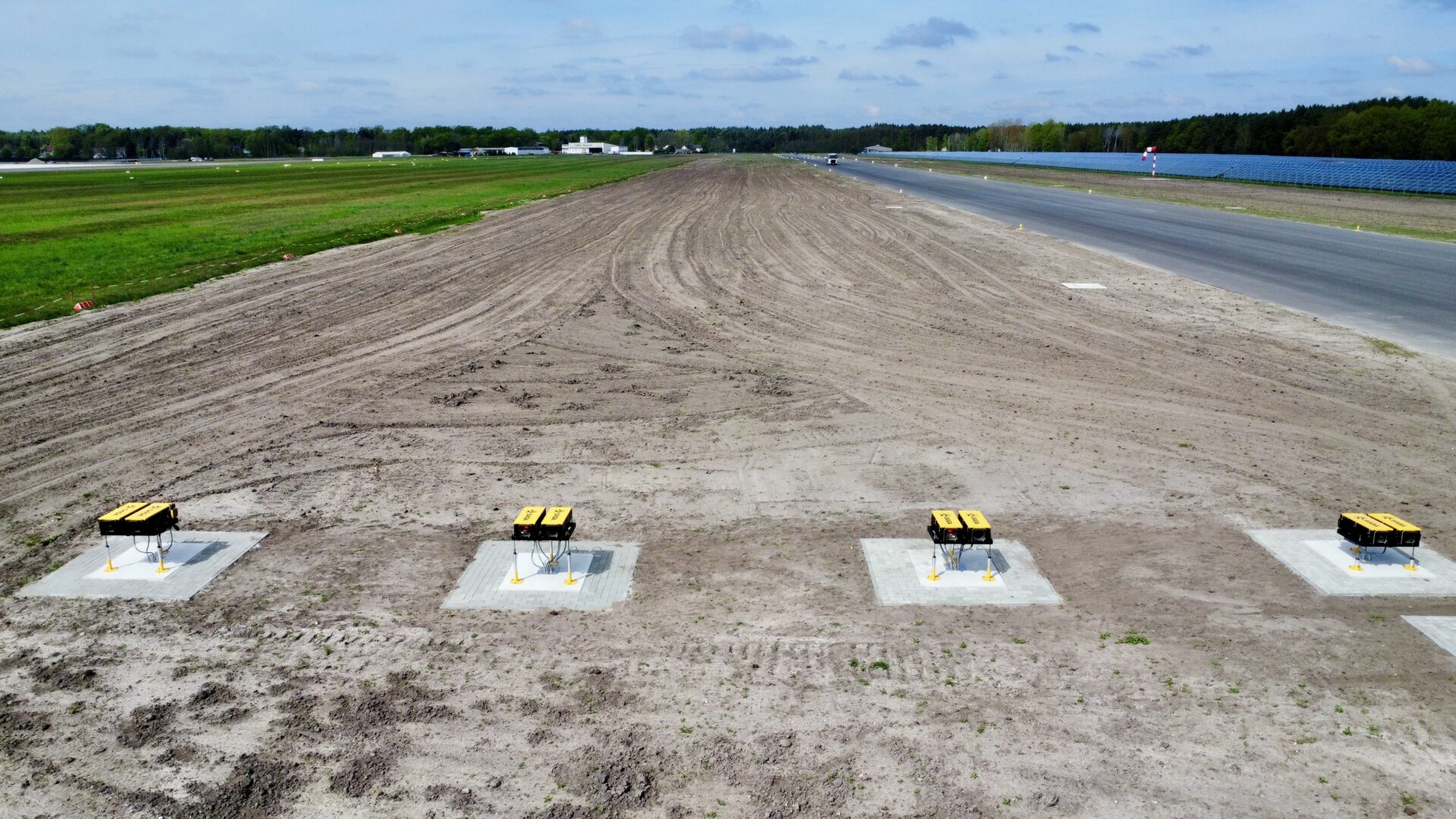
S4GA supplied and commissioned its double-projector LED PAPI system, featuring dual redundancy, precise photometric calibration, and energy-efficient LED technology.
Integration into the airport’s ALCMS, enabled seamless real-time monitoring and control directly from the control tower.
The system also includes self-monitoring capability with live feedback on tilt and operational status, allowing maintenance teams to quickly detect and address any irregularities — further increasing reliability and uptime.
Benefits and Operational Impact
The new PAPI system provides Cottbus Airport with:
- Full compliance with EASA safety and performance standards.
- Enhanced safety through dual-projector redundancy and SELV 24 VDC power supply.
- Energy-efficient performance using high-output LED technology.
- Simplified installation and maintenance, supported by self-diagnostic monitoring and ALCMS integration.
Cottbus Airport is now equipped with a modern, efficient, and reliable S4GA LED PAPI System that enhances both safety and operational performance — an upgrade any airport can consider to ensure full compliance, low maintenance, and top-tier reliability.
Get a quote
At the request of Her Excellency, the Governor of Lualaba Province (Democratic Republic of the Congo), Mrs. Fifi Masuka, an inspection and full report were commissioned to assess the modernization of Kolwezi International Airport’s runway lighting system. The visit provided technical guidance to the Governor, the Civil Aviation Authorities, and Airport Manager Madam Jeanne Ditend on the feasibility of introducing solar-powered airfield lighting as a modern, sustainable, and ICAO-compliant solution.
The findings recommended the deployment of a permanent solar-powered runway lighting system, tailored to the airport’s operational requirements.
Kolwezi Airport needed a reliable lighting system capable of withstanding tough Congo weather conditions while supporting growing night-time traffic. The airport is a key driver of regional development, so implementing a compliant, off-grid solution was essential.
The main challenge was to install the system without disrupting daily flight operations. This required close coordination between Sunsolutions Aeronautics, the local partner Kolela Trading, airport staff, and the Civil Aviation Authorities. In addition, hands-on training was critical to ensure that the system could be properly operated and maintained by local personnel.
Why S4GA’s Solution Was Chosen for Kolwezi International Airport?
In 2025, Sunsolutions Aeronautics, in collaboration with Kolela Trading (DRC), successfully installed the S4GA solar-powered Airfield Ground Lighting (AGL) system at Kolwezi International Airport.
The system represents a historic milestone as the first permanent solar runway lighting system in the Democratic Republic of Congo. Fully ICAO-compliant, the S4GA solution provides:
- Reliable solar-powered runway and taxiway lighting
- Zero greenhouse gas emissions and reduced reliance on grid electricity
- Enhanced aviation safety for night operations
- Scalable infrastructure supporting future airport growth
SOLAR AIRFIELD LIGHTING AT Kolwezi International Airport – Photos
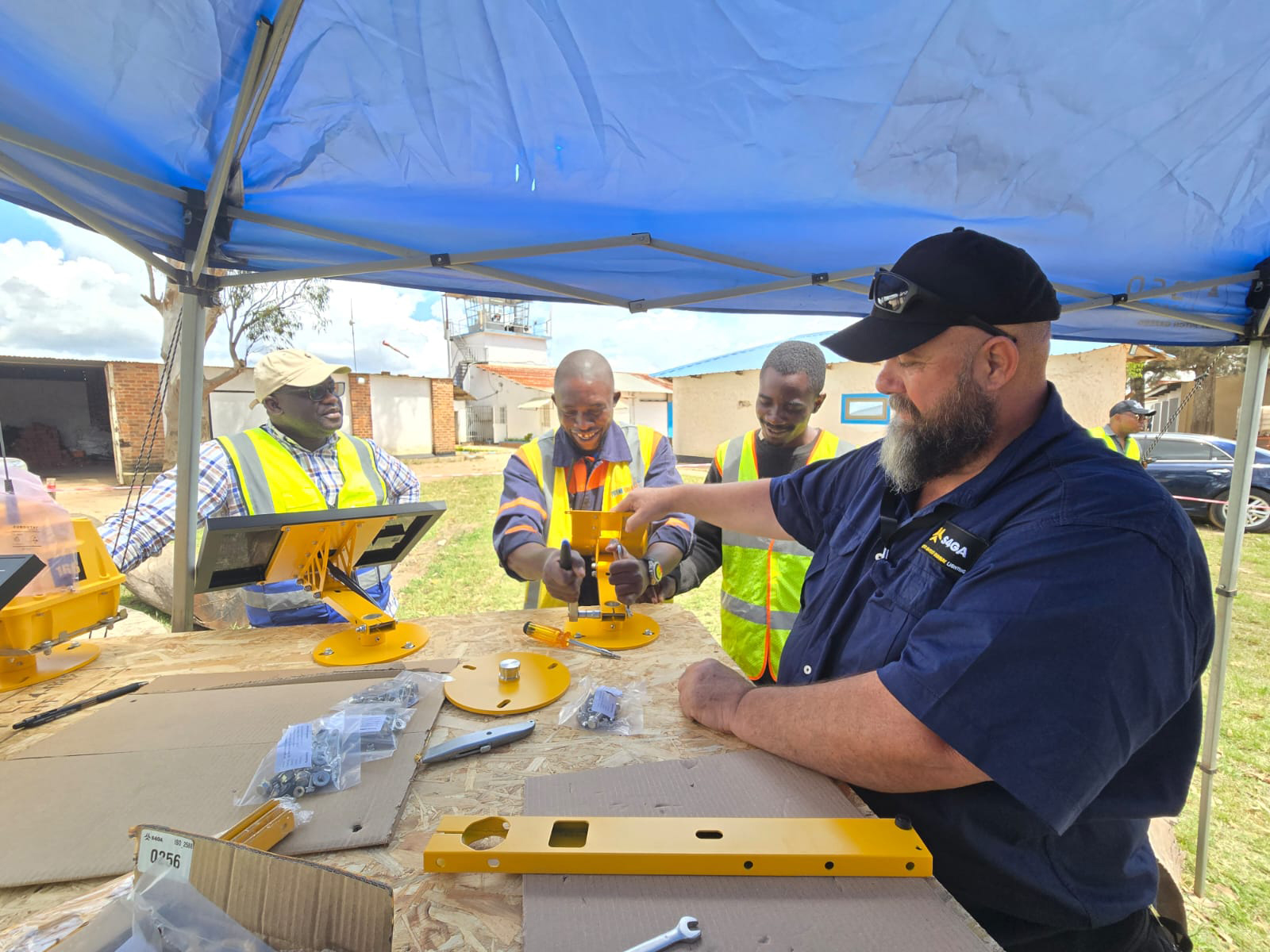
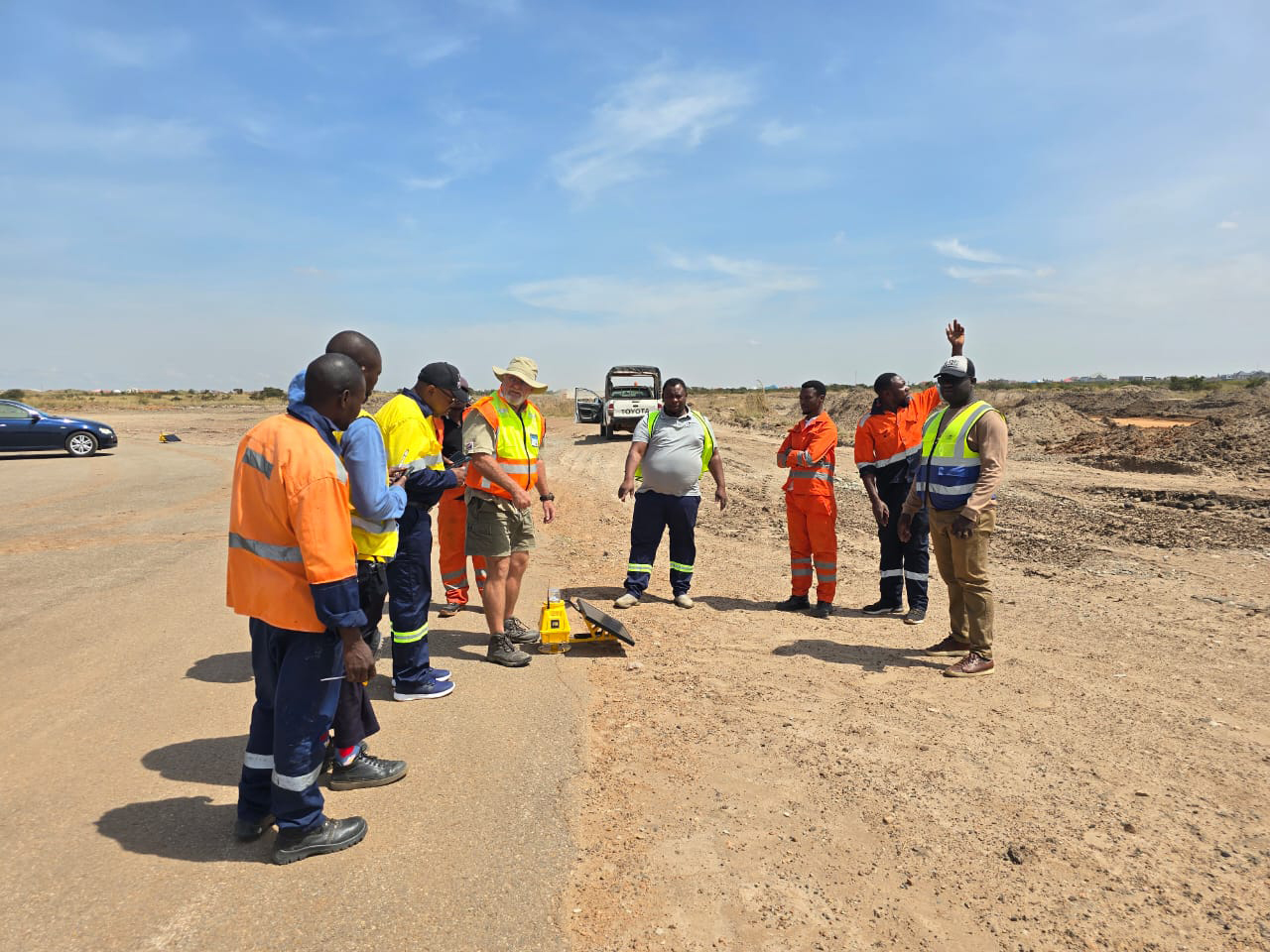
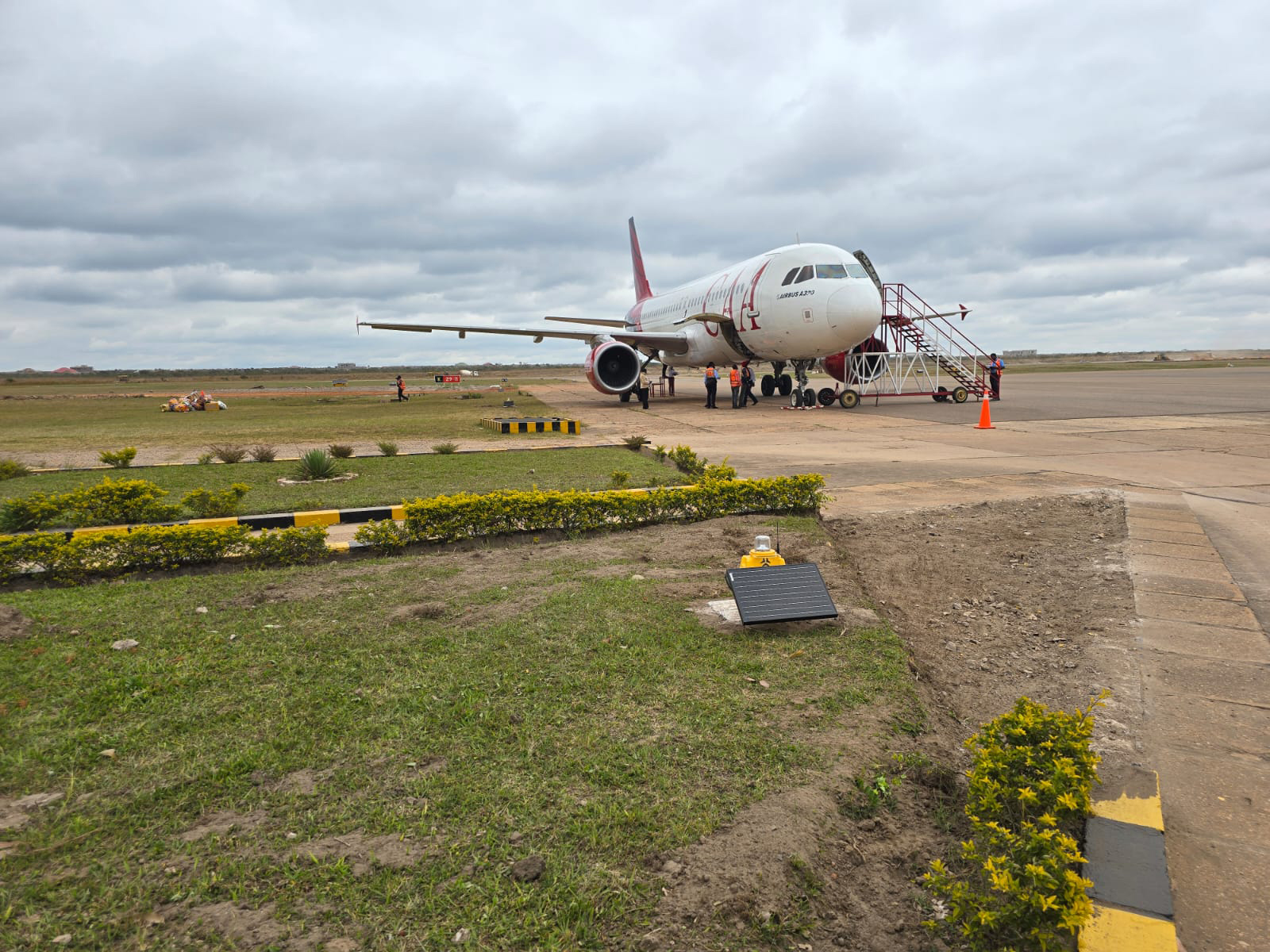
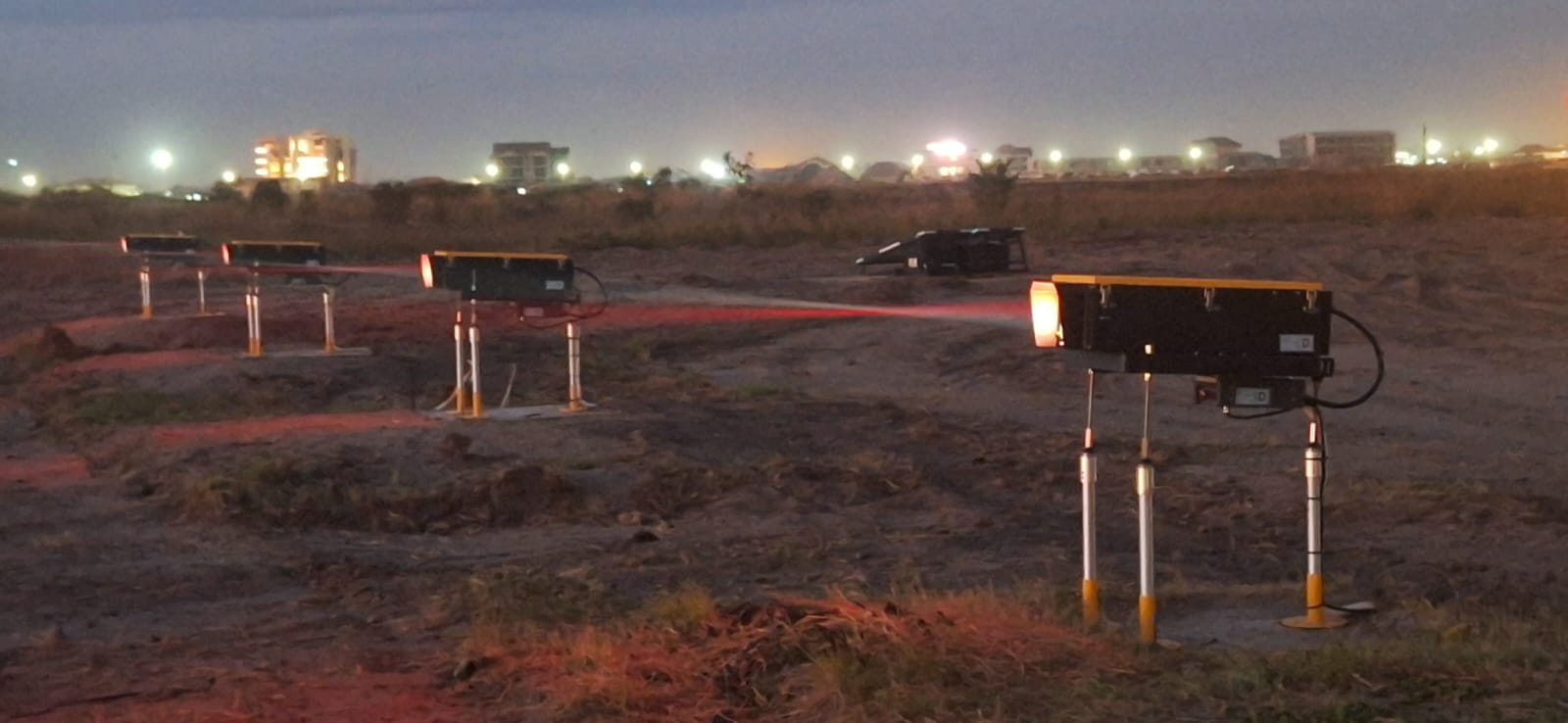
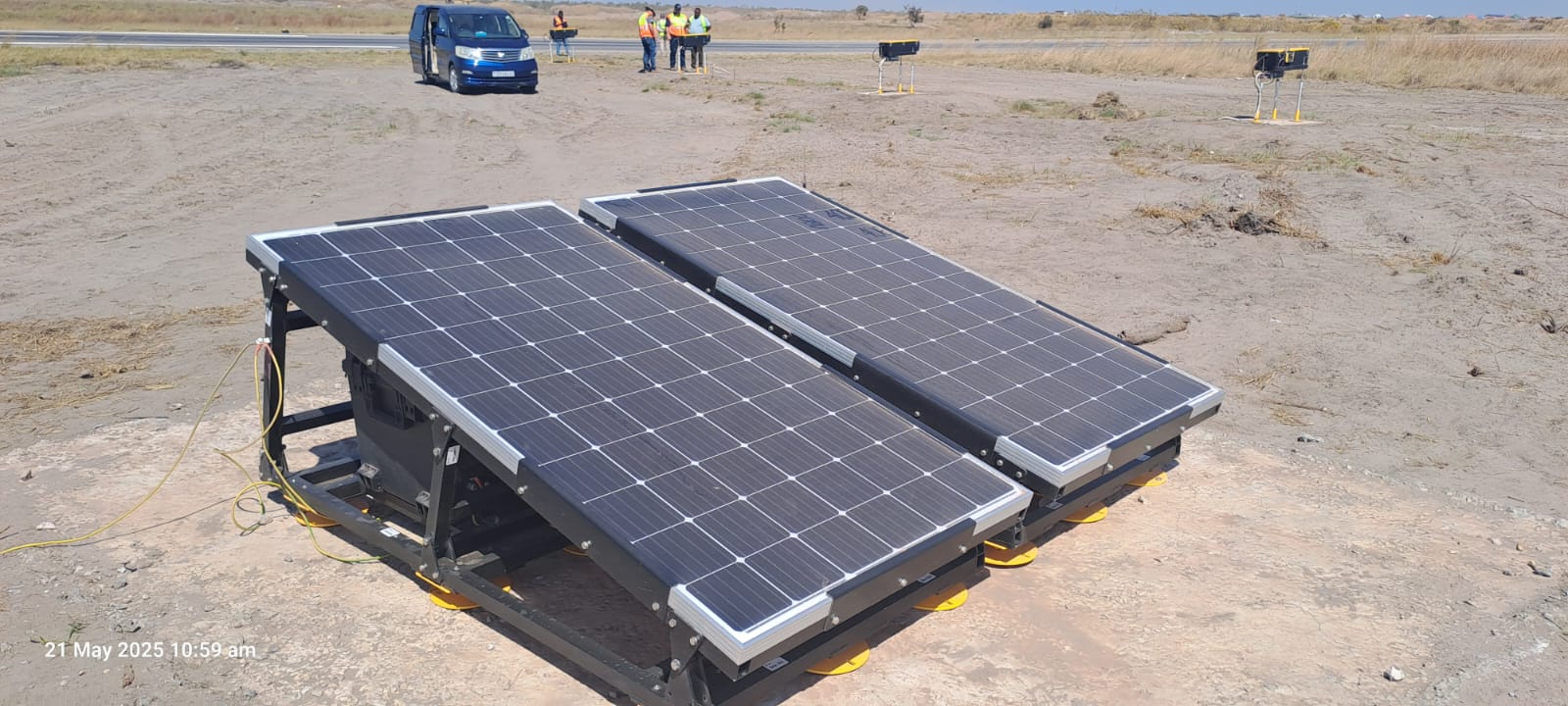
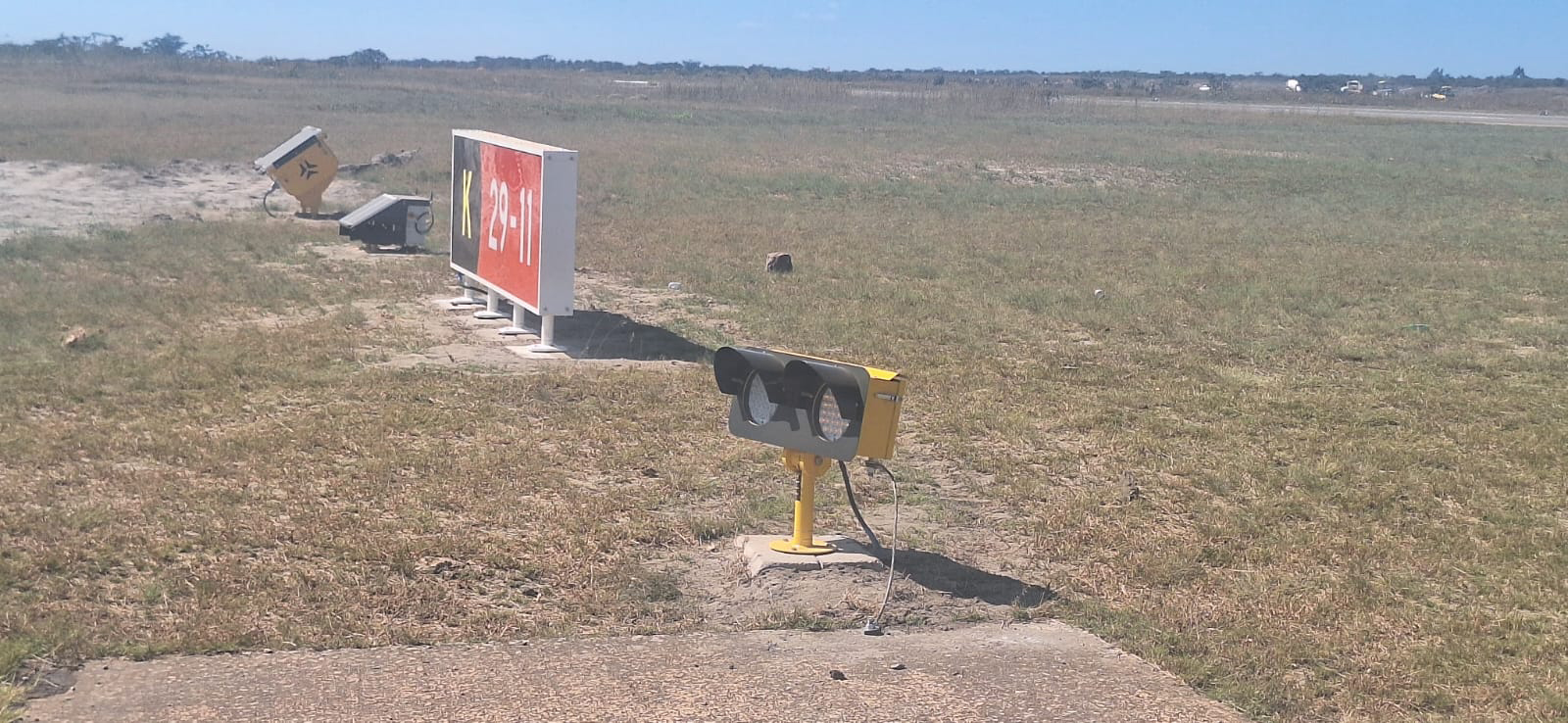
The deployment of the solar AGL system at Kolwezi International Airport sets a new precedent for sustainable aviation infrastructure in the DRC.
Operational Impact: The airport is now equipped with a fully functional runway lighting system that improves operational safety and efficiency.
Government Leadership: The Governor’s initiative has demonstrated leadership in modernizing regional infrastructure while prioritizing sustainability.
Sustainability: The project eliminates dependency on the unreliable national grid and reduces carbon emissions.
Capacity Building: Local staff received training, ensuring long-term self-sufficiency in system operation and maintenance.
This project not only strengthens the aviation sector in Lualaba but also paves the way for similar sustainable infrastructure projects across
the Democratic Republic of Congo.

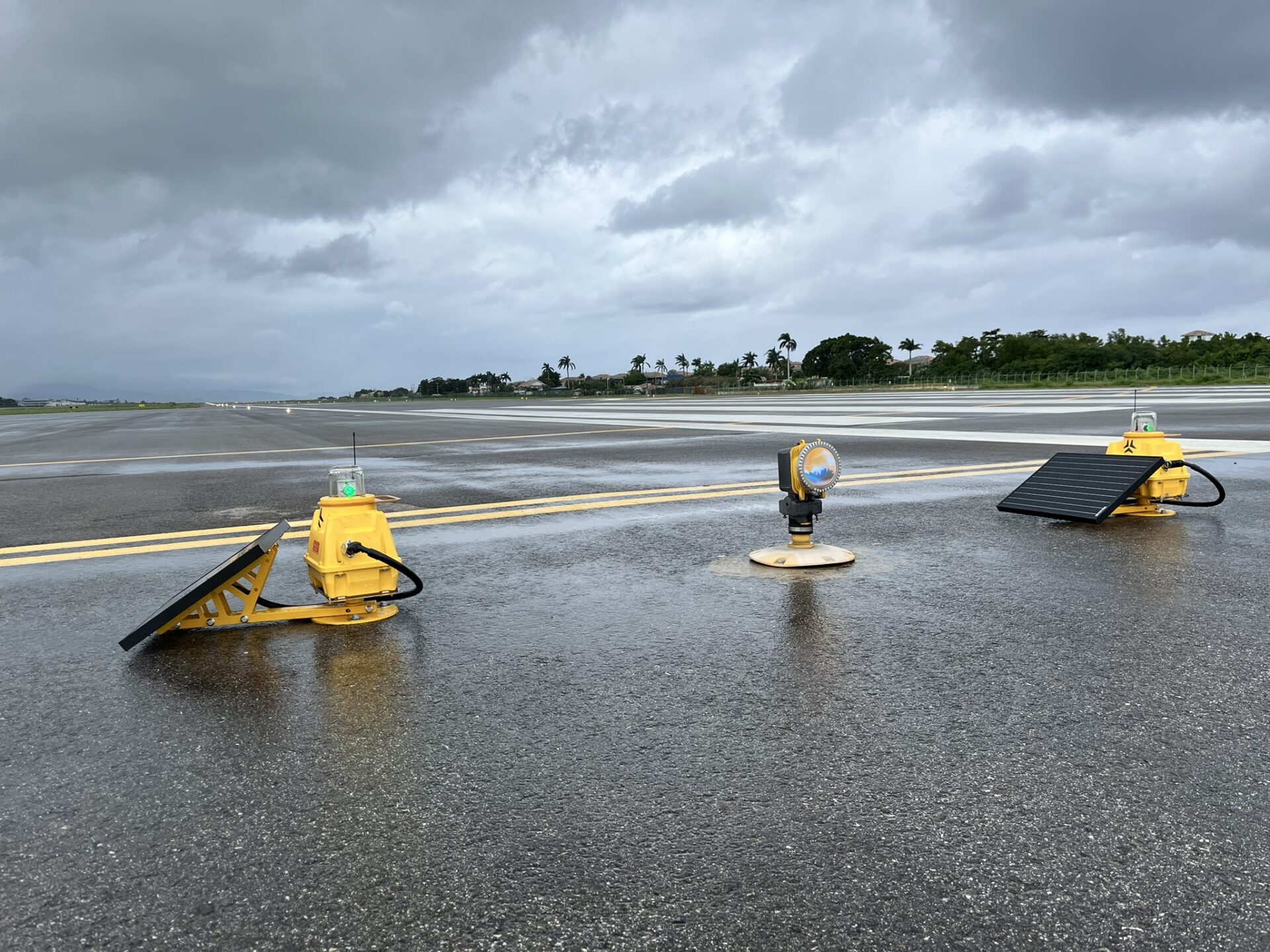
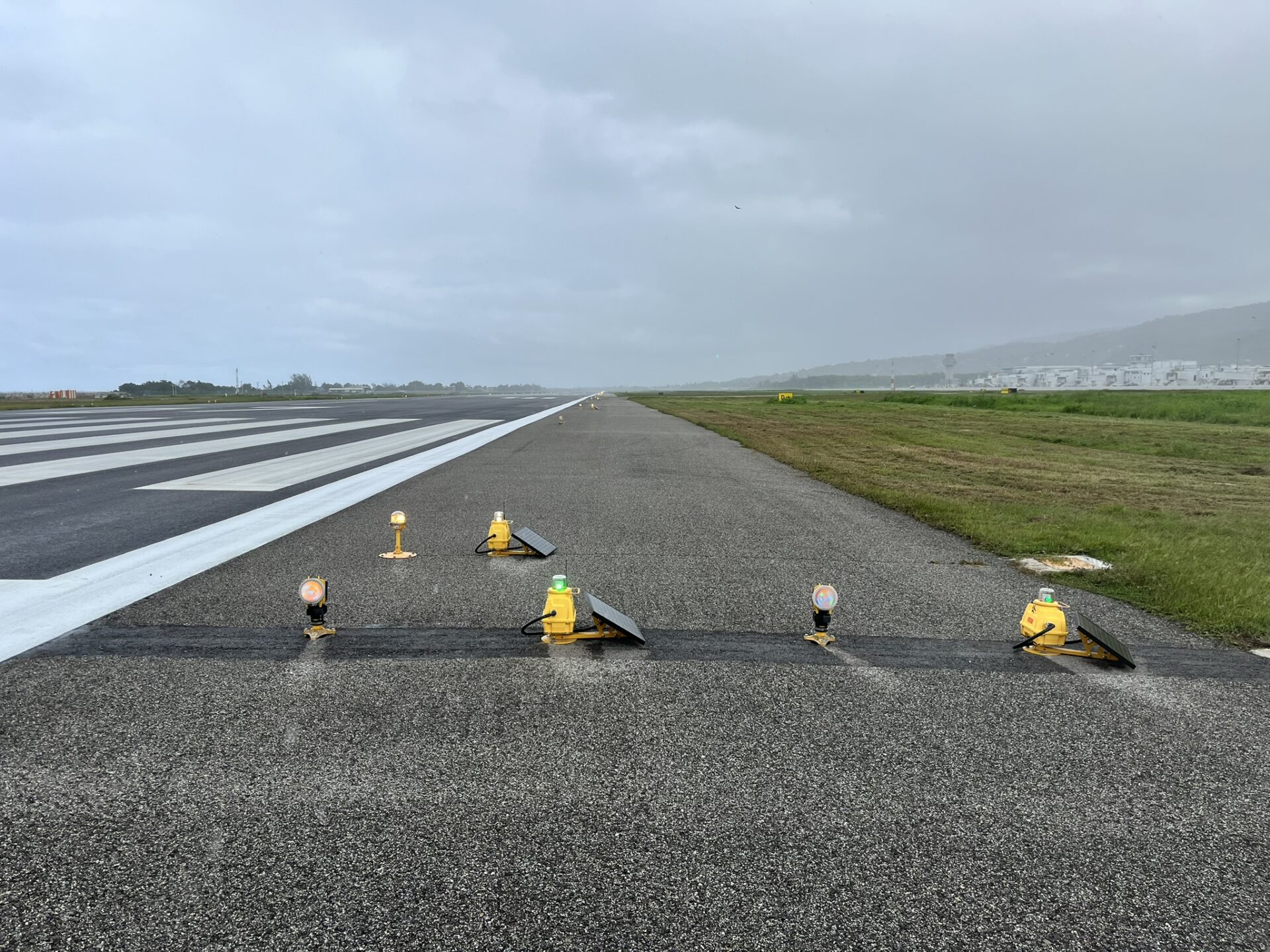
S4GA has collaborated with Grupo Aeroportuario del Pacífico (GAP) to install a solar runway lighting system as a backup to the existing conventional wired lighting at Sangster International Airport in Montego Bay, Jamaica. As one of the busiest airports in the Caribbean, Sangster International aims to ensure smooth operations even during emergencies. S4GA helped meet that goal while also supporting GAP’s commitment to sustainability.
Choosing S4GA’s Solar AGL as a Backup
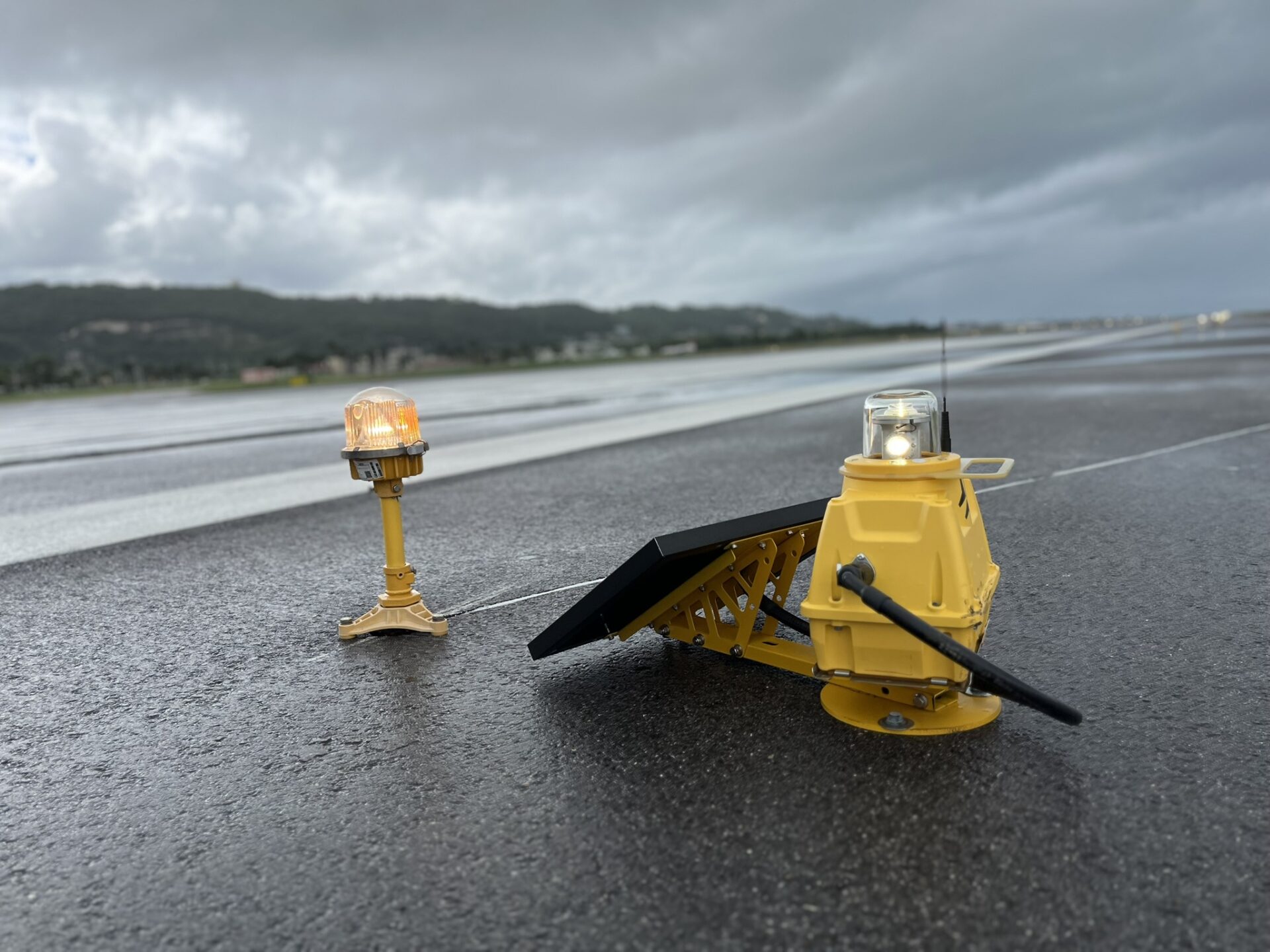
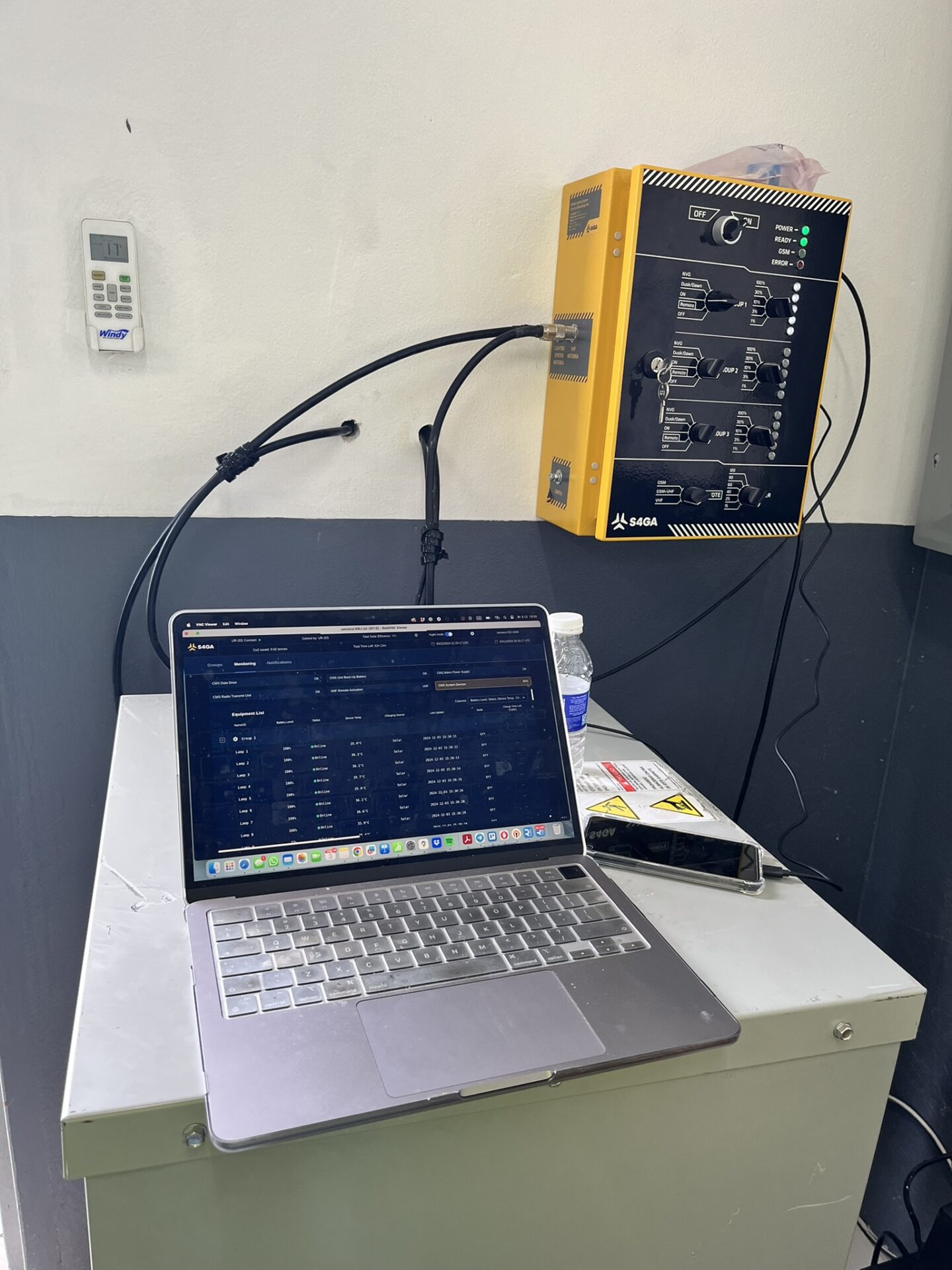
The airport had several options for backup lighting, including a traditional wired system and a temporary trailer-based solution. Due to the airport’s demanding schedule, it chose a fixed solar system that doesn’t require additional setup in emergencies and can be activated immediately. With minimal maintenance requirements, the team can focus on resolving issues without downtime.
ICAO-compliant solar runway lights are certified for jet blast resistance, frangibility, and photometric performance, providing a stable and dependable solution for a high-traffic airport. Moreover, the S4GA solar runway lighting system is completely carbon-free, aligning with GAP’s green operations goals.
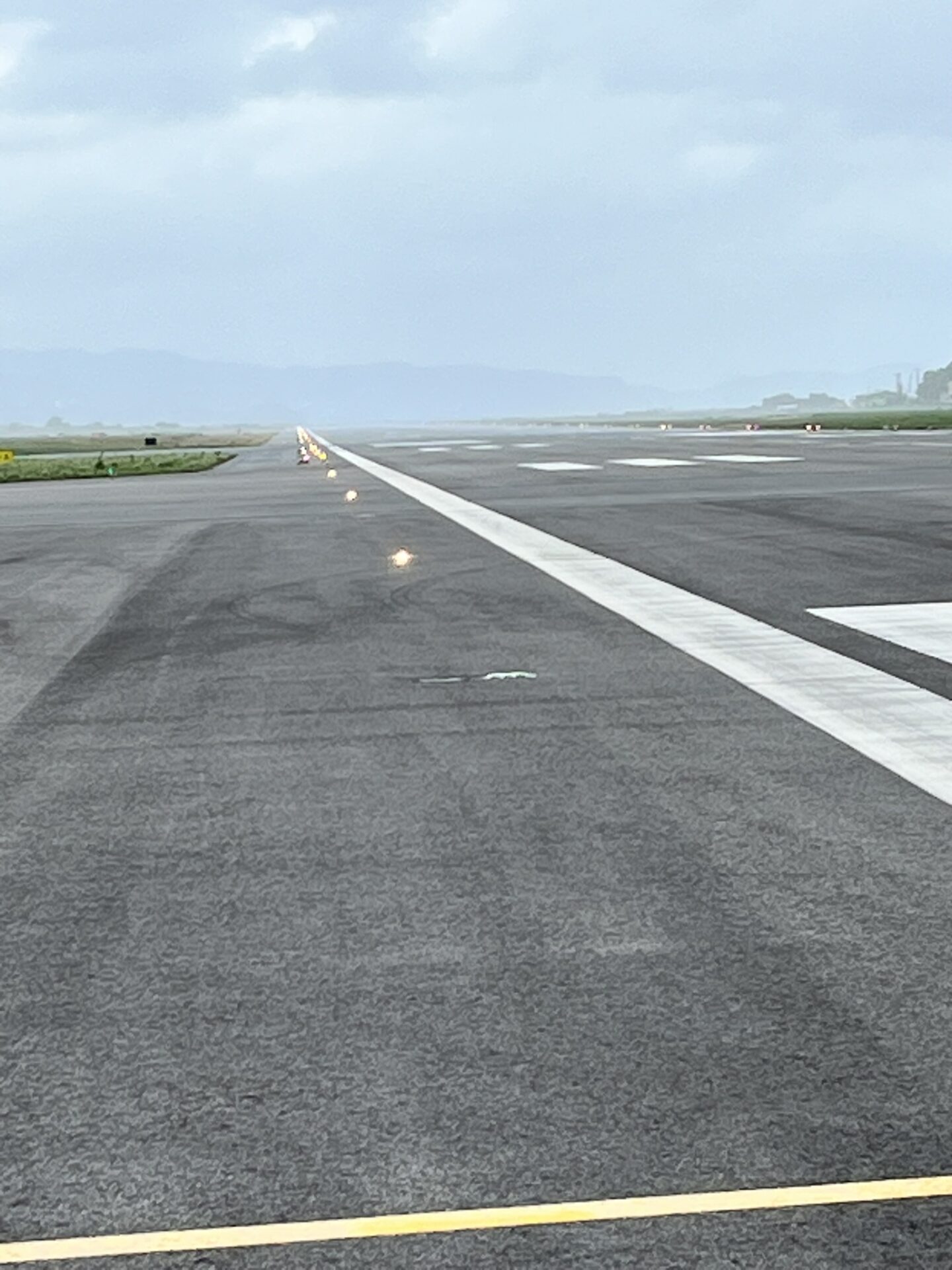
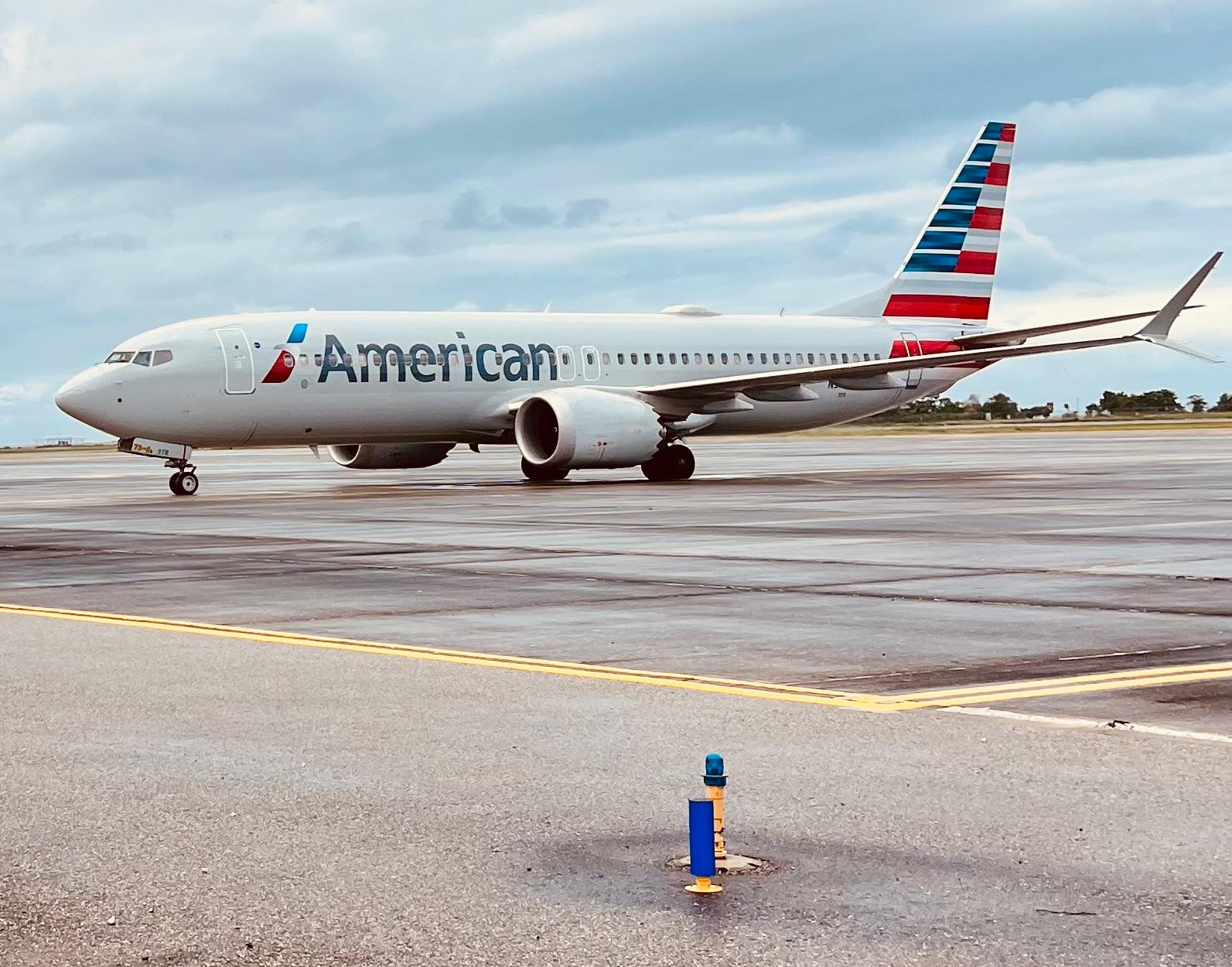
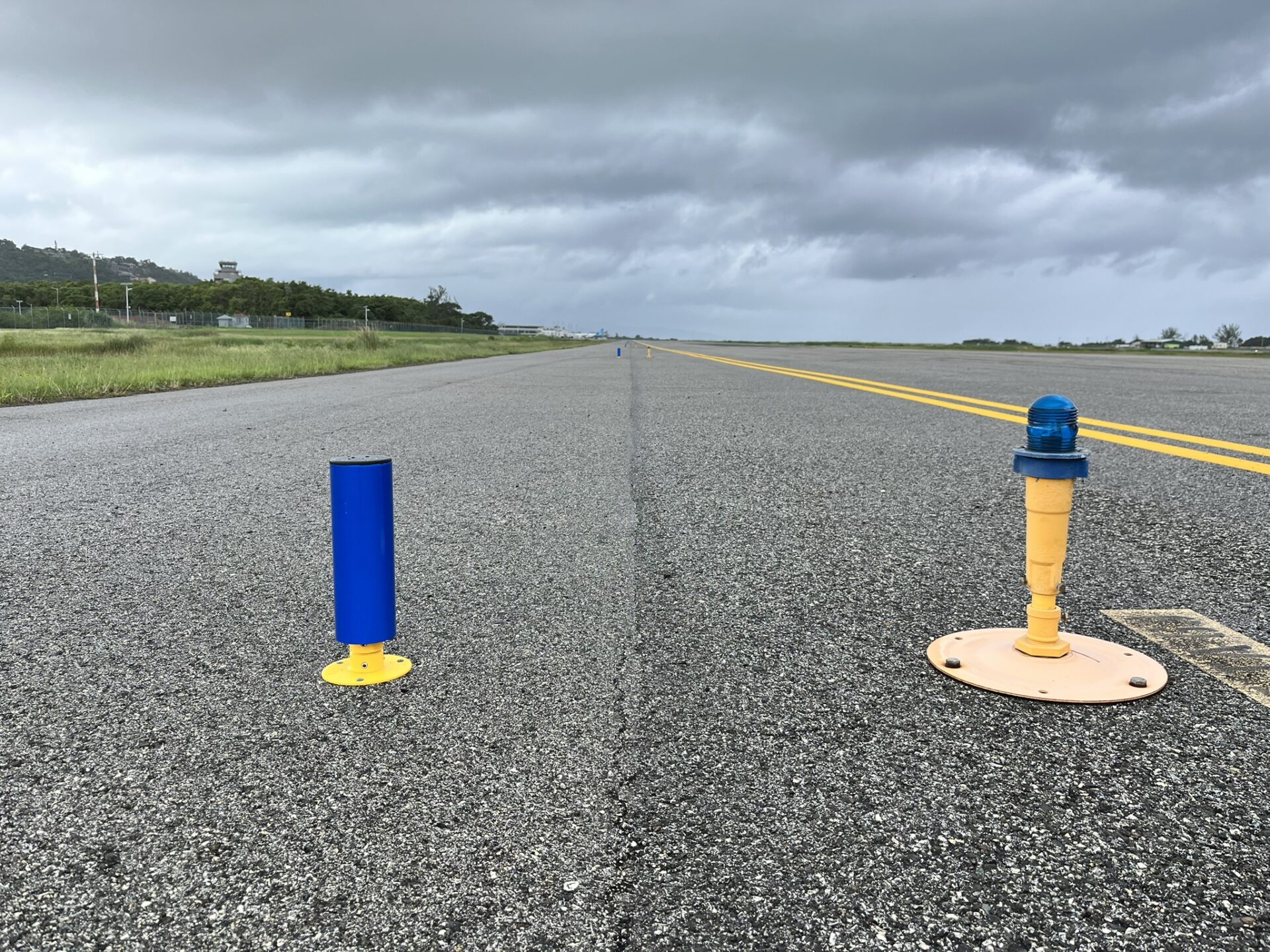
s4ga Backup Solar Airfield Lighting at sangster Airport – Photos



Easy Deployment by the In-House Team
One of the challenges faced by the Sangster International Airport team was managing installation alongside ongoing operations. Thanks to S4GA’s technicians providing clear guidance and the AGL system’s straightforward deployment, the in-house team successfully installed the lights without disrupting airport activities. Ultimately, the team handled the challenge exceptionally well, and the system is now fully operational.
Sangster International Airport selected S4GA for its backup solution and received a durable, eco-friendly, long-term system that remains operational even during grid outages.
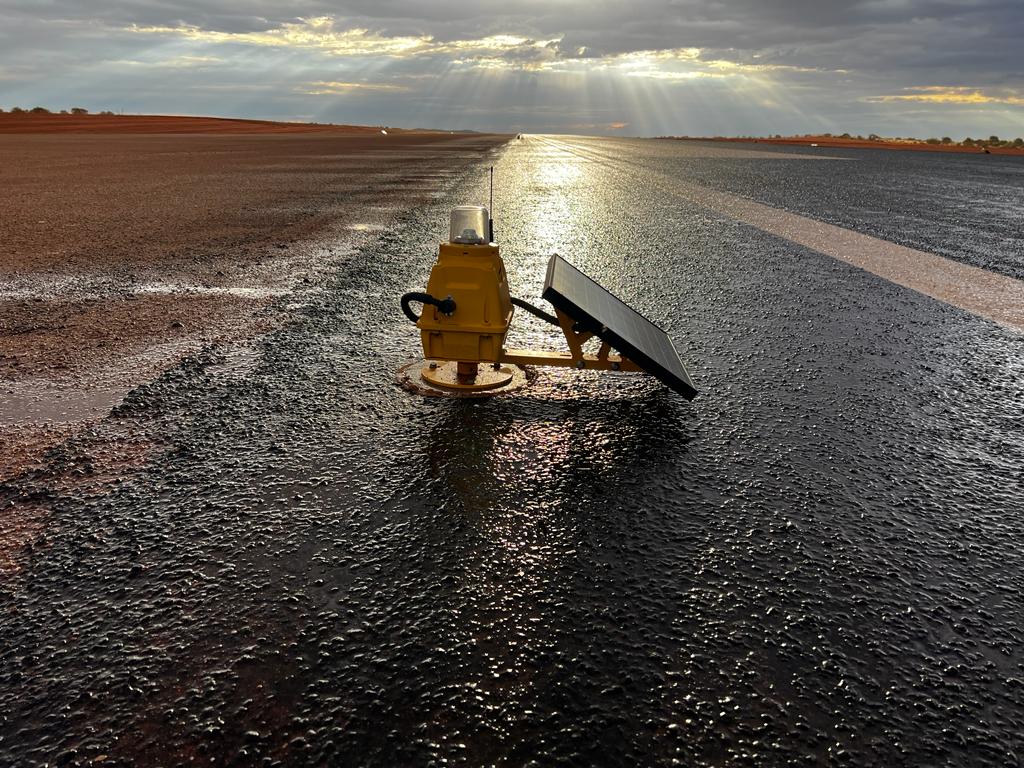
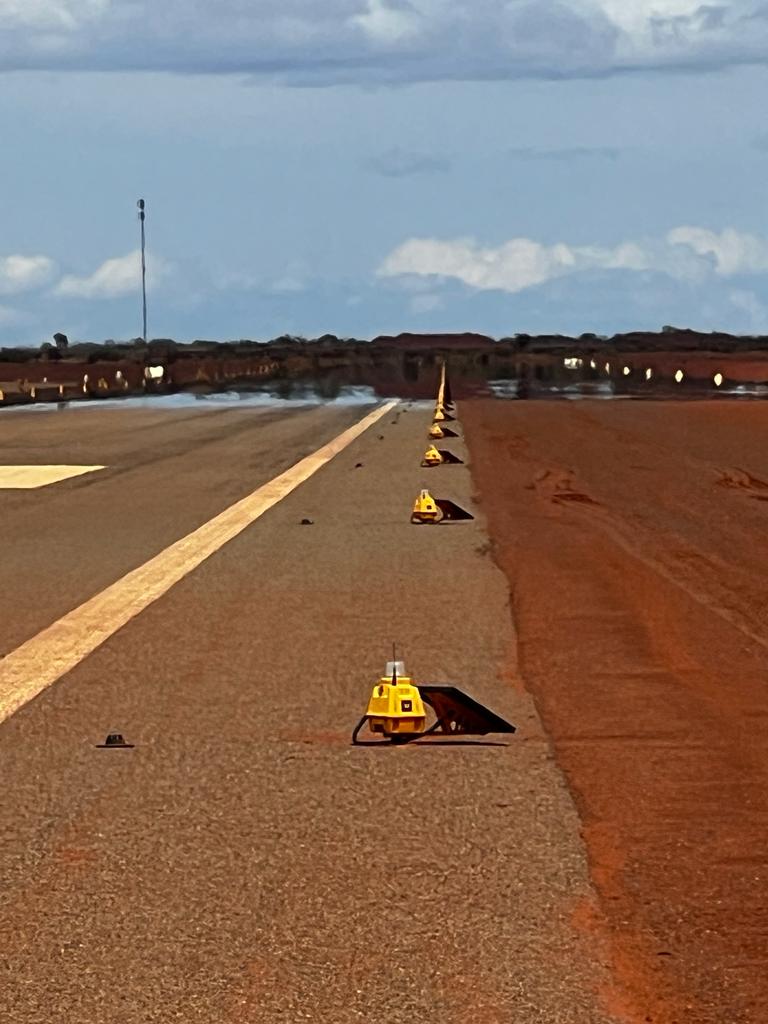
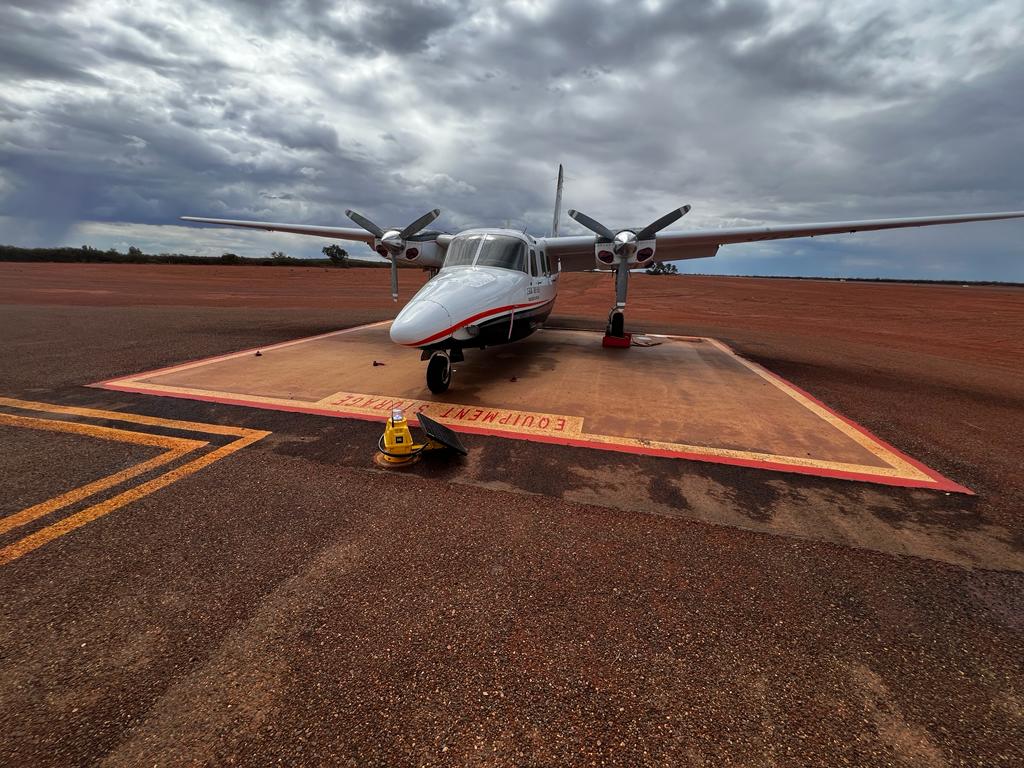
 In collaboration with our partner Aerodrome Management Services (AMS), S4GA has been selected to provide the West Musgrave airport with a Solar Airfield Lighting System. West Musgrave Airport, operated by BHP Group, serves one of Australia’s most remote mining sites. The nearest city, Kalgoorlie, is approximately 900 kilometers (560 miles) away. The airport faced the challenge of installing reliable airfield lighting to enhance safety and operations. Given the airport’s remote location and the difficulties associated with maintaining traditional cabled lighting systems, the Company sought an innovative solution.
Photos of Solar Airfield Lighting for West Musgrave
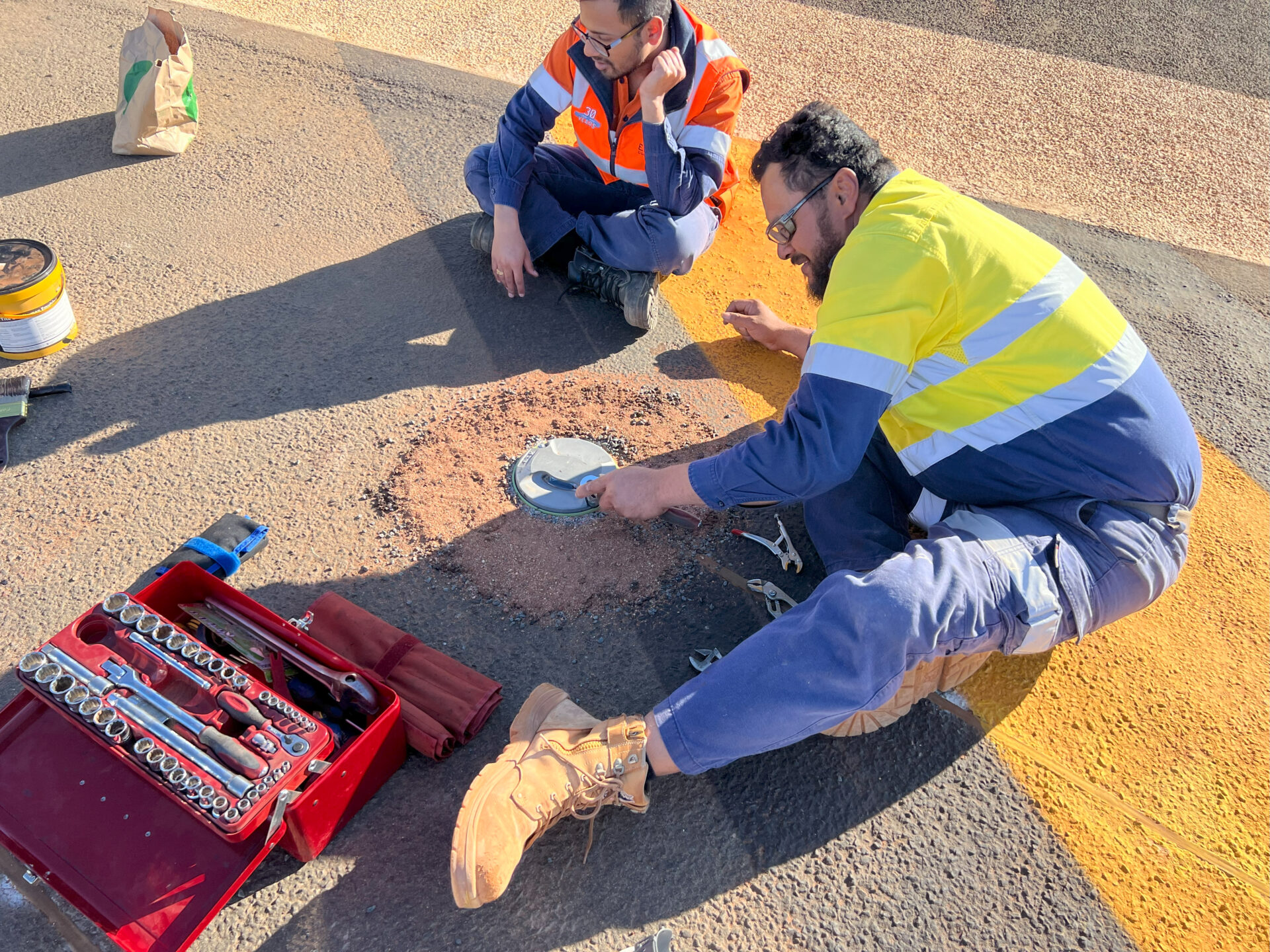
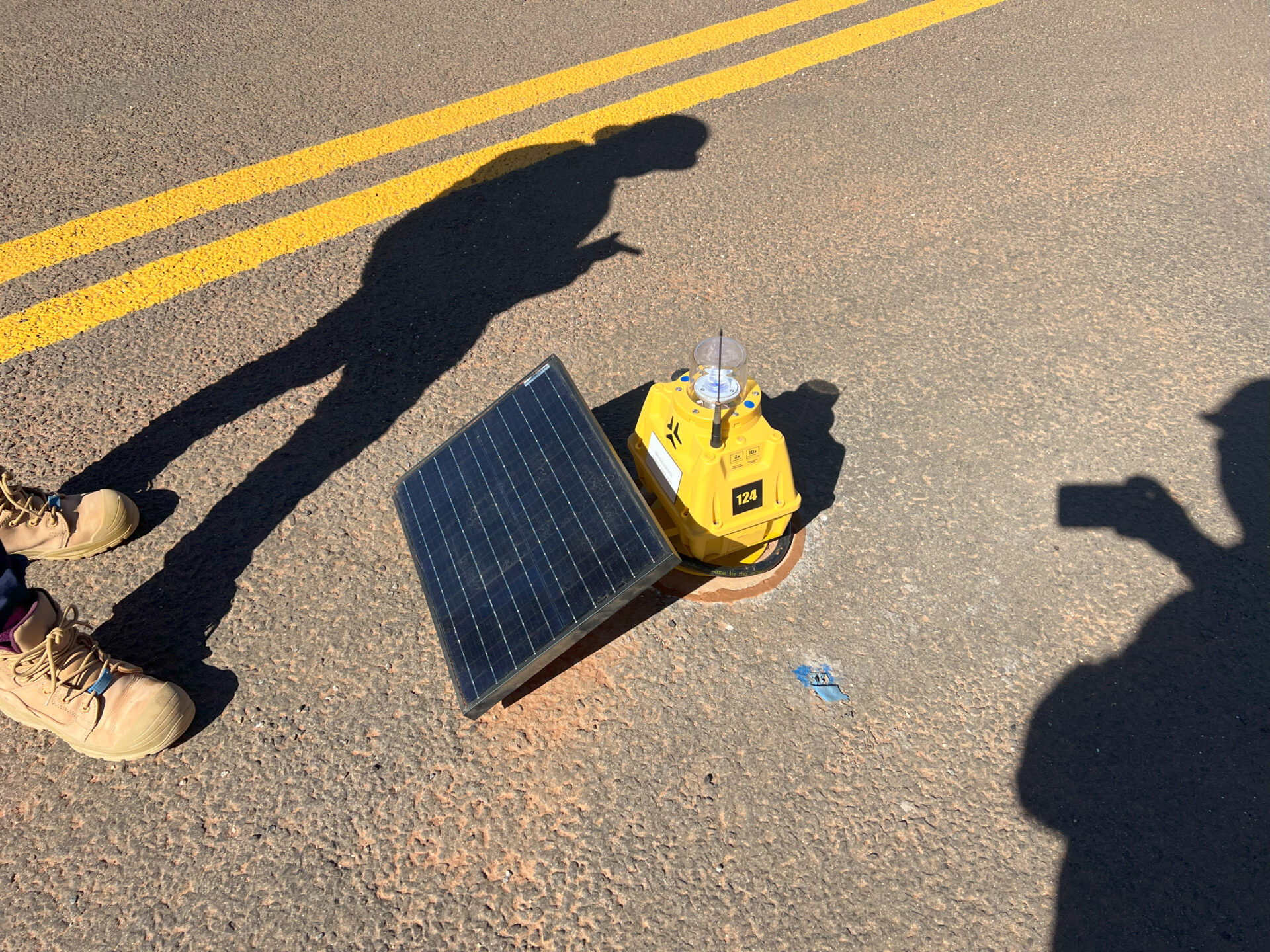
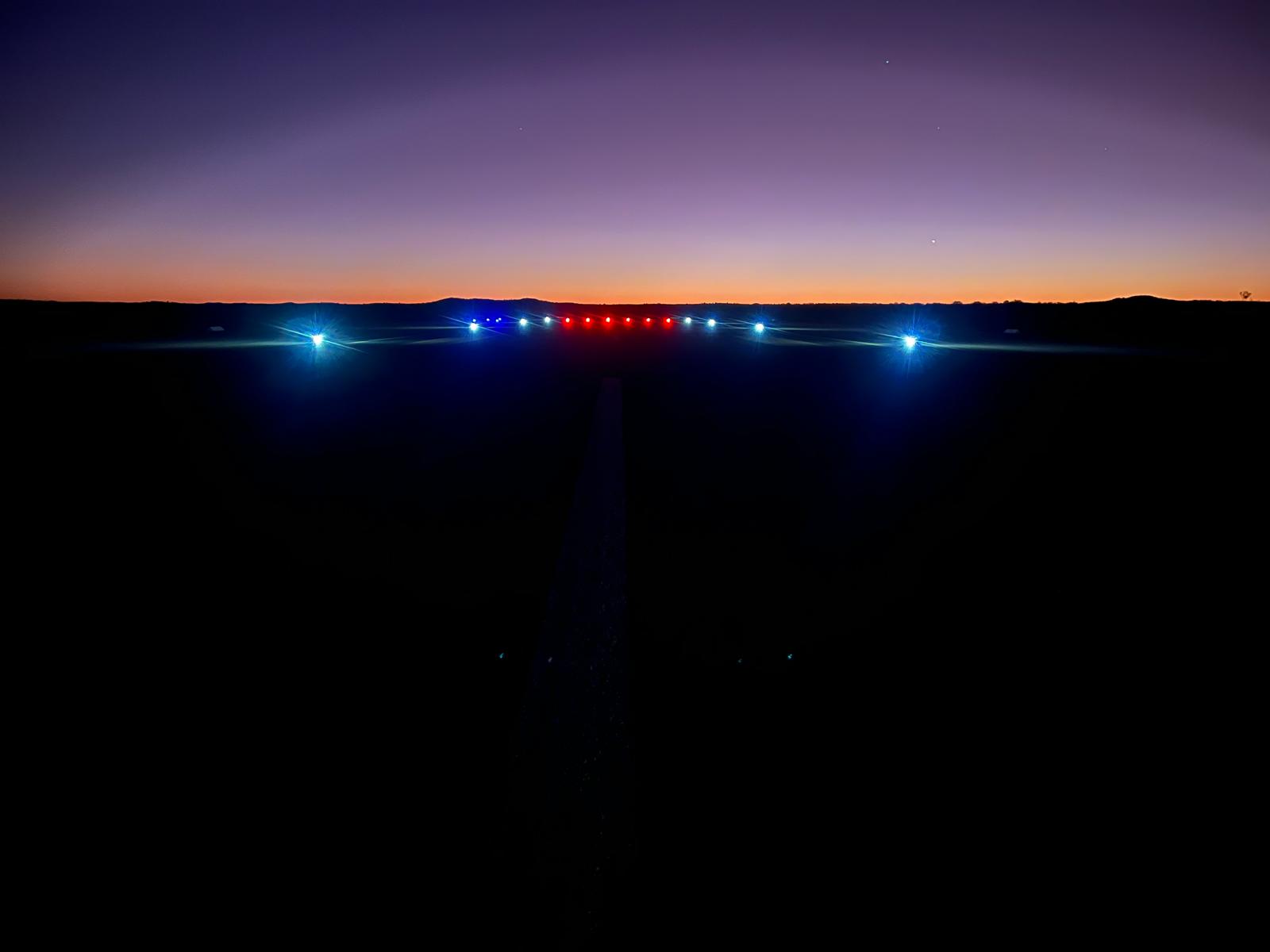
project overview
Extreme Temperatures and Weather
The intense daytime heat, with average summer temperatures ranging from 30°C to 49°C (86°F to 120°F), combined with frequent sandstorms and thunderstorms, required an aerodrome lighting system that was both durable and low-maintenance.
Remote Location
The airport’s isolation meant that conventional wired systems were impractical due to the difficulties and high costs associated with installation, maintenance and repairs.
Given these challenges, a reliable, sustainable, and easy-to-install solution was imperative for the continued safe operation of West Musgrave Airport.
S4GA Solar Airfield Lighting – the best fit for the demanding conditions
S4GA’s Solar Aerodrome Lighting System has been found as the perfect fit for West Musgrave Airport, addressing the unique challenges of its remote and harsh environment.
It operates reliably 365-day a year using solar energy, reducing costs and eliminating grid dependency. The system is durable, can withstand extreme temperatures and harsh weather, and can be rapidly installed for fast restoration of airport operations. Additionally, it requires minimal maintenance and complies with Australian CASA regulations, as well as international aviation standards.
Powered by a 24 VDC system, S4GA’s solution aligns with Australia’s preference for 24 VDC power due to its enhanced electrical safety. This low-voltage option is exceptionally safe to handle, minimizing the risk of injury in case of mishandling.
By choosing S4GA, West Musgrave Airport not only enhanced its operational safety but also demonstrated the effectiveness of solar-powered solutions in the most demanding conditions.
Request a quote
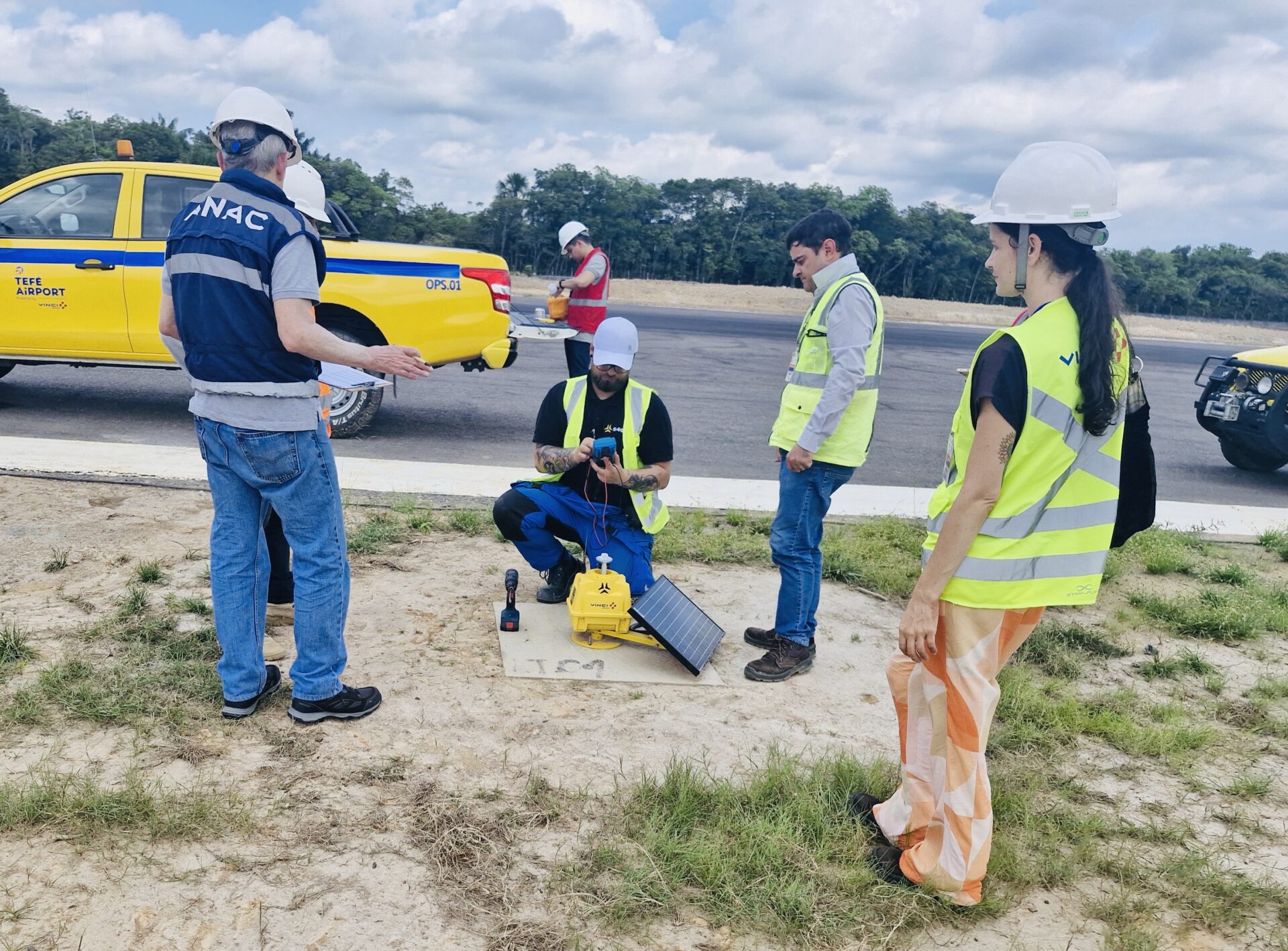
In 2024, Tefé Airport, an important regional airport in Brazil, made a significant move toward sustainability by installing S4GA’s Solar Airfield Ground Lighting (AGL) system. This project, spearheaded by VINCI Airports, aligns with their ongoing efforts to reduce carbon emissions and enhance operational efficiency while cutting long-term costs.
VINCI Energies handled the installation, ensuring the project was completed smoothly and on schedule.
Why S4GA’s Solution Was Chosen for Tefé Airport?
- Environmental Impact: The solar-powered lighting system significantly reduces the airport’s carbon footprint, aligning with VINCI Airports’ sustainability objectives.
- Cost Efficiency: Harnessing solar energy translates to lower operational costs and long-term savings.
- Advanced Technology: S4GA’s ALCMS (Airfield Lighting Control and Monitoring System) ensures precise control and monitoring of the airfield lighting, improving overall efficiency.
- Regulatory Approval: After a successful pilot program and testing at Manaus Airport, Agência Nacional de Aviação Civil (ANAC, Brazil) approved the system for Tefé Airport, with ongoing inspections during its first year of operation.
- Easy Installation: Managed by VINCI Energies, the installation was completed efficiently, minimizing disruptions to airport operations.
APPROVED BY BRAZILIAN ANAC
 One of the key hurdles in this project was gaining regulatory approval from ANAC, Brazil’s national civil aviation authority, which had not previously endorsed solar-powered lighting for commercial airports.
To overcome this, S4GA and VINCI Airports ran a successful pilot program at Manaus Airport. The positive results led ANAC to approve a one-year trial at Tefé Airport, which has already passed its initial inspections.
SOLAR AIRFIELD LIGHTING AT Tefé Airport – Photos
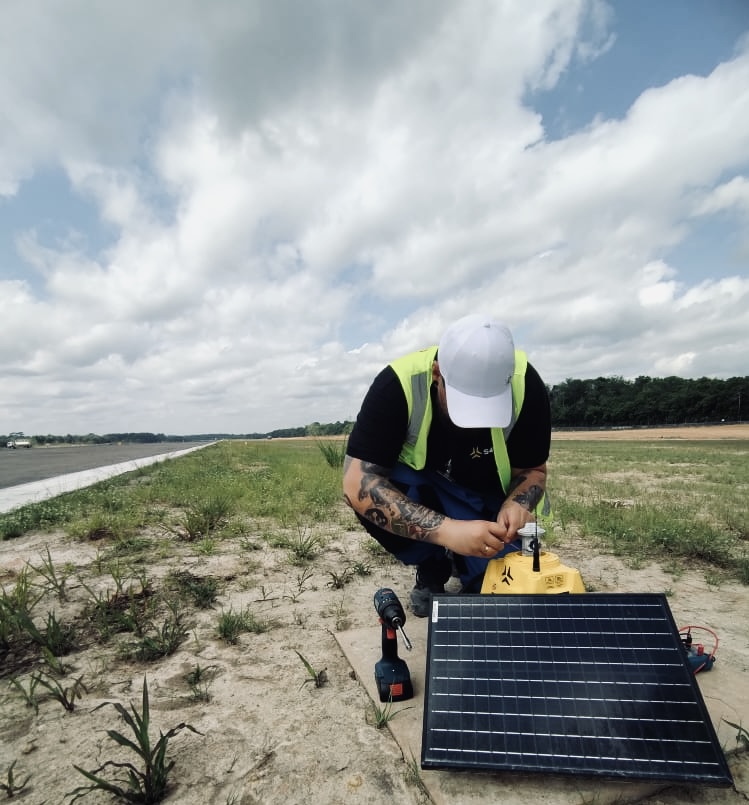
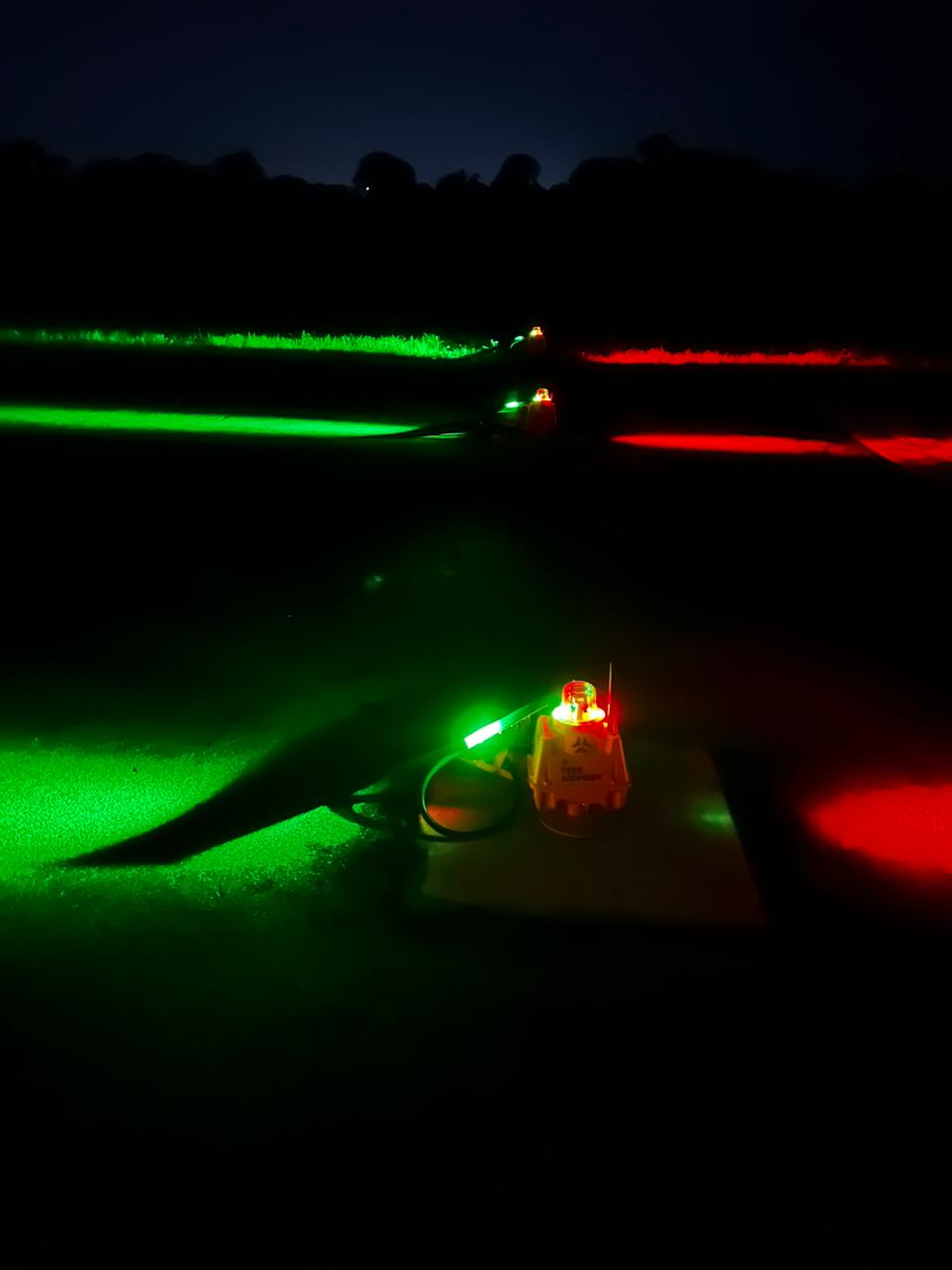
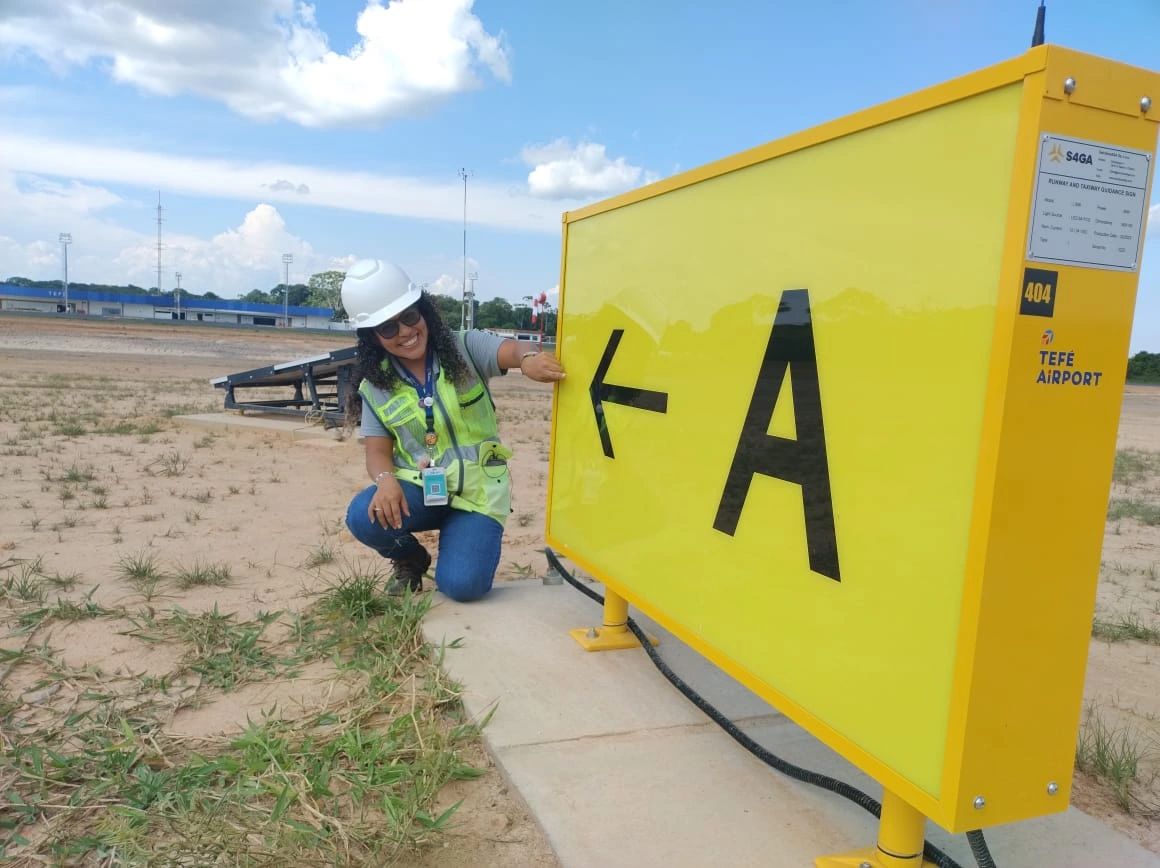
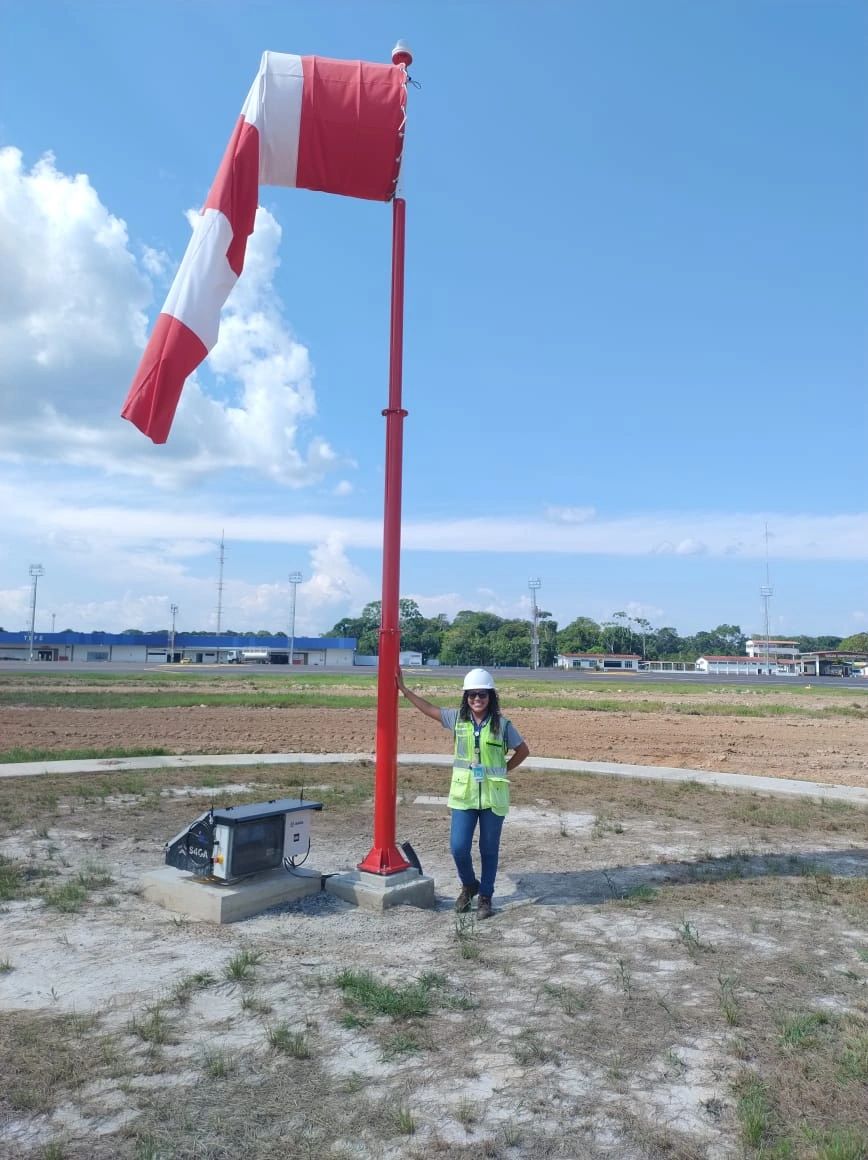
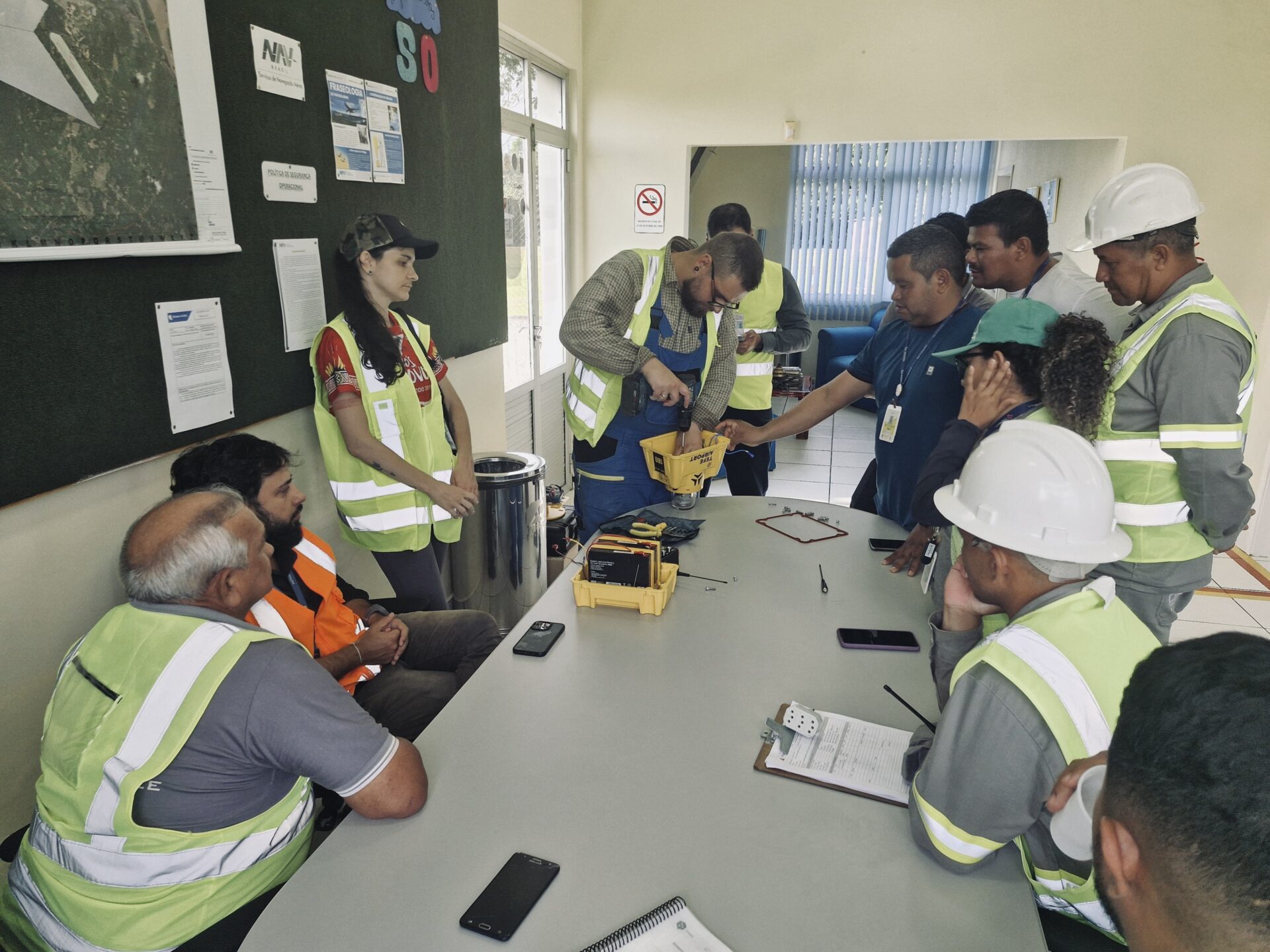
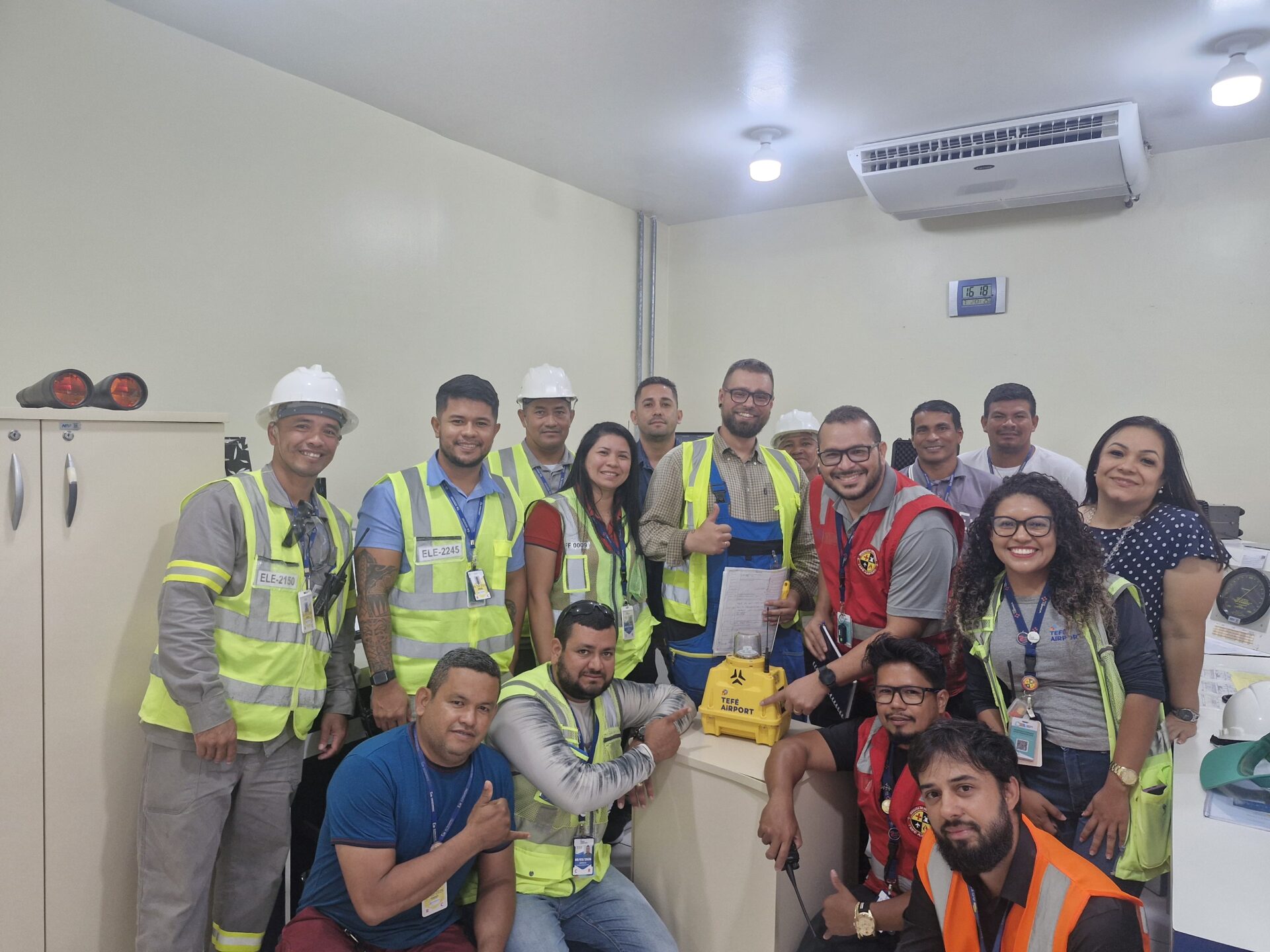
This installation showcases how S4GA’s Solar AGL system meets the highest safety and regulatory standards while supporting the airport’s sustainability goals. It also demonstrates the growing potential of solar-powered lighting solutions for regional airports in Brazil and beyond.
Get a quote Fortescue is a green technology, energy and metals company, that operates three mining hubs in the Pilbara, Western Australia. As part of the Company’s commitment to decarbonising its Australian iron ore operations by 2030, they have upgraded the mining airstrip at Fortescue Dave Forrest Airport with a sustainable solar-powered airfield lighting system. This initiative marks a significant step toward creating an environmentally responsible and energy-efficient operational environment.
Challenge: Transitioning to a Sustainable Solution
One of the key challenges the Company faced was replacing their outdated, wired airfield lighting system. The previous system not only incurred high operational costs but also posed safety risks and environmental concerns due to heavy reliance on diesel power.
Fortescue’s objectives were clear:
- Reducing power consumption and diesel usage to lower operational costs and environmental impact.
- Improving safety by removing electrical cables, thus minimising the risk of electrical hazards.
- Adopting a sustainable solution that aligns with their operational needs and decarbonization goals.
Video source: Linkedin Fortescue
Why Solar Airfield Lighting?
In line with the vision of a greener future, the Company sought an innovative, sustainable solution. Traditional lighting systems powered by diesel generators were contradicted their environmental objectives. Therefore, transitioning to solar-powered airfield lighting was a natural choice.
S4GA Solar Airfield Lighting Systems are designed to operate independently from the electrical grid, powered entirely by renewable energy. This eliminates the need for high-voltage cables and significantly reduces power consumption. Such systems offer reliability, cost-efficiency, and contribute to reducing carbon emissions – a perfect fit for sustainability targets.
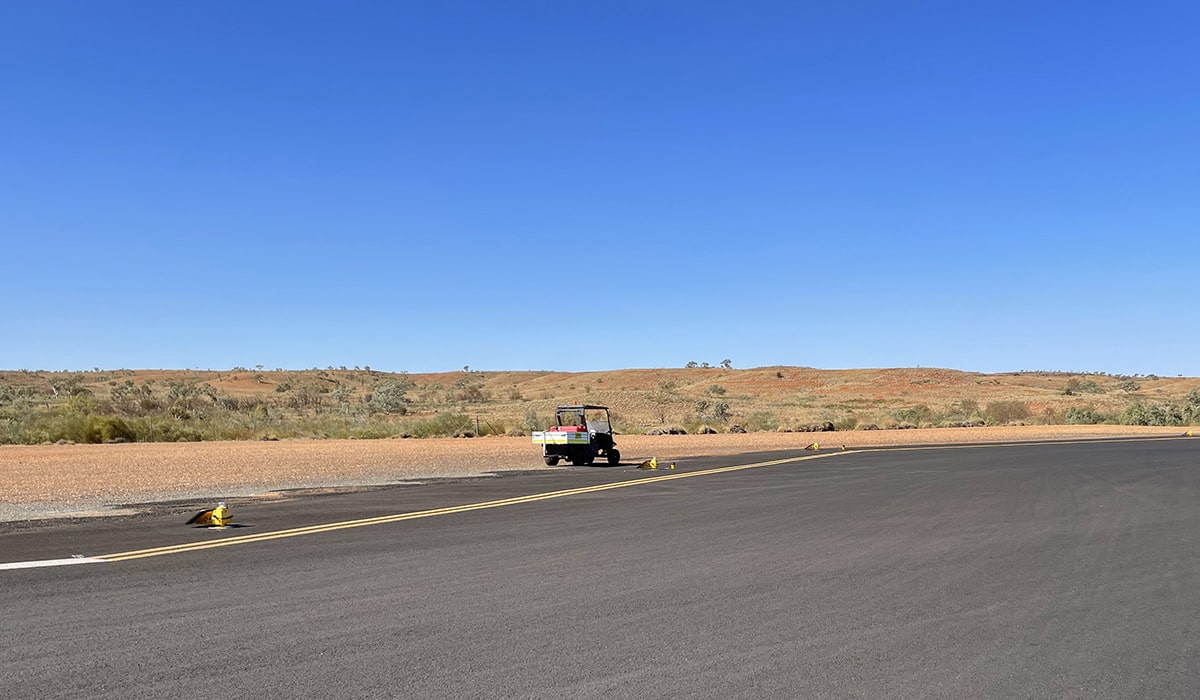
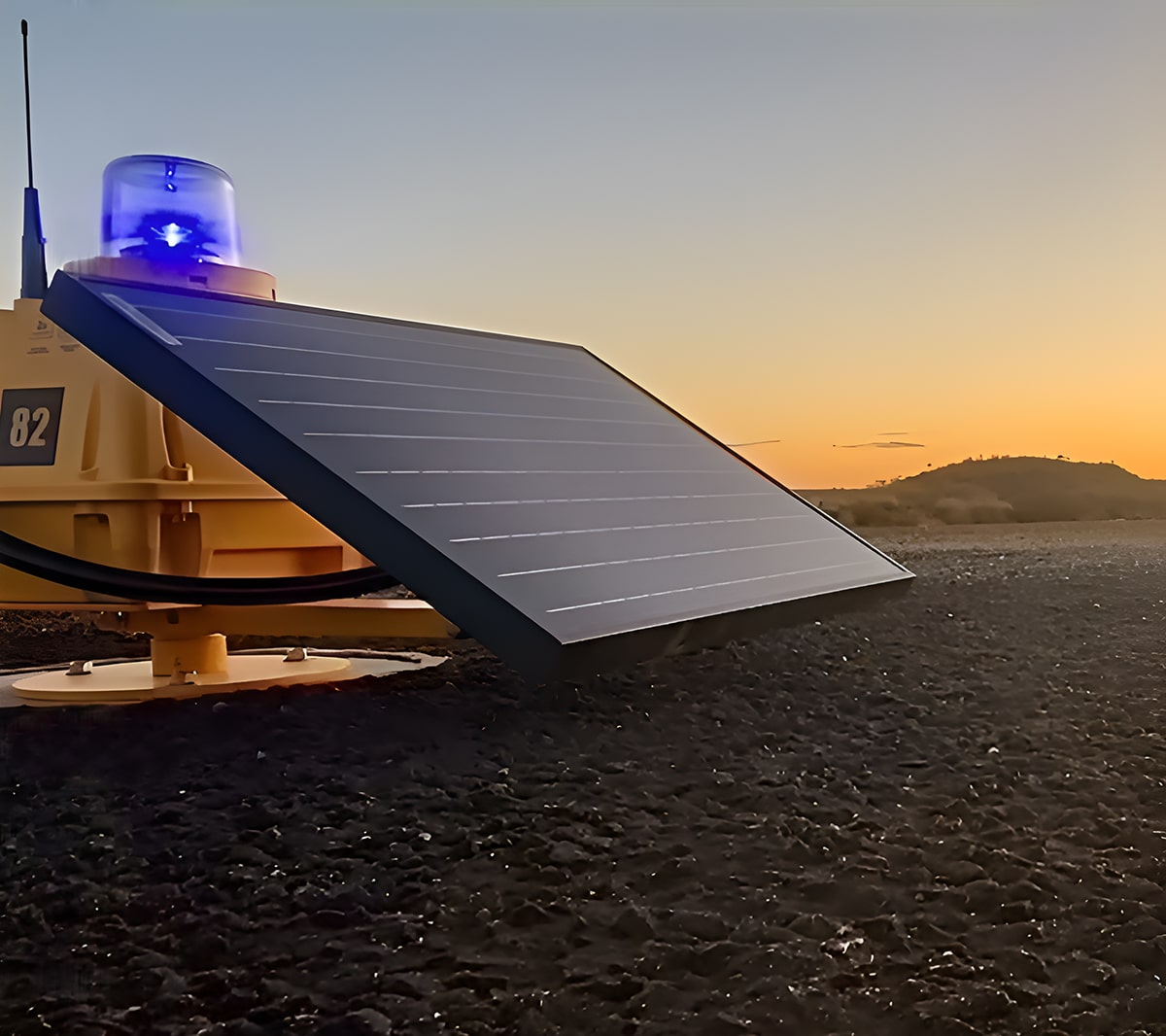
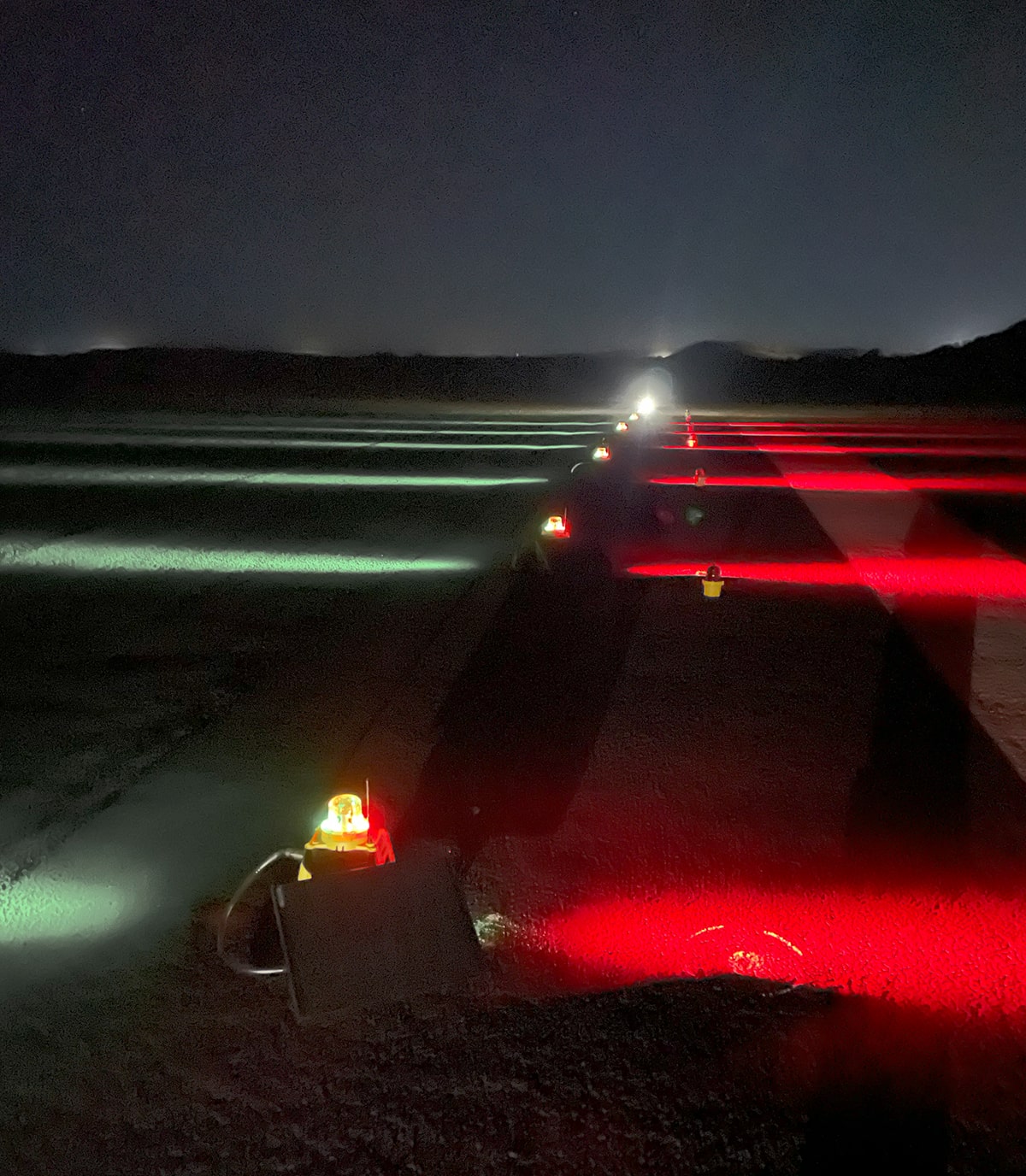
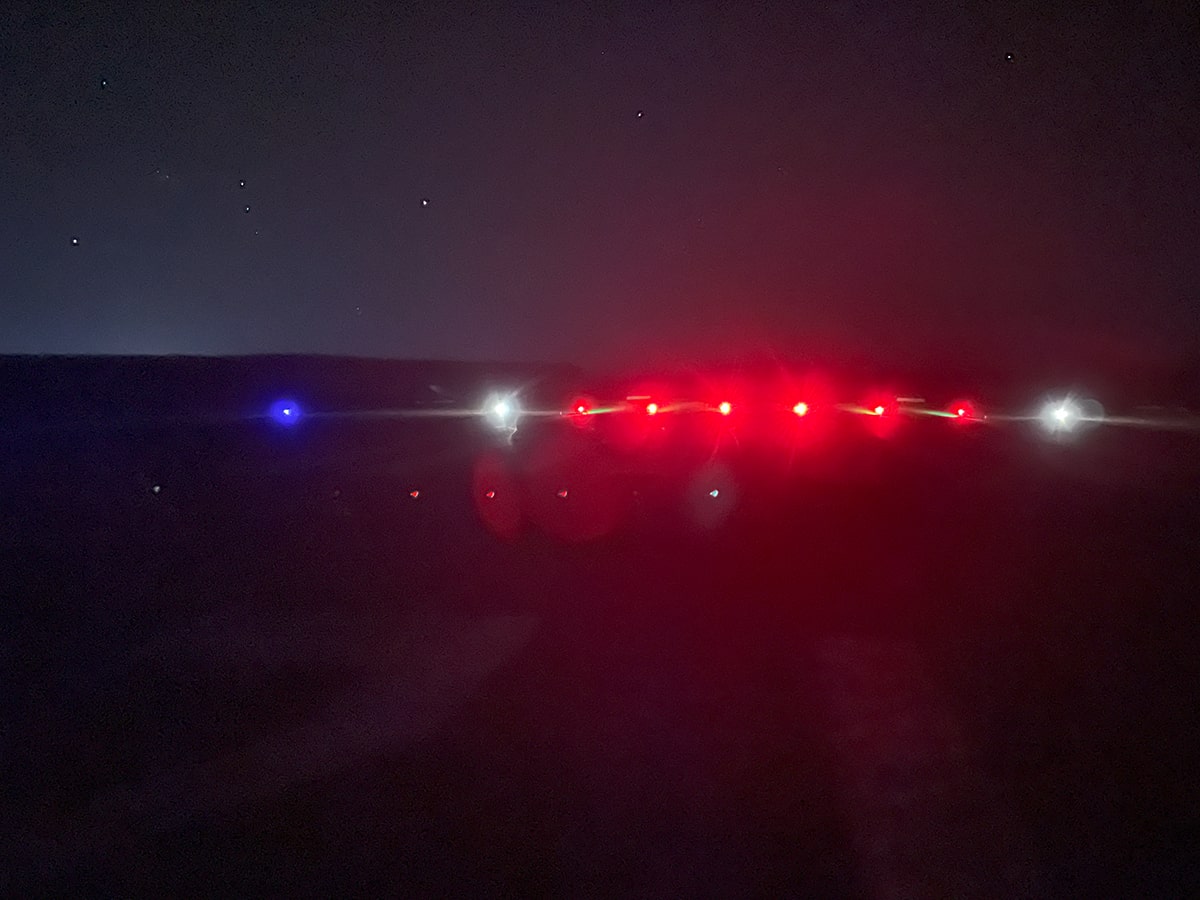
SOLAR AIRFIELD LIGHTING AT Fortescue Dave Forrest Airport – Photos
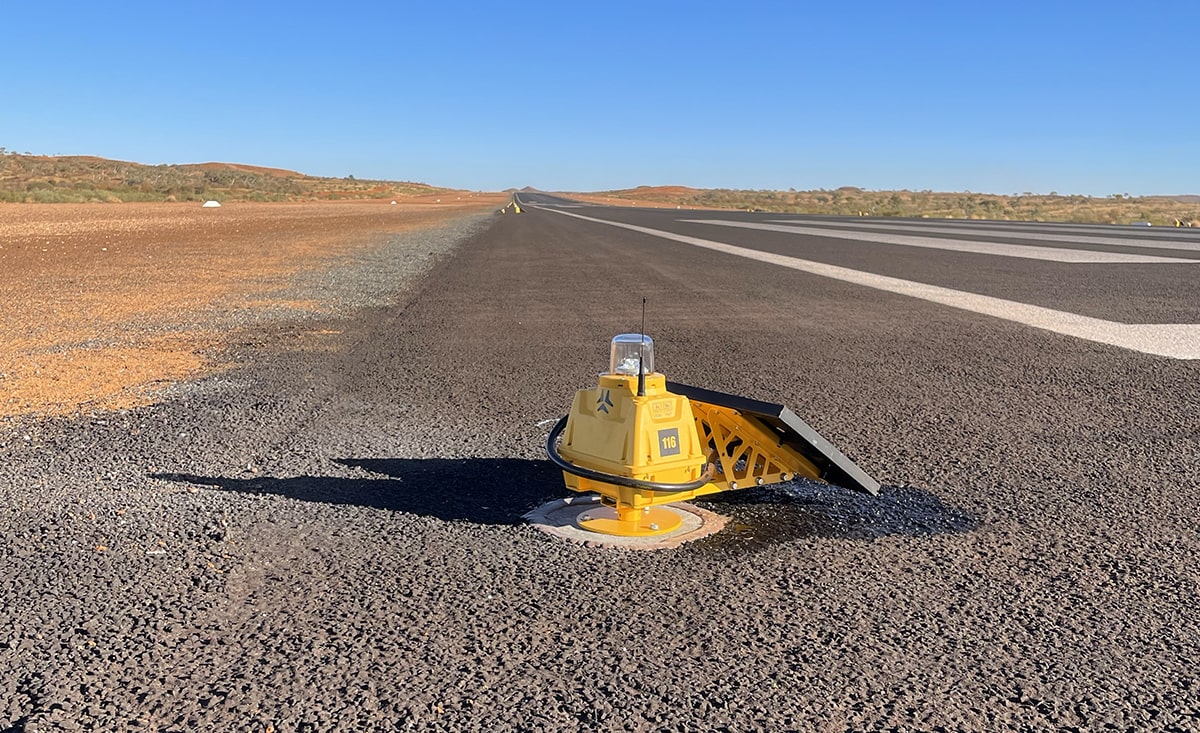
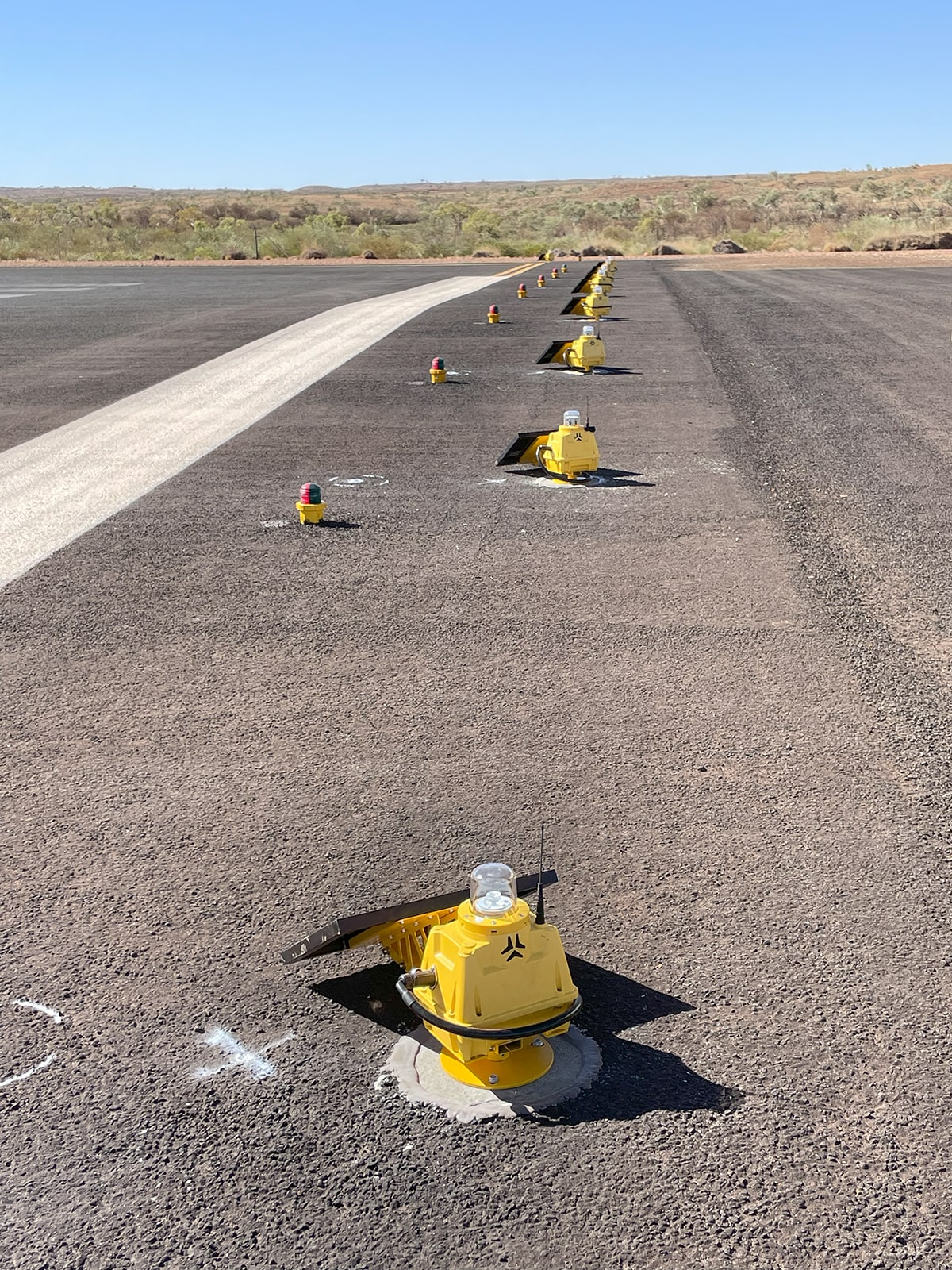
The S4GA Solution: Advanced Solar Airfield Lighting
S4GA, a global provider of solar airfield lighting solutions, delivered a fully customized system designed to meet Fortescue’s unique operational requirements. In partnership with Aerodrome Management Services (AMS), the system was supplied, installed, and commissioned to ensure a seamless transition from the outdated diesel-powered system to a fully solar solution.
Key Features of the Solution:
- Solar-Powered Lighting System: S4GA installed 120 solar-powered lights, including runway edge lights, taxiway lights, and threshold end lights. This conversion resulted in a 20% reduction in both power usage and diesel consumption, directly supporting Fortescue’s commitment to sustainability.
- Enhanced Safety: The solar system integrates solar panels with built-in battery storage, completely eliminating the need for dangerous high-voltage cables. This upgrade significantly reduces electrical hazards and enhances overall airfield safety, which is crucial for an active mining operation.
- Reliable, Independent Power: The solar-powered lights provide consistent, reliable illumination without the need for external power sources. This ensures uninterrupted airstrip operations, even in the remote Pilbara region, where power reliability can be a challenge.
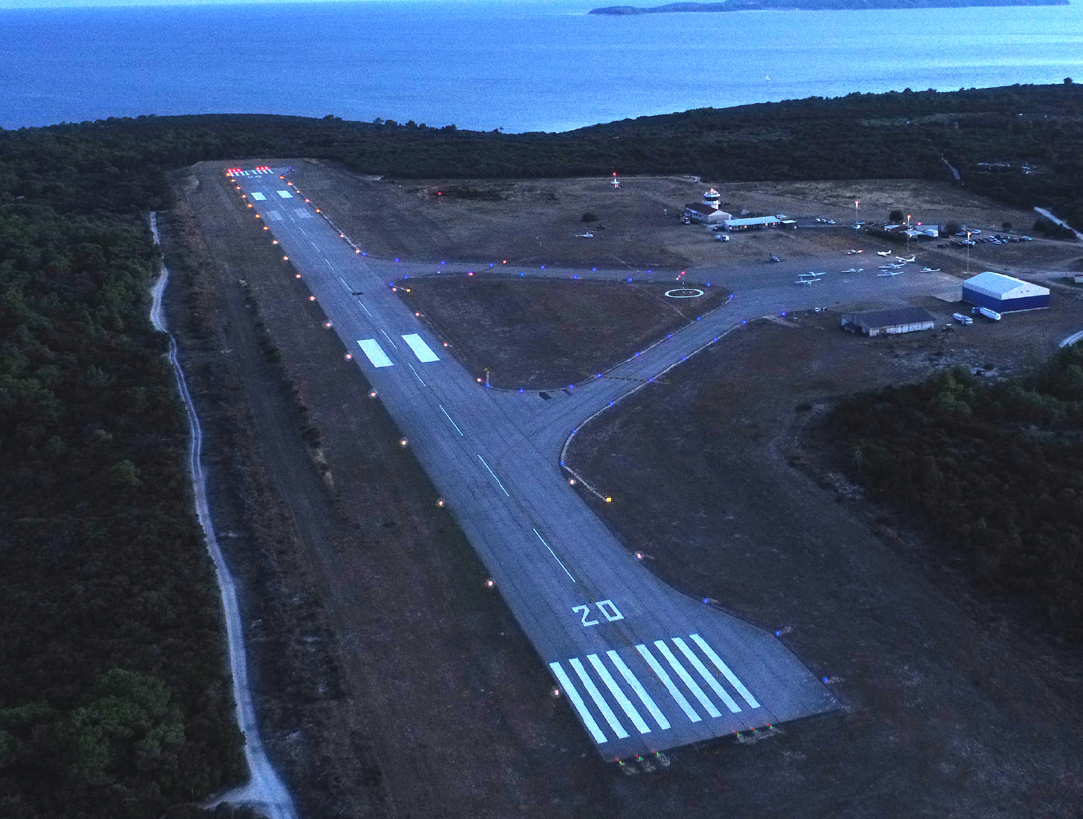
Airport Mali Lošinj, a private airport, located on the island of Lošinj in Croatia, primarily handles local and charter flights, especially during the tourist season. In 2023 the airport improved its operational capabilities by installing the S4GA Permanent Solar Runway Lighting System. The design, installation, and commissioning are done by Macula AERO, an aviation solutions company and S4GA partner in Croatia, to address specific operational needs of the airport, which serves as a gateway for tourists arriving from Zagreb.
Challenges of Limited Operations at Mali Lošinj Airport
The lack of a permanent lighting system restricted flight operations to daytime only. This constraint impacted the airport’s ability to provide flexible travel options for its passengers, who often prefer to travel at various times of the day. The absence of adequate lighting also posed potential safety concerns and limited the airport’s overall functionality.
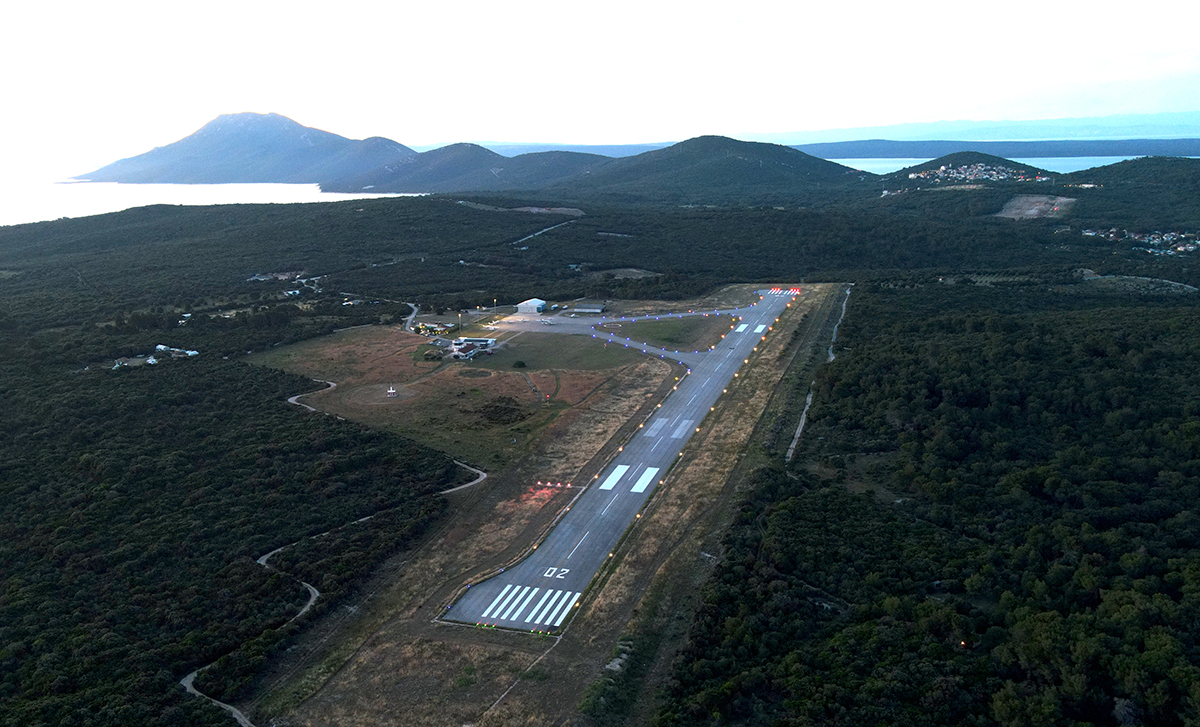
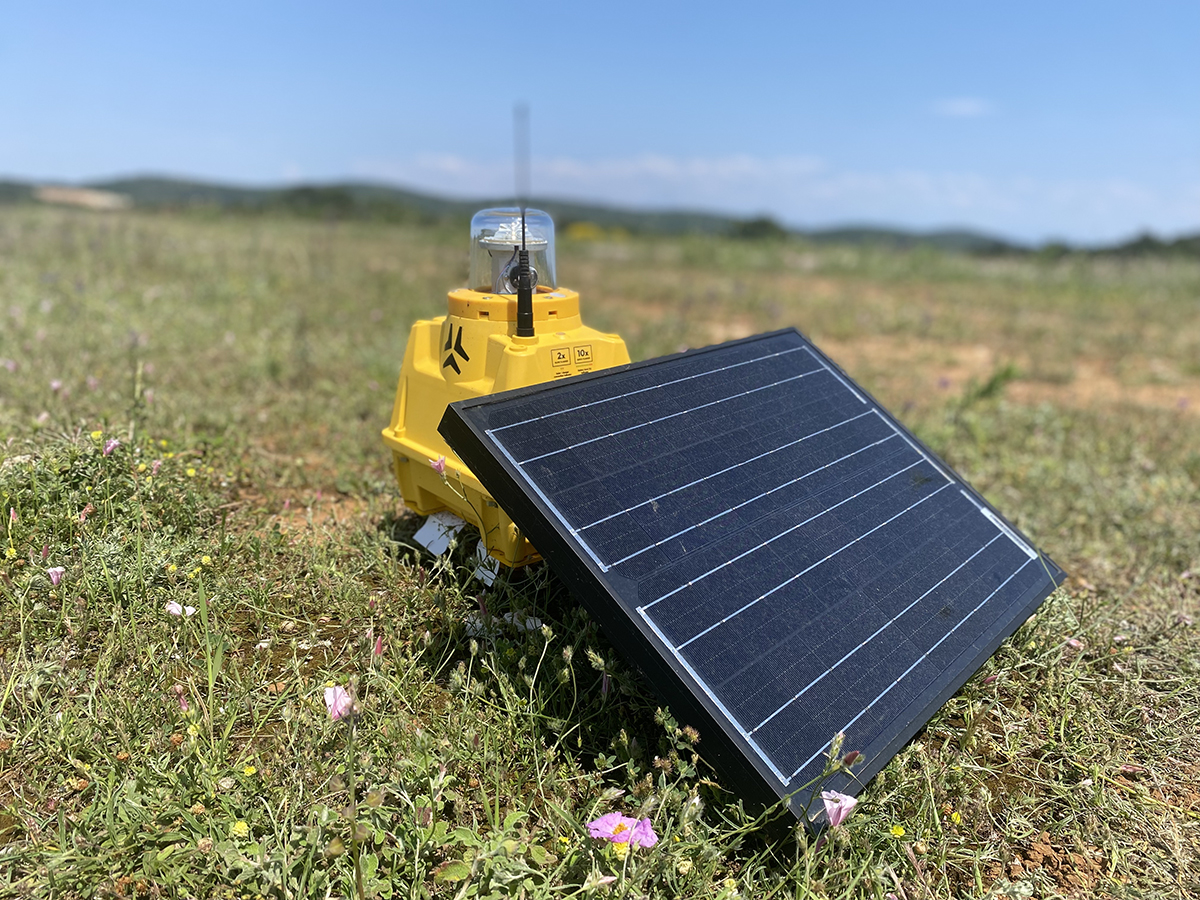
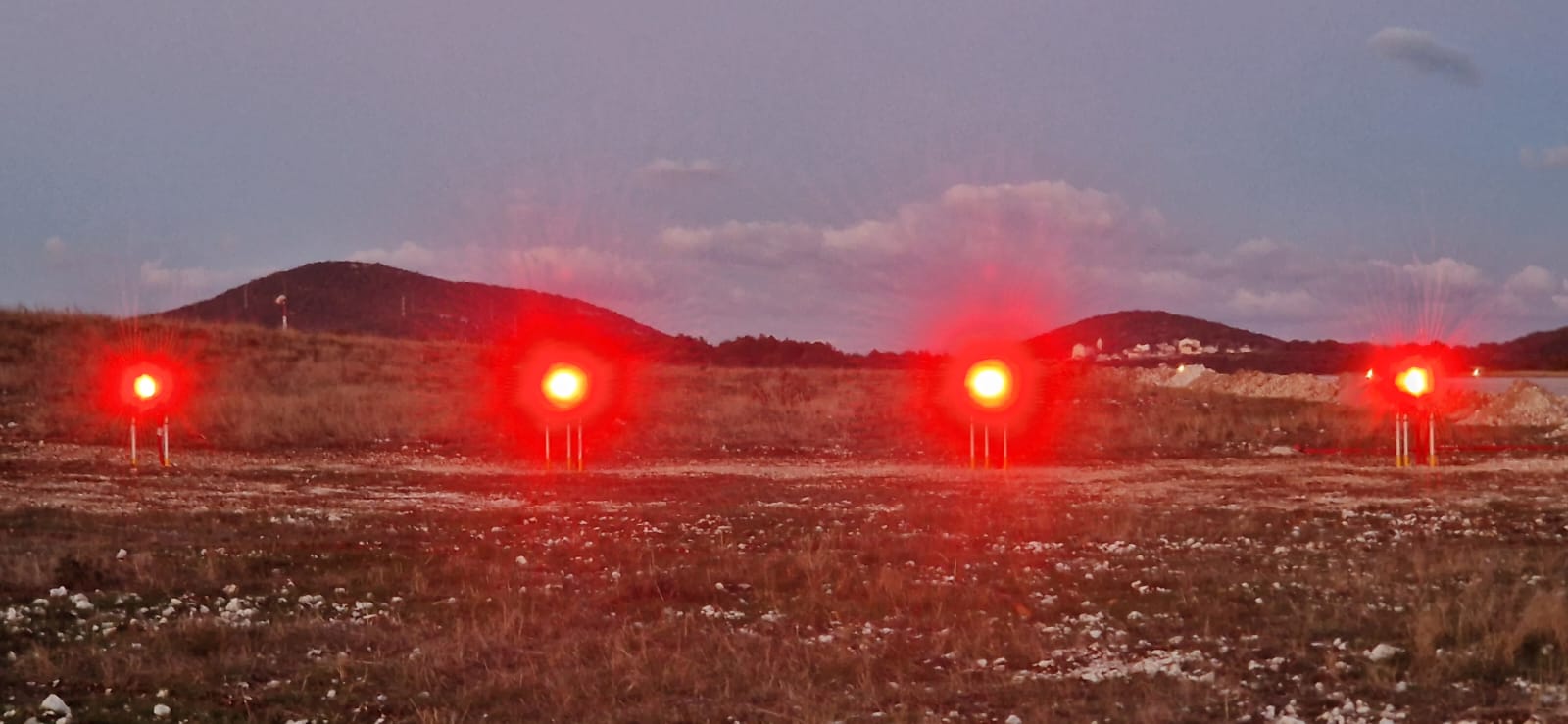
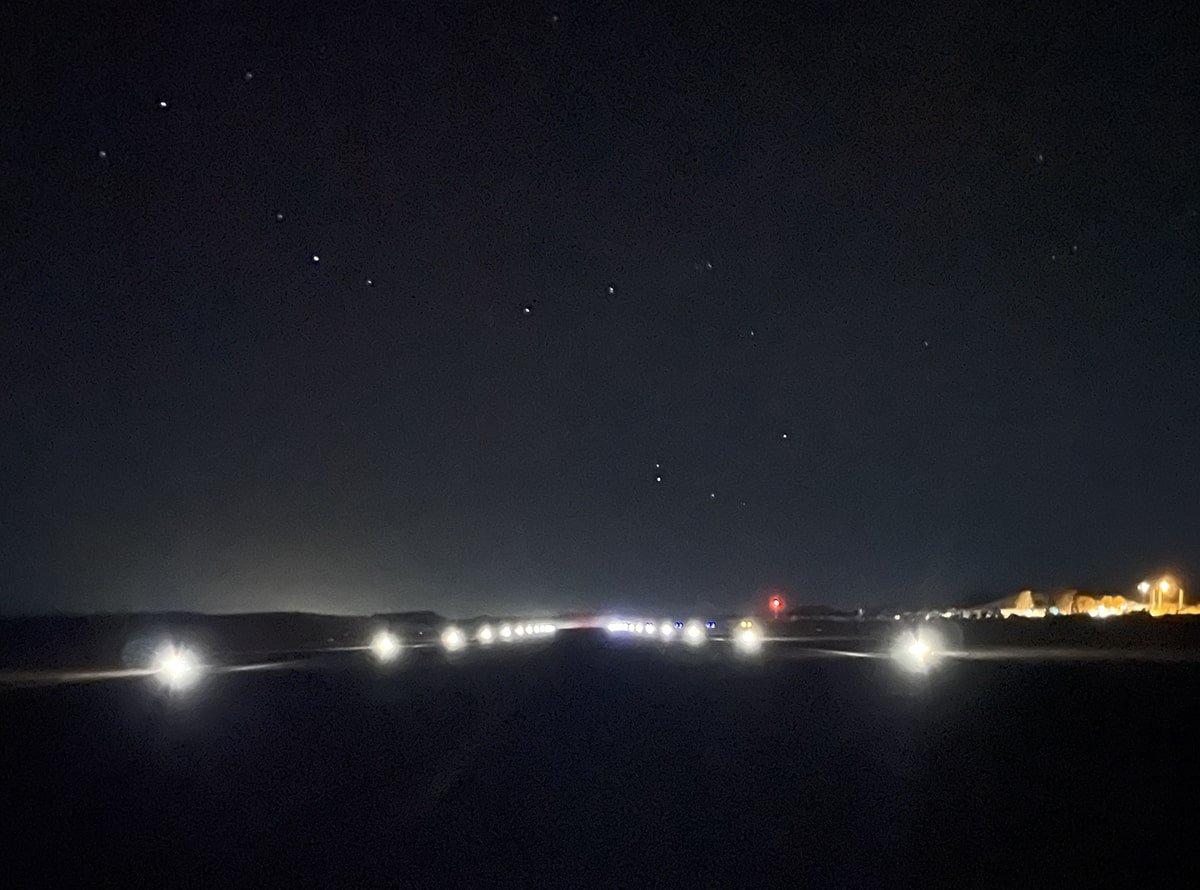
Turning the Lights On with S4GA Solar Runway Lighting
After careful consideration, the S4GA Solar Permanent Runway Lighting was confirmed as the optimal solution to overcome the airport’s challenges.
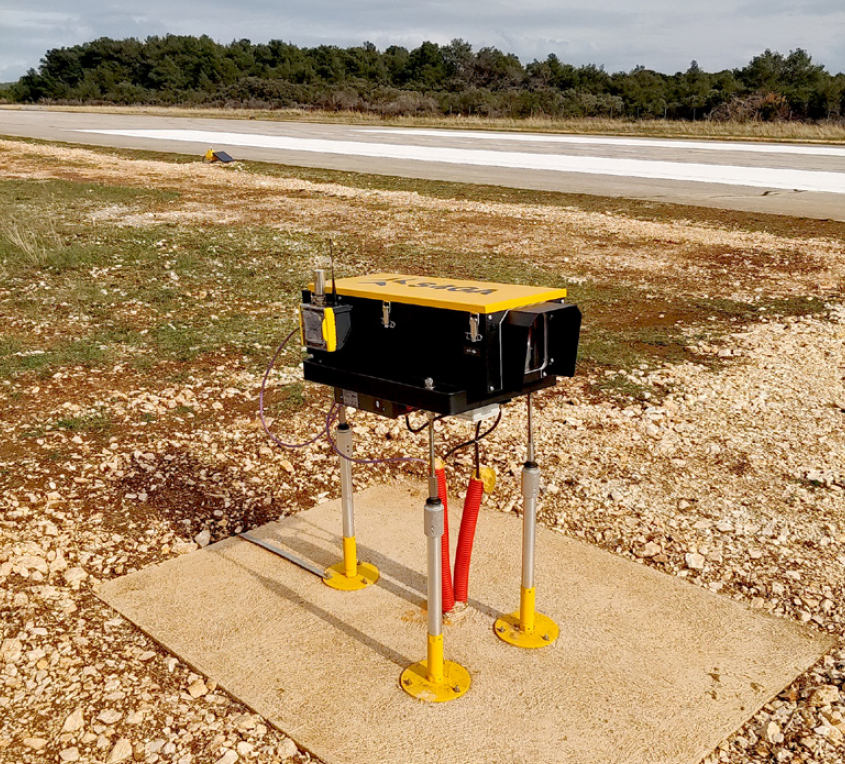
Before completing the full installation, the airport tested solar equipment under the S4GA Free Trial Program to assess the solar system’s performance in actual conditions. The successful trial convinced the airport’s administration of the system’s reliability and efficiency in providing consistent and strong lighting essential for safe airport operations.
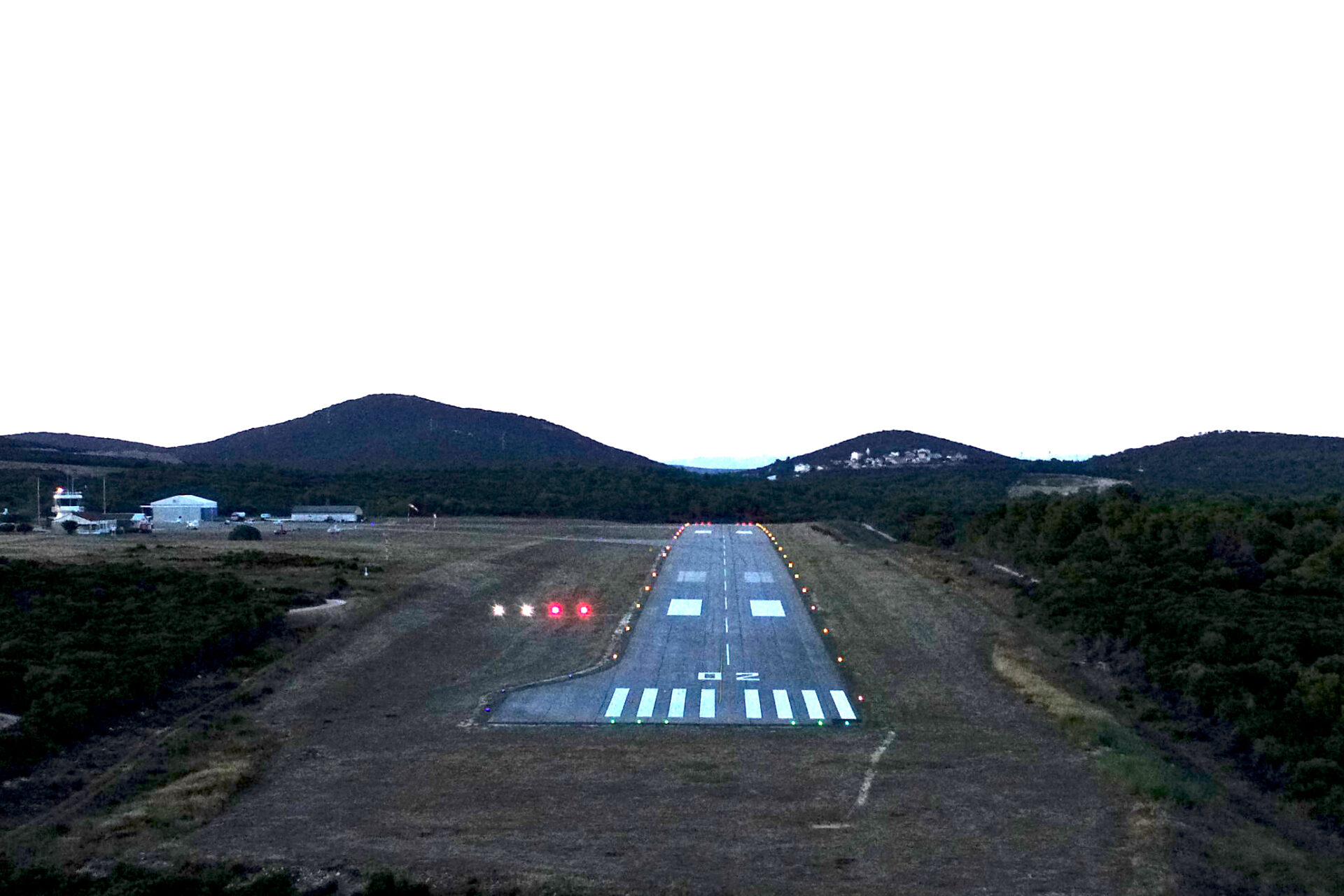
As a result, the airport decided to aquire the S4GA Solar Runway Lighting System. The new runway lights setup at Airport Mali Lošinj allows night-time operations for aviation enthusiasts and HEMS operation. Together, it gives operational flexibility and supports the island’s tourism industry.
OFFICIAL APPROVAL BY CROATIAN CAA
This installation marked the first solar-powered Airfield Lighting System approved by the Croatian Civil Aviation Authority, emphasizing its compliance with stringent aviation safety standards. Click here to download Croatian CAA Approval.
The S4GA Permanent Solar Runway Lighting System at Airport Mali Lošinj is an achievement, that improves operational capacity and establishes the airport as a leader in sustainable aviation technologies in Croatia. This project sets a standard for other regional airports, showcasing the benefits of innovative and eco-friendly solutions in airport infrastructure.
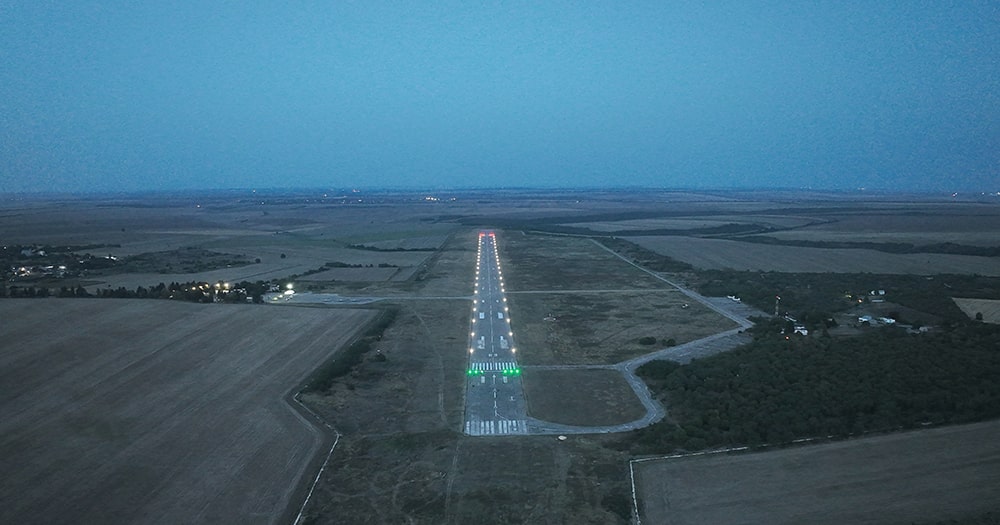
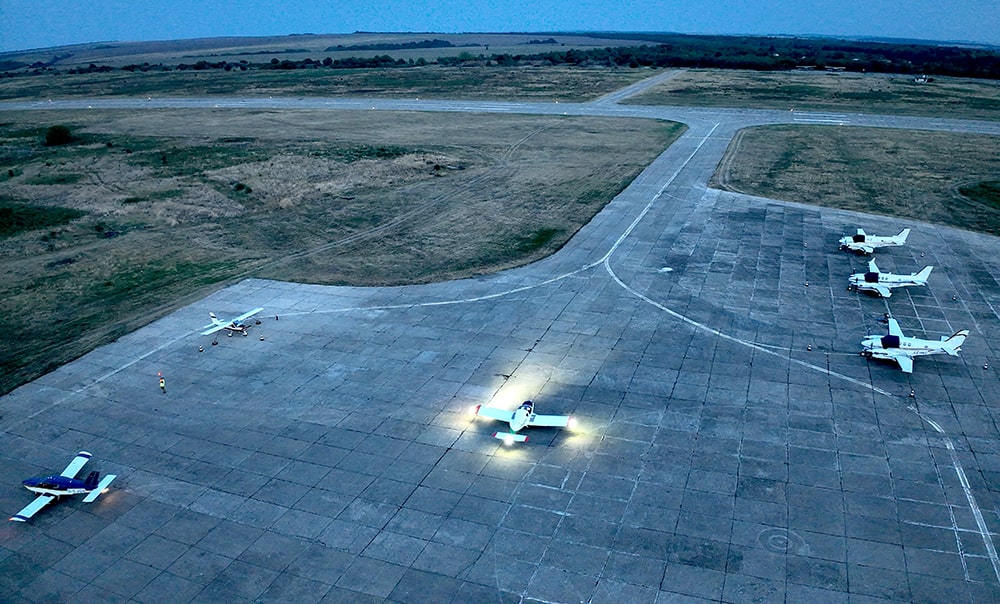
Get a quoteRuse Airport was originally built in 1967 for the Bulgarian Air Force. Later, was used for domestic flights. Now, it is undergoing a major transformation into a key regional aviation hub. As part of this redevelopment, a new airport ground lighting (AGL) system has been installed. The airport has chosen the S4GA Permanent Solar Airfield Lighting System for this upgrade, which also involved refurbishing the runway and modernizing navigational aids. All the work was completed seamlessly by Stroyproject and STRAPLAN.
Airfield Lighting Upgrade – Faced Challenges
The new runway lighting had to meet strict ICAO standards for Category 3C. This would ensure that Ruse Airport’s improved facilities are internationally compliant. As a result, the airport would be capable of handling increased air traffic volumes.
Additionally, there was an urgent need to commence night flights quickly, and the new airport lighting system had to be deployed within a few months from order to commissioning, with solar lighting being the only viable solution.
Furthermore, due to budget constraints, airport needed a cost-effective solution without compromising quality. The new runway lighting system also had to be easy for the existing technical team to install and maintain without requiring specialized contractors.
S4GA Solar Runway Lighting – the best solution for regional airport
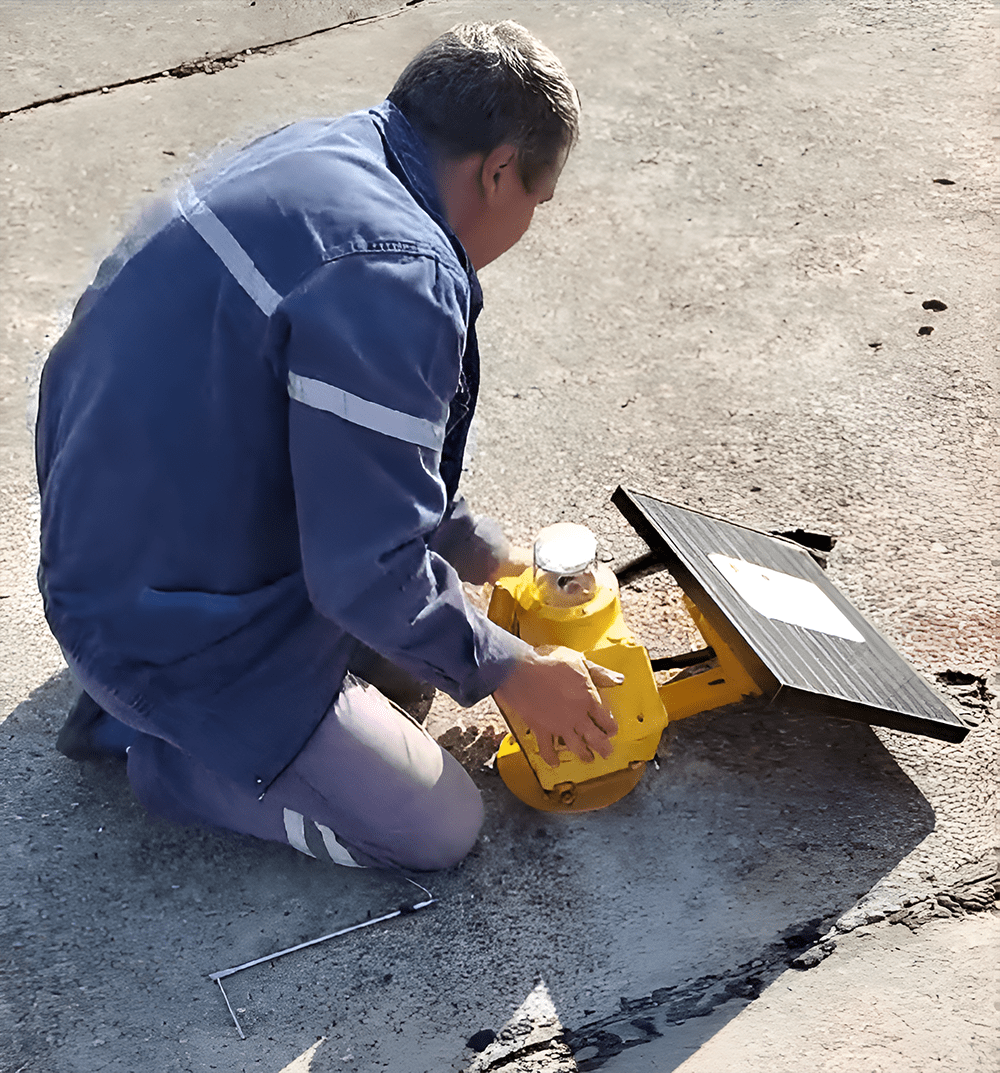
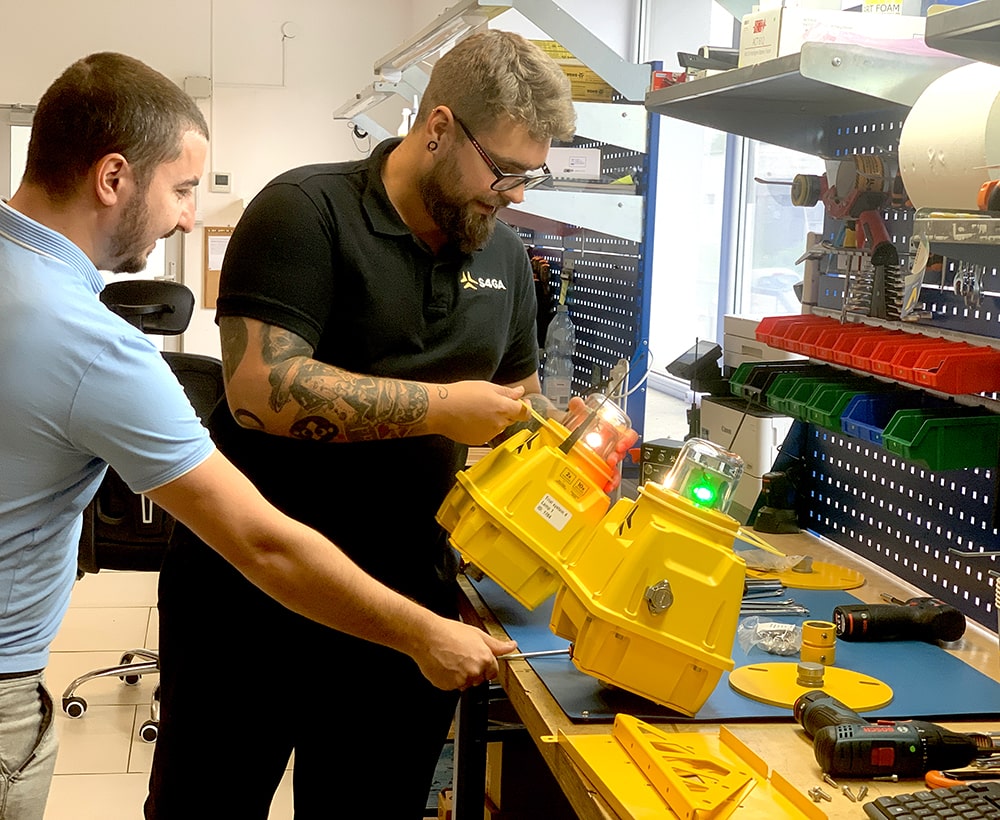
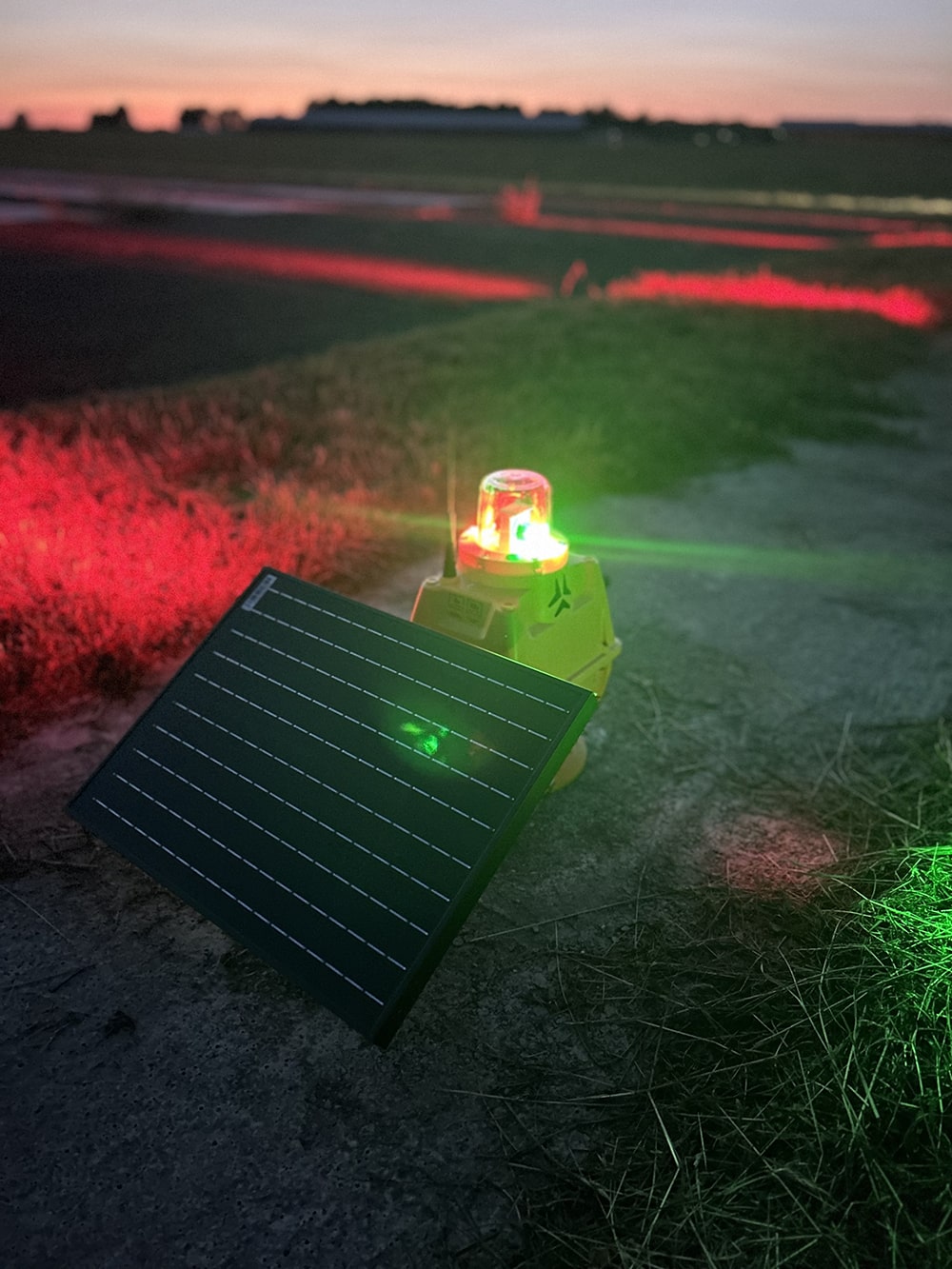
S4GA offered a Solar Airport Lighting System that perfectly met Ruse Airport’s needs:
- Cost-efficiency: The S4GA solar AGL system costs 35% less than wired lighting, making it a budget-friendly option for airports.
- Swift Installation: The system is designed for quick installation. This benefits the airport’s staff in meeting the urgent deadline for starting night operations.
- Sustainability: The use of solar energy offered an eco-friendly alternative, cutting operational costs and supporting sustainable practices.
- Reliability and Compliance: The S4GA runway lighting system meets the requirements of ICAO, FAA, EASA, and CASA. It is certified by accredited laboratories.

“The S4GA Permanent Solar AGL System is really straightforward to install. We didn’t need any specialized contractors, so it fit perfectly with our team and saved us money.
The maintenance is also simple and doesn’t cost much. The solar power means we don’t have to do a lot of upkeep, and it keeps running reliably. Overall, it’s been a great choice for updating our airport without breaking the bank.“– m.sc.eng. Nedko Todorov, Project Manager at STRAPLAN
The successful installation of S4GA Solar Airport Lighting at Ruse Airport demonstrates a new solution for small regional airports with budget restrictions and a shortage of technical staff. It’s a sustainable and cost-effective alternative to traditional wired lighting, with lower initial investment and minimal operational costs.
Get a quote