


Construction workers removing old pavement. Image source: Shan Nelwan via Pinterest
Runway rehabilitation is a major airport infrastructure project. It can take months, require significant investment, and temporarily change how the airport operates.
It can become a challenge when the airport needs to keep running while the work is underway. Flights still need to be handled, and the airport may need an alternative runway configuration while the main runway is closed.
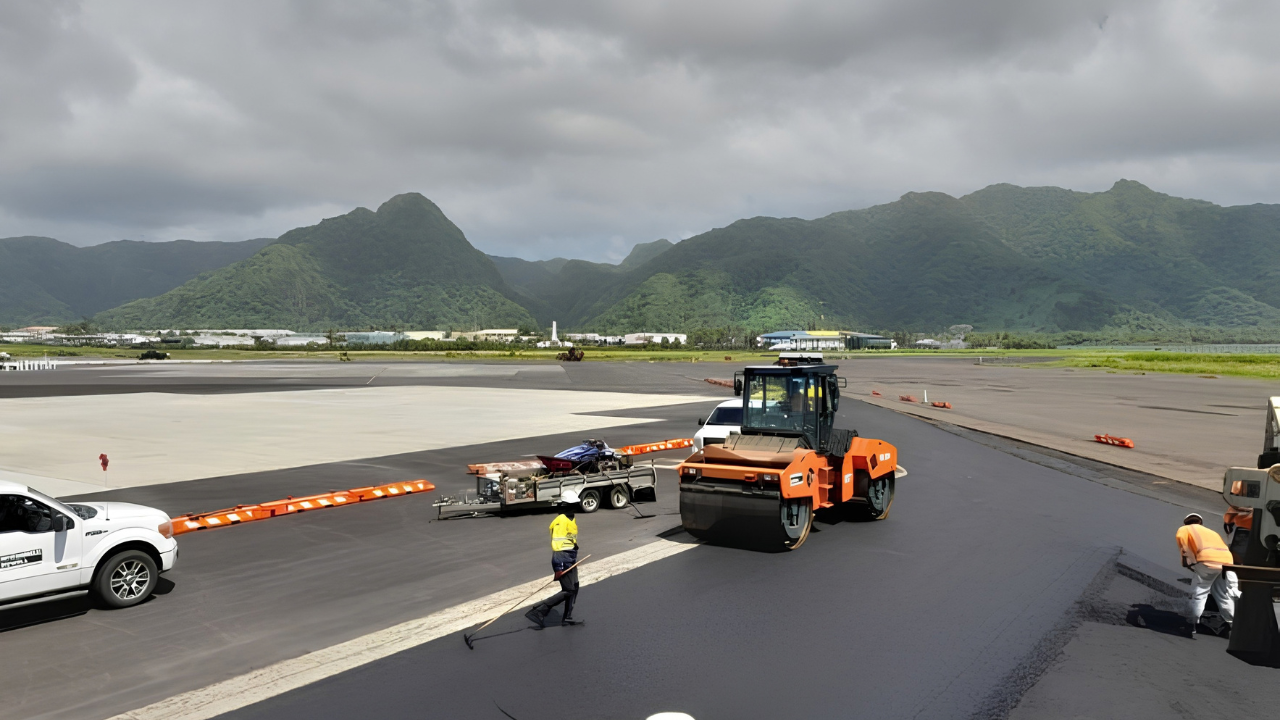
Fresh pavement at Pago Pago International Airport, American Samoa. Image source: The Asphalt Pro
Closing the main runway can put immediate pressure on airport operations.
If the backup is not ready, the airport may have to reduce the number of flights it can handle, adjust schedules, or redirect some operations elsewhere. That can quickly translate into lost airport revenue, airline disruption, passenger costs, and wider economic losses.
For example, the rehabilitation project in Bellingham International Airport, Washington, United States, is estimated to result in a $385,000 revenue loss to the airport in just 30 days. For a major airport, the financial impact of reduced capacity over several months can reach millions, depending on traffic levels and how much capacity is lost.
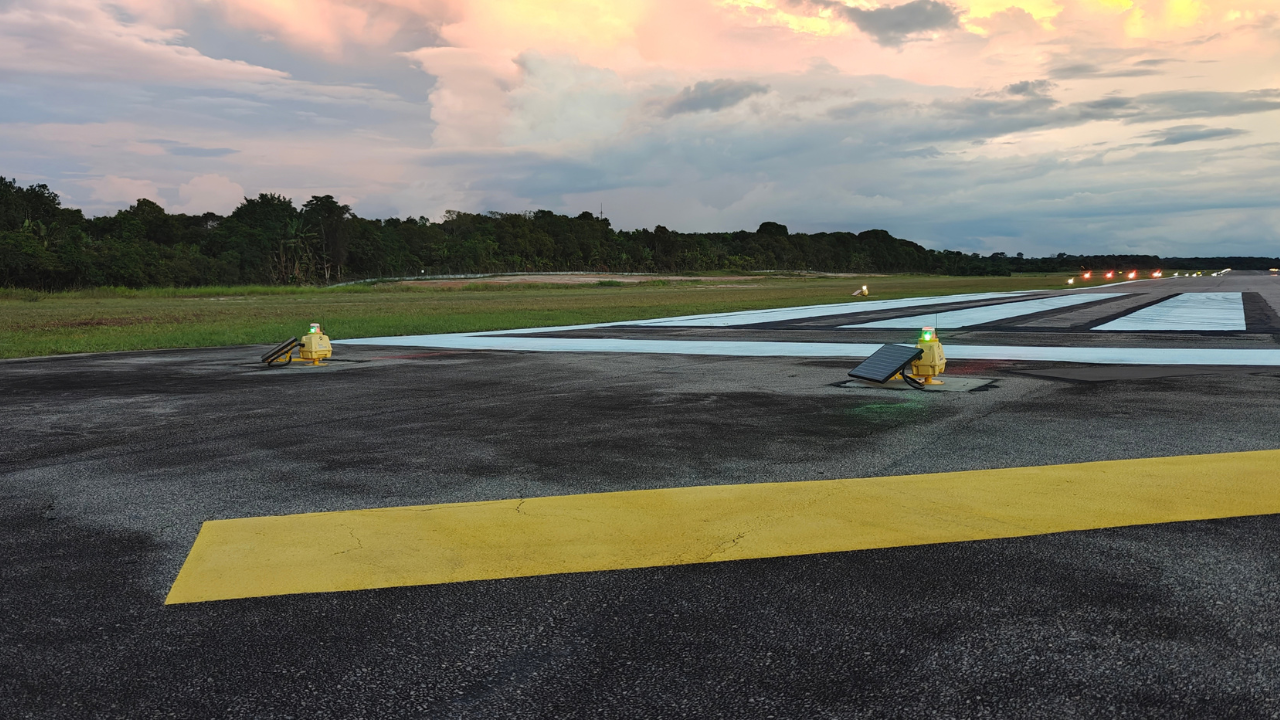
Tefé Airport, Brazil
Airfield lighting is one of the practical considerations during an alternative runway configuration. Depending on the airport layout, operations may be moved to the second runway, the main runway may be shortened, or a parallel taxiway may be temporarily adapted for runway use.
The temporary runway can then be equipped with different types of lighting. Wired lighting is a conventional option, but installing it may require trenching, cabling, power infrastructure, and civil works — all for a runway that may only be needed for a few months.
Portable battery-powered lights provide more flexibility and can be useful for shorter-term or changing configurations, but they still require charging, handling, and repositioning, which slows down the project.
Solar airfield lighting offers a simpler way to approach this.
Because the lights are powered by the sun and operate independently of the grid, there is no need to install cables or extend the airport’s power infrastructure. They can be positioned where needed and easily relocated as the temporary configuration changes. With full control from the ATC tower, they can be operated as part of the airport’s lighting system. During operation, they are self-sufficient, recharging through their integrated solar panels.
This can make the temporary runway faster and less costly to prepare, while avoiding infrastructure that is no longer needed once the main runway reopens. And after reconstruction, the solar lights can remain installed alongside the permanent system and serve as backup lighting, adding an extra layer of resilience to the airfield.
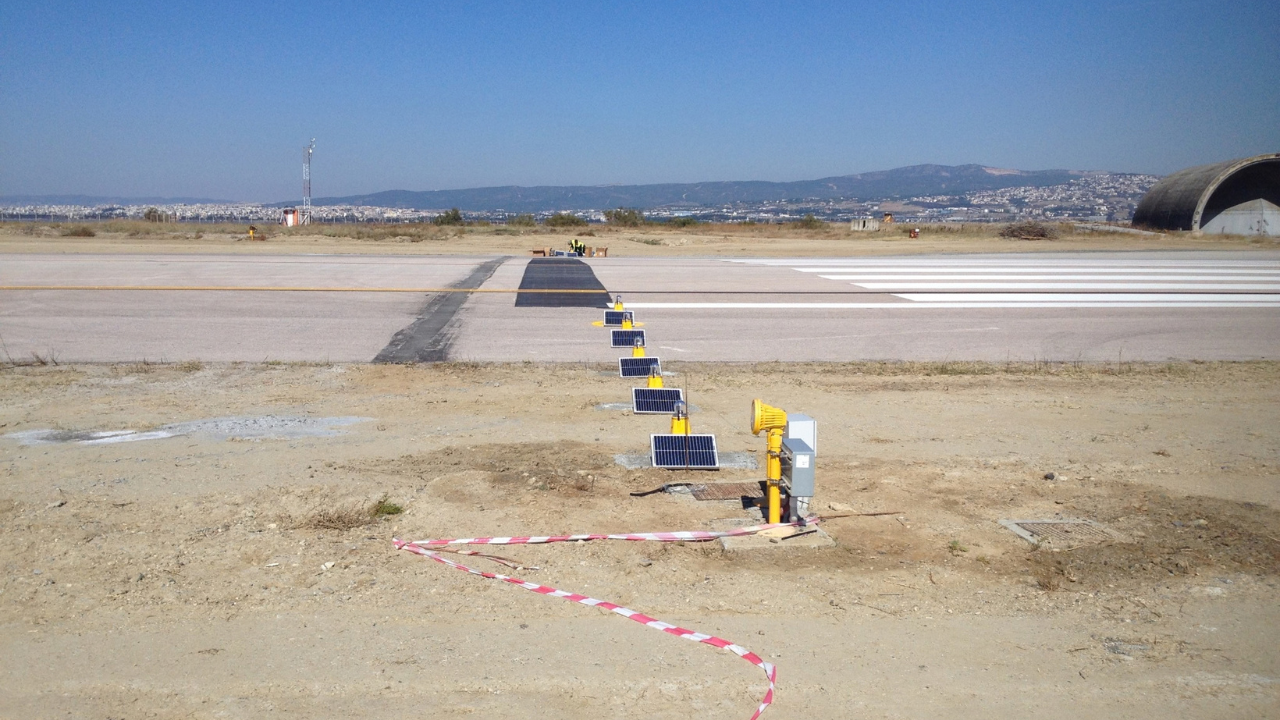
S4GA Solar PRO supporting airport operations during reconstruction work at Thessaloniki Airport, Greece, 2017
Thessaloniki Airport faced this during the reconstruction of its main runway. The airport has a runway with a parallel taxiway running alongside it, a configuration that made it possible to maintain flight operations while the runway was out of service.
When the runway was closed for planned rehabilitation works, the airport temporarily adapted the parallel taxiway for use as a runway. To support operations in this temporary configuration, S4GA Solar PRO airfield lighting was installed.
Another example is a runway reconstruction at Amsterdam Airport, which required taxiway rerouting. In that case, taxiway lighting had to support temporary changes to the airfield while remaining practical to operate and maintain.
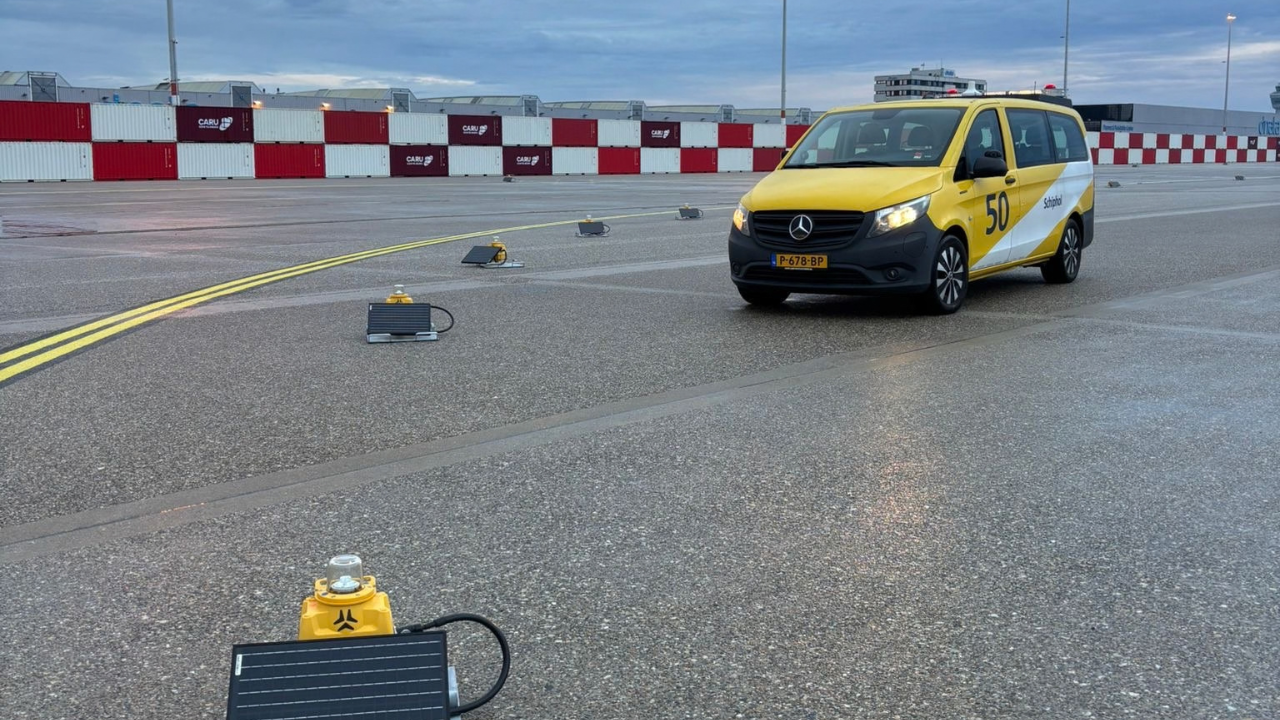
Taxiway rerouting at Schiphol Airport, Netherlands, 2023 , using the S4GA Solar Taxiway System
As John Spanjaard, Service Manager at Royal Schiphol Group, explained:
We needed a solution that could operate continuously over a long period, be easy to manage and maintain, and ensure operational safety.
The Schiphol project demonstrated another side of solar airfield lighting in a temporary use: it fit into the airport’s existing operation and remained dependable for as long as the temporary configuration was required.
Runway rehabilitation can require airports to change how their airfield is used for weeks or months. And while it is temporary, the decisions made around it can have a longer impact on the airport.
The lighting chosen for the temporary configuration does not necessarily have to be temporary in its usefulness. Solar AGL can remain part of the airfield after the rehabilitation is complete, whether as a backup or for future changes to the airfield configuration.
This gives operators another factor to consider when planning rehabilitation works: whether the temporary lighting investment can continue to serve the airport once the project is finished.
Contact Us