

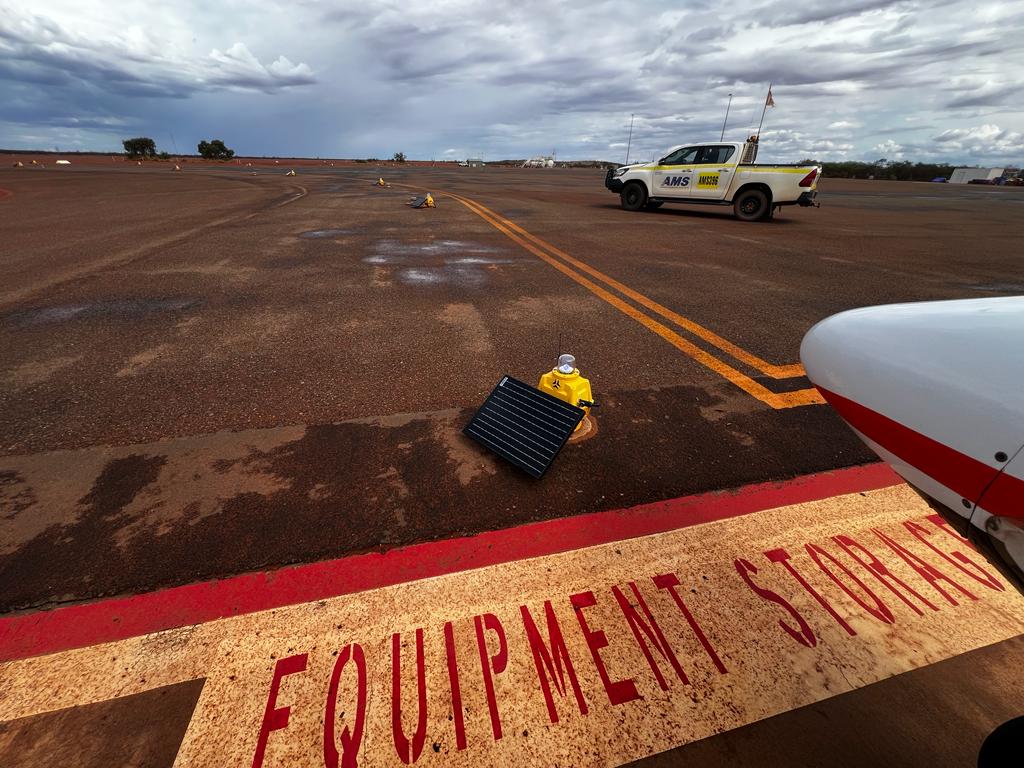
Most mining sites in Australia operate far from grid infrastructure, in extreme heat, dust, and logistical isolation. In these environments, operational airstrips have evolved from a nice-to-have feature into an essential part of mining infrastructure. In the meantime, aerodrome lighting is a critical component that makes airstrips available 24/7. It must be easy to install, simple to maintain, and predictable in daily operation.
S4GA solar aerodrome lighting is increasingly being implemented across mining sites because it removes underground cabling, reduces electrical complexity, and eliminates dependence on diesel-powered lighting.
For global mining companies such as the BHP Group, Fortescue, and others already using these systems, this translates into reduced infrastructure burden and clearer system behaviour in remote conditions. While representing only a portion of the broader portfolio of similar implementations delivered across remote regions, the projects outlined below illustrate this approach.
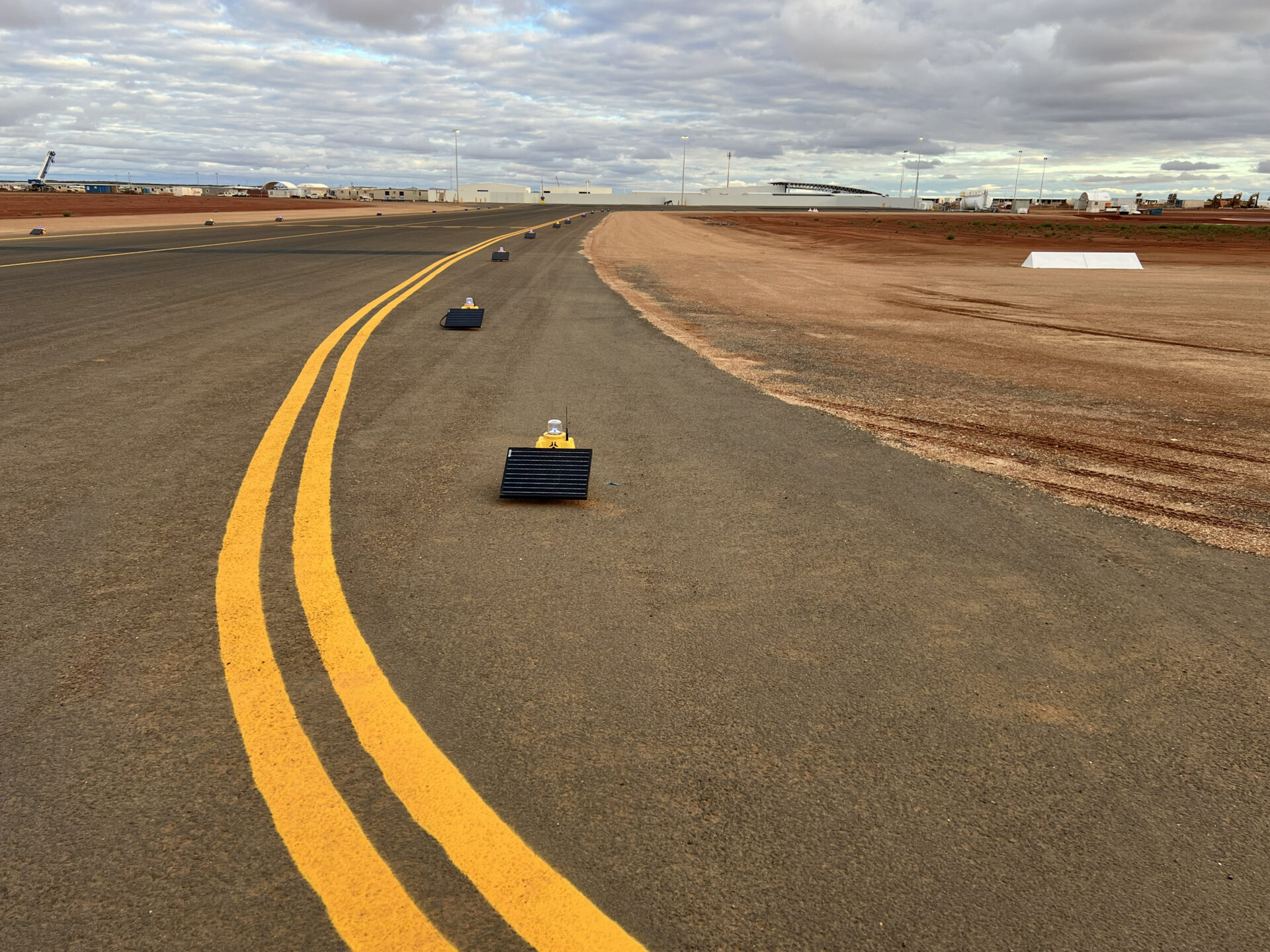
West Musgrave Airport, operated by the BHP Group — one of the world’s largest mining and metals corporations — serves one of Australia’s most remote mining sites, located approximately 900 kilometres from Kalgoorlie. High temperatures reaching up to 49°C, sandstorms, and limited access make conventional wired lighting systems difficult to justify from an operational standpoint.
The implemented solar AGL system operates independently from the electrical grid and aligns with Australia’s preference for 24 VDC architecture. By removing underground cabling and diesel generators, the lighting configuration reduces electrical exposure and simplifies maintenance. In a remote mining environment, this approach supports stable runway operations whenever needed.
Replacing it with a solar-powered solution removed high-voltage cabling and generator reliance, reducing electrical infrastructure on site. For Fortescue — one of the biggest iron ore producers in the world — the change supports environmental objectives while maintaining clear operational control over the lighting system.
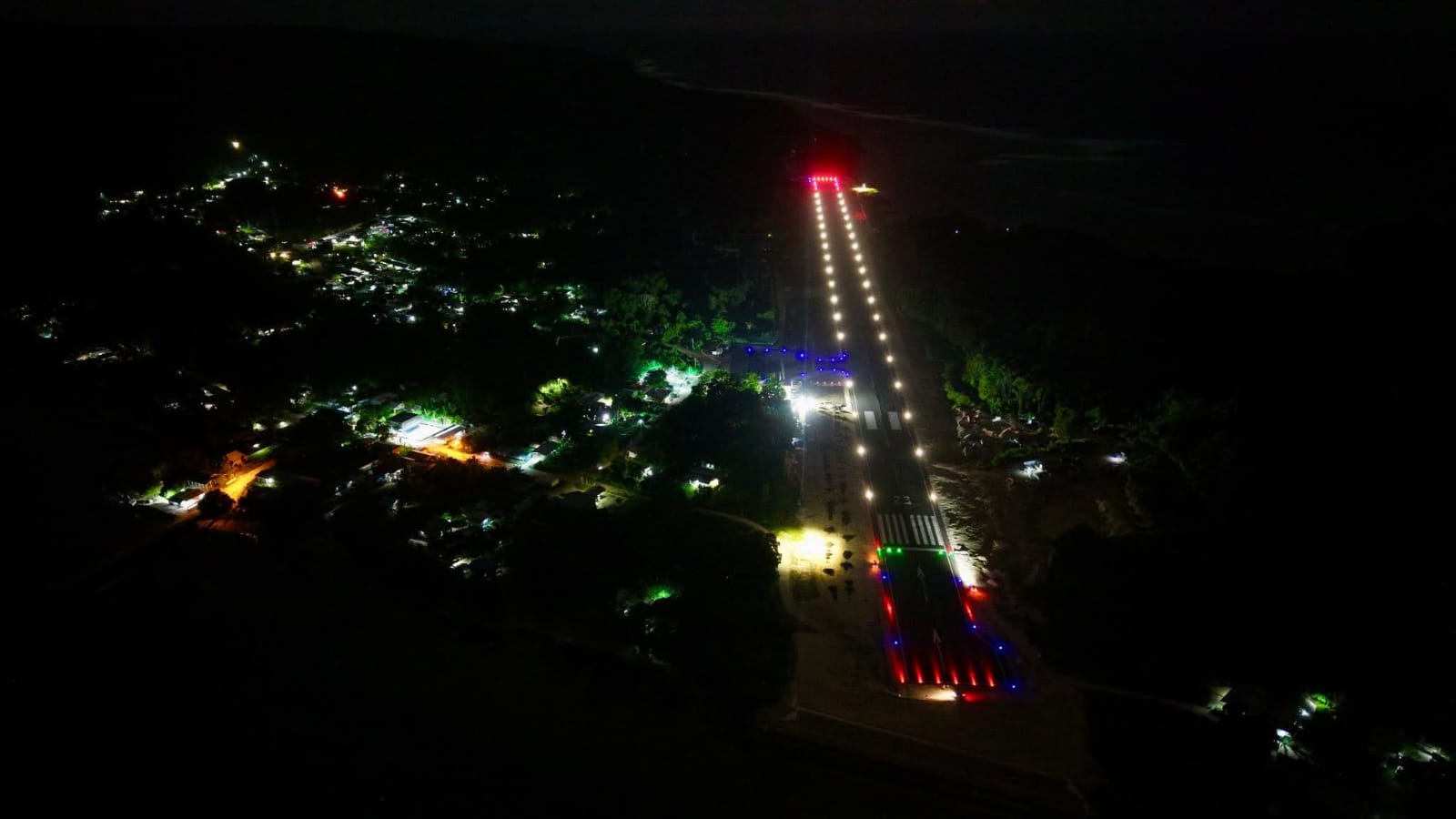
Although not a mining facility, Santa Cruz Airport, operated by the Solomon Islands Airport Corporation, represents one of the most recent completed installations in the region. As a part of the Second Solomon Islands Roads and Aviation Project (SIRAP2), it was funded by the World Bank and implemented by the Ministry of Communication and Aviation (MCA). It includes runway lighting, taxiway lighting, a full LED PAPI system, and an S4GA ALCMS — Airfield Lighting Control and Monitoring System.
Mining companies operating in environments defined by extreme heat, dust, isolation, and long logistical chains consistently prioritise equipment that can withstand harsh conditions, remain simple and reliable in daily operation, and require minimal maintenance support.
When it comes specifically to aerodrome lighting, this translates into solutions that remove underground cabling, eliminate diesel dependence, reduce electrical exposure, and simplify ongoing servicing. In short, solar AGL aligns directly with the operational realities of remote site management.
The examples above — which represent only a fraction of S4GA airfield lighting systems installed across Australia — illustrate that solar AGL adoption in the mining sector is no longer experimental or occasional. It reflects a structural shift toward more resilient, lower-risk infrastructure choices across Australia’s resource regions.
For more information regarding aerodrome lighting projects in Australia, contact Aerodrome Management Services, an official S4GA partner in Australia.
