

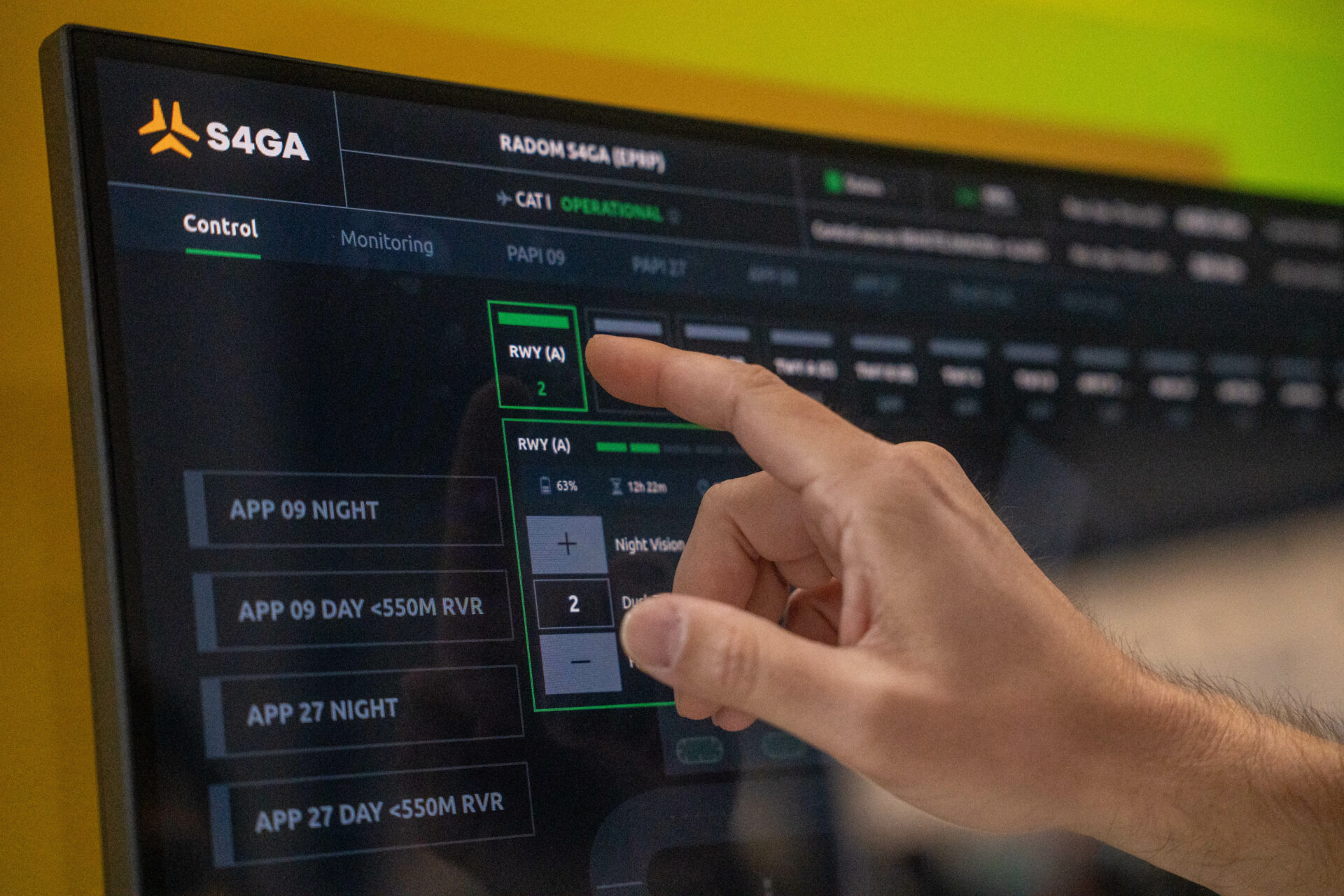
In airfield lighting projects, control is straightforward — buttons are pressed, the system responds, operations continue. But this only holds under normal conditions.
What happens when the main control system fails, or communication is disrupted? Can the lighting still be controlled, or does access disappear at the exact moment of failure? If it does, the lighting system can become operationally unavailable within seconds.
Instead of concentrating it in a single point, the S4GA system is built as a layered structure: the loss of one access path does not mean loss of control over the entire system.
Conventional AGL setups typically rely on a single control unit connected to a complex power network with multiple components. If any of these — cables, CCRs, or connectors — fail, the entire operation can be halted.
This creates a single point of dependency: response time increases, the AGL operator can’t pinpoint a problem, and recovery takes longer. For the airport, that means higher operational risk, greater disruption exposure, and less predictable financial impact.
S4GA addresses this in two ways:
The S4GA control system is structured in multiple layers. Each layer provides an independent level of access, ensuring that the system remains manageable under different scenarios.
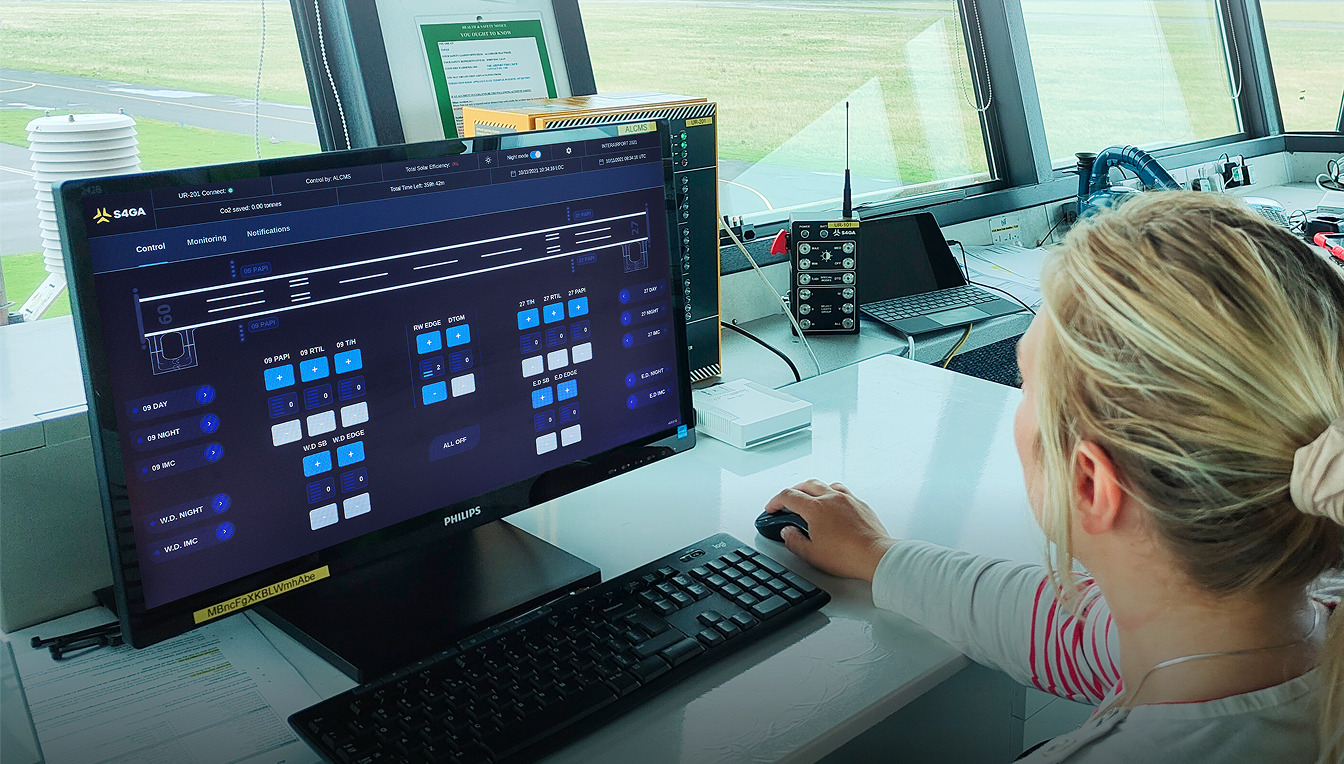
At the top level is the Airfield Lighting Control and Monitoring System (ALCMS).
ALCMS is a computer-based interface that provides full control and monitoring of the entire airfield lighting system. Every component of the AGL — runway, taxiway, and PAPI — is visible and manageable in real time. This makes ALCMS much more than just a control device: it gives airports full confidence in the system they are using.
Individual Light Monitoring integrated in the ALCMS allows the airport team to always know the status of every light in the system: what is working or not, and where attention is required — without manually checking the lights at the airfield. This fundamentally changes the maintenance: instead of reacting to failures, the system highlights issues before they become problems, and shows exactly where and when to check them.
ALCMS removes uncertainty: the system performs in a predictable way, without unexpected disruptions. As a result, downtime is reduced, response becomes faster, and maintenance efforts are more efficient.
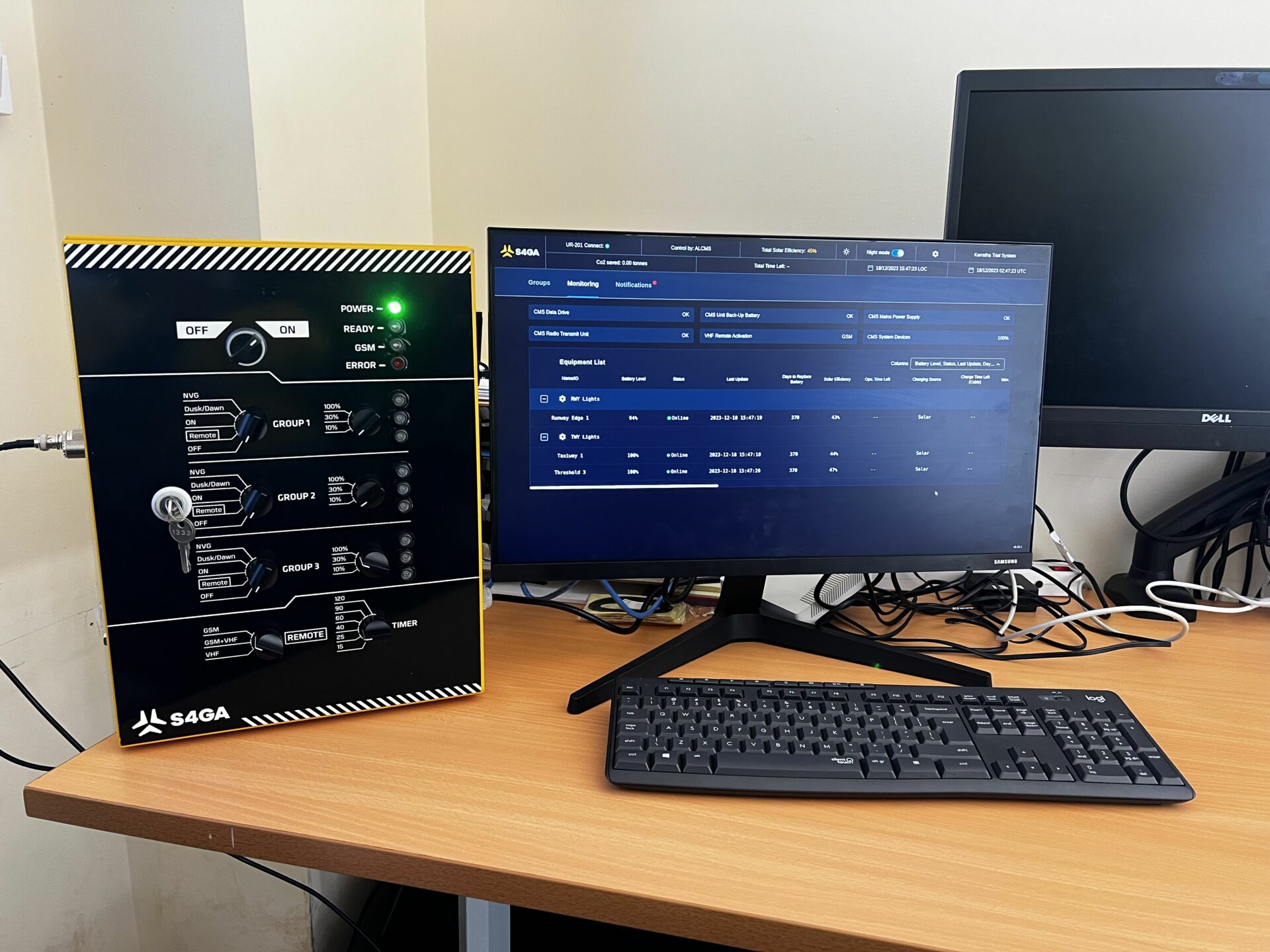
The UR-201 operates as a secondary control device. If the primary interface (ALCMS) becomes unavailable — due to system damage, connectivity issues, or other disruptions — the UR-201 continues to provide direct control over the lighting system.
This layer keeps remote control and monitoring available even if the main software interface is down. It creates a separate command path, so the airport team can continue operating the system without waiting for the primary interface to recover. Moreover, the UR-201 can operate without external power, using an integrated battery that keeps the unit running for up to 48 hours.
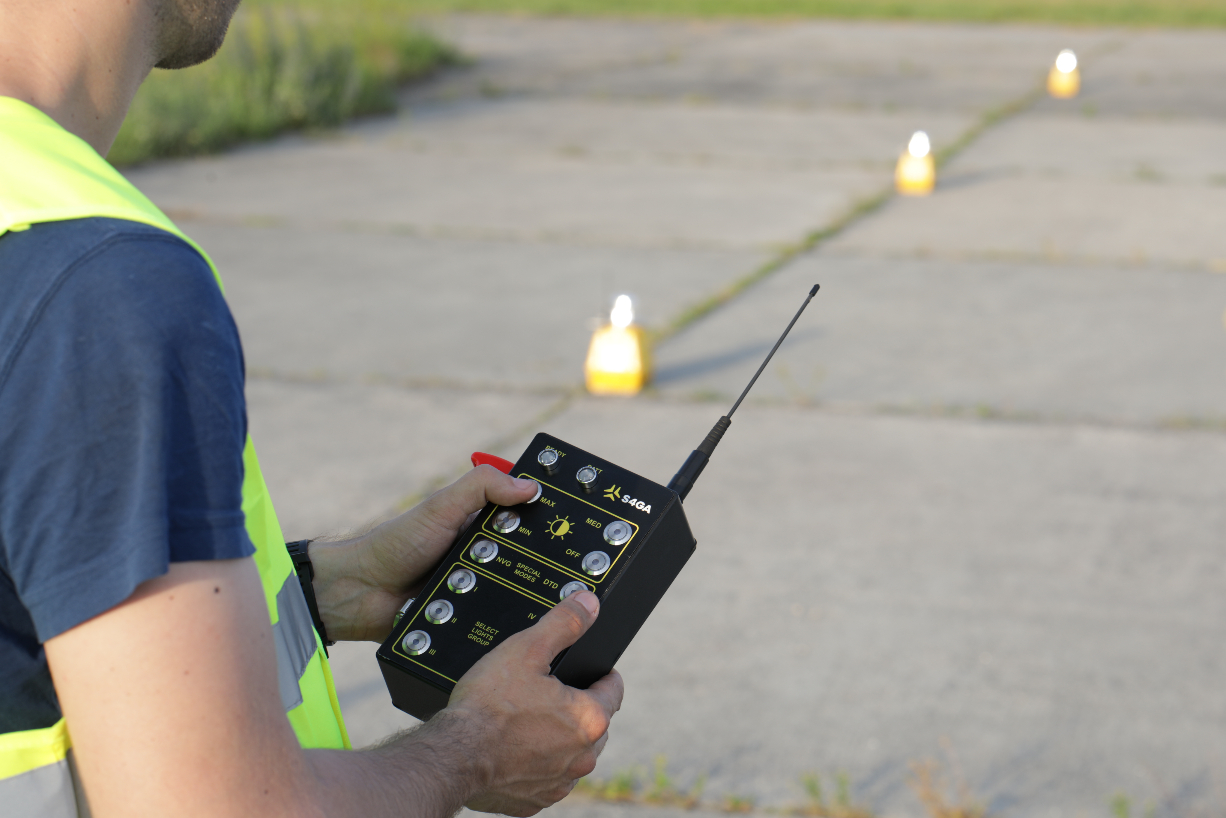
The UR-101 introduces an additional level of backup. As a handheld controller, it allows the airfield technicians to manage the airfield lighting system without relying on fixed infrastructure. This becomes relevant in scenarios where access to primary control systems becomes unavailable.

For extreme cases, such as loss of wireless network or radio signal jamming, each light unit includes an emergency ON/OFF switch for manual override. This ensures that technicians still retain physical control over the system by pressing the button on the fixture itself.
This layer defines the system’s behavior in worst-case scenarios — when all other layers are unavailable.
Airfield lighting management remains available in different forms, which allows teams to respond and keep the AGL working without waiting for the main control system recovery. It minimizes the possibility of flight disruptions and reduces reliance on immediate access to specific equipment or locations.
For airports, this defines how much operational dependency, recovery exposure, and unplanned cost the system brings after installation. It is not only about having control, but about keeping it available under different conditions.
The S4GA control system is built around the idea that control should not depend on a single element. By structuring it in layers, the airfield lighting system remains manageable even when parts of it are unavailable.
This changes how the AGL system behaves under disruption. Losing one control device does not mean losing the entire runway lighting system — the team still has backup options to keep the AGL working, even if the primary one fails.
Contact us for more information about the S4GA airfield lighting control and monitoring system.
