

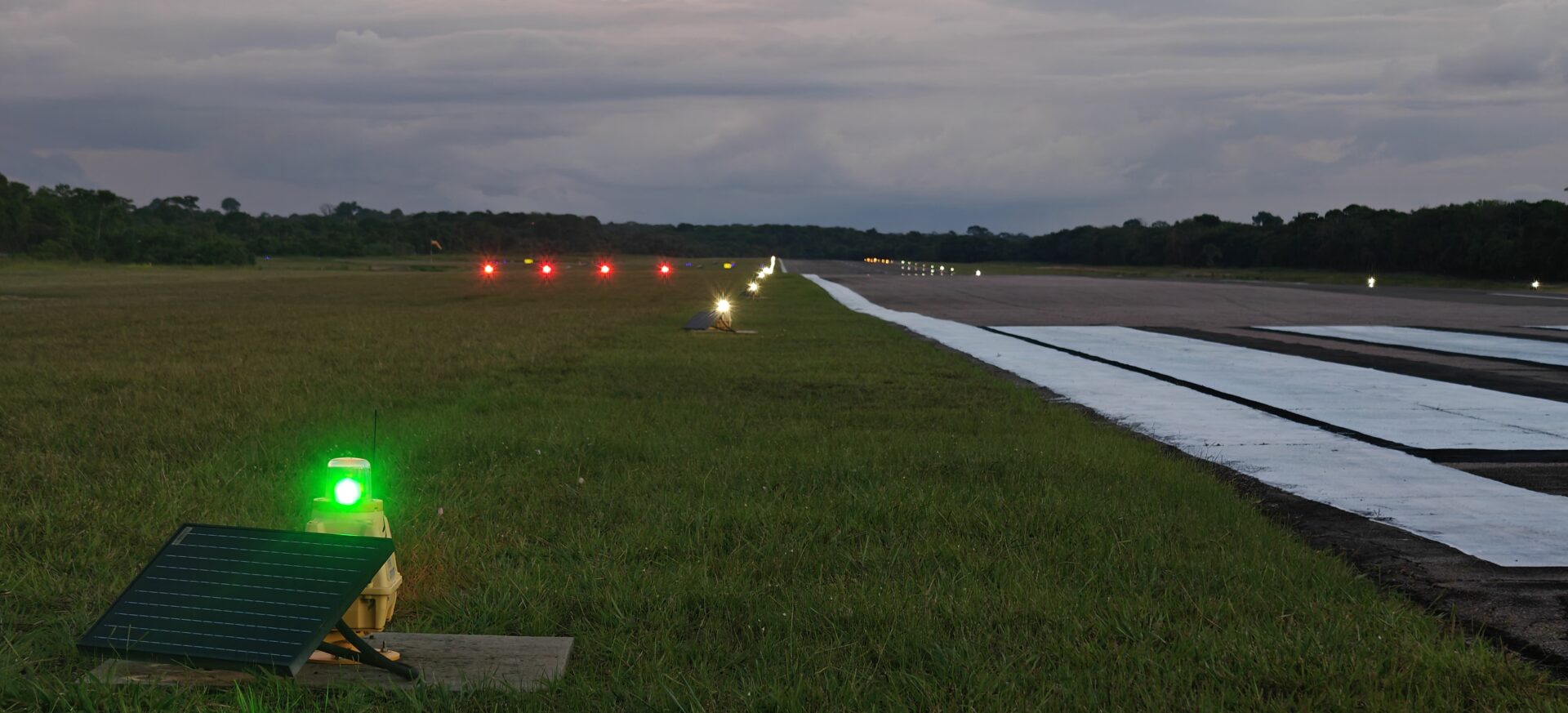
Just a couple of weeks ago, our technical team visited Tefé Airport in Brazil for the airfield lighting system inspection. Following the initial installation of S4GA solar AGL in 2024, the system is running flawlessly, and the airport team is completely satisfied with the equipment.
Interestingly enough, the VINCI project in Tefé highlights a paradox that often surprises people. One might expect countries with strong solar profiles and stable day-night cycles to adopt solar runway lighting easily.
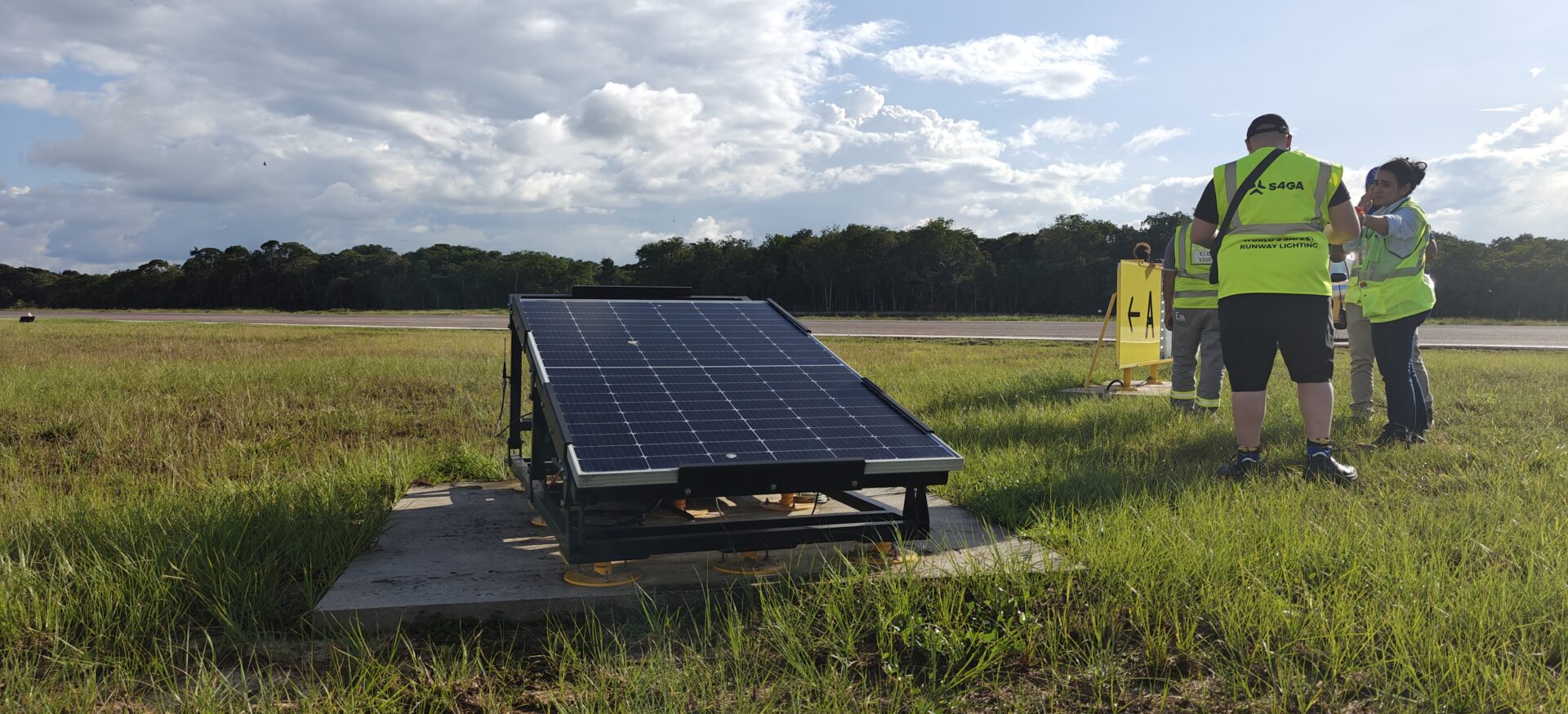
In practice, the opposite is often true. Airports in equatorial regions tend to be more cautious, not less. The concern is not whether the sun shines — it is the fear of being wrong and carrying responsibility if something fails.
We have often seen faster acceptance in countries with long winter nights, snow, or harsh seasonal conditions, such as Canada. Those operators tend to challenge assumptions early, demand rigorous energy modelling, and gain confidence once limits are clearly defined.
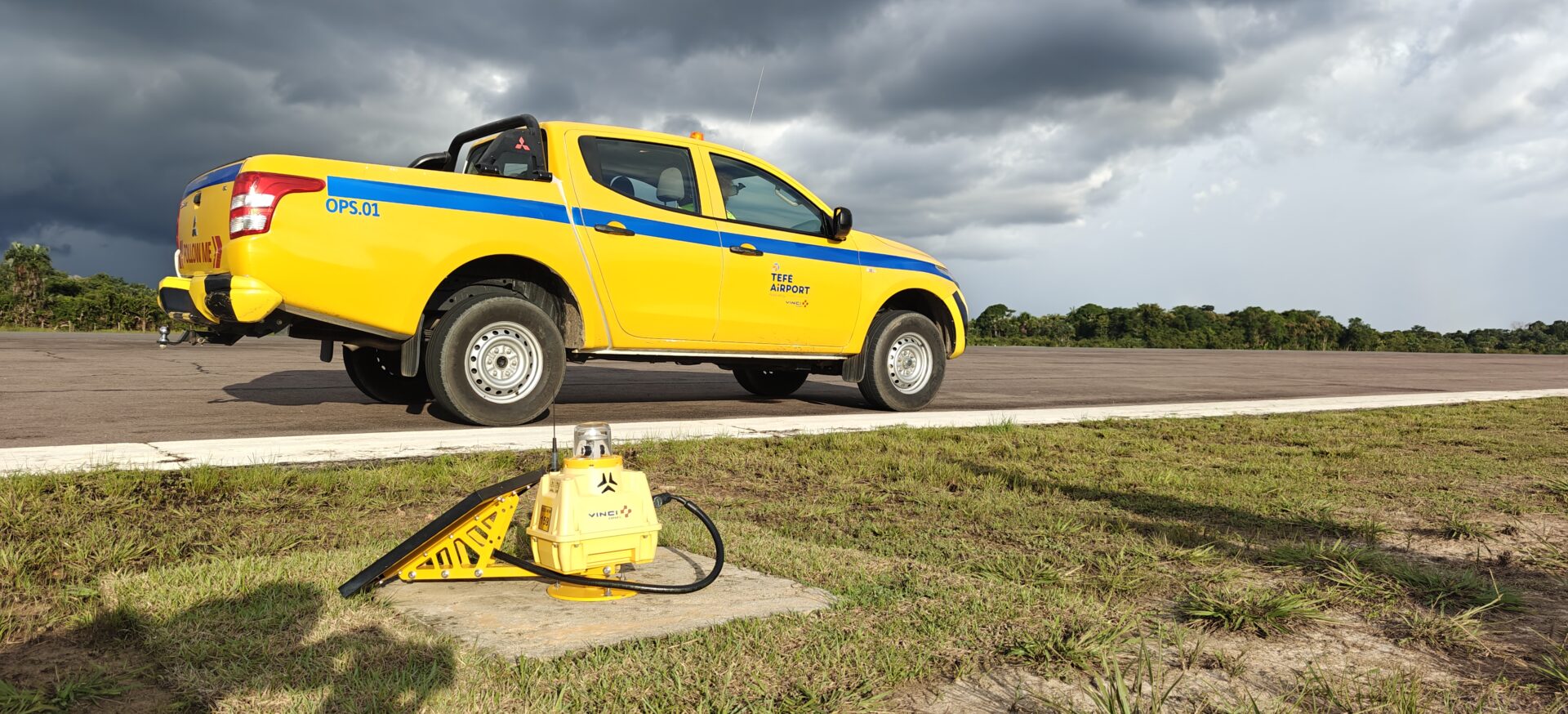
Brazil sits at a unique intersection. ANAC is conservative by necessity — runway lighting allows no margin for optimism — yet open-minded when new technologies are supported by data. VINCI Airports reflects the same mindset. The decision to deploy solar AGL in the Amazon was not driven by novelty or sustainability messaging.
It was a calculated decision, based on measurable benefits: typically a 30–40% reduction in CAPEX and up to 70% reduction in operational and maintenance costs over a 10-year period, largely by removing heavy civil works and grid dependency.
This practical, engineering-driven approach is also reflected in feedback from the end user. In the video below, the airport team shares their experience with the installed solar AGL systems at Tefé and Tabatinga, highlighting how the solution performs in real operational conditions
The Tefé project — as well as Tabatinga, the second VINCI airport where an S4GA solar system was deployed — was not about proving that solar works where there is sun. It was about proving that solar can and should be treated as serious infrastructure, supported by proper feasibility studies, AGL design, and planning.
For more information about this project, please contact Dmytro Kuczeruk, Aviation Infrastructure & AGL Systems Expert.
