

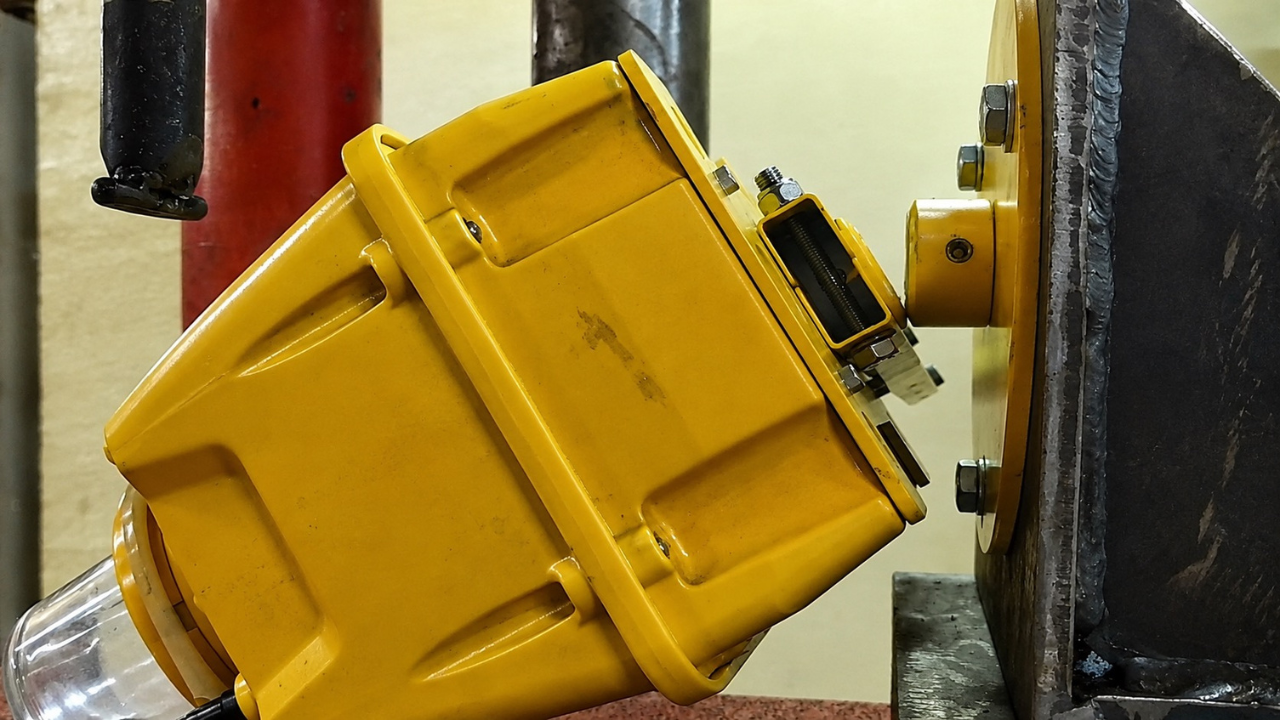
Frangibility is one of the key safety requirements for airfield lighting. While it rarely comes into play during normal airport operations, it becomes critical if an aircraft strikes a lighting fixture.
As more airports consider solar airfield lighting, one question comes up repeatedly: Can a solar light, which is much heavier than a conventional fixture, still be frangible?
It’s a valid question. However, the answer depends on the fixture’s design and testing—not simply on its weight.
Airfield lighting fixtures are installed in areas where an aircraft could come into contact with them during a runway overrun, taxiway excursion, or similar event. If that happens, the fixture should break away rather than act as a rigid obstacle that could worsen damage to the aircraft.
Because of this, frangibility is a well-established requirement in aviation standards and guidance. It’s defined in detail by ICAO in the Aerodrome Design Manual (Doc 9157), Chapter 6 (Frangibility), as well as in regional and national aviation regulatory bodies like the FAA, EASA, and CASA in relevant documents.
When airport operators, consultants, and regulators evaluate an airfield lighting system—including a solar-powered one—frangibility is one of the safety requirements they expect it to meet.
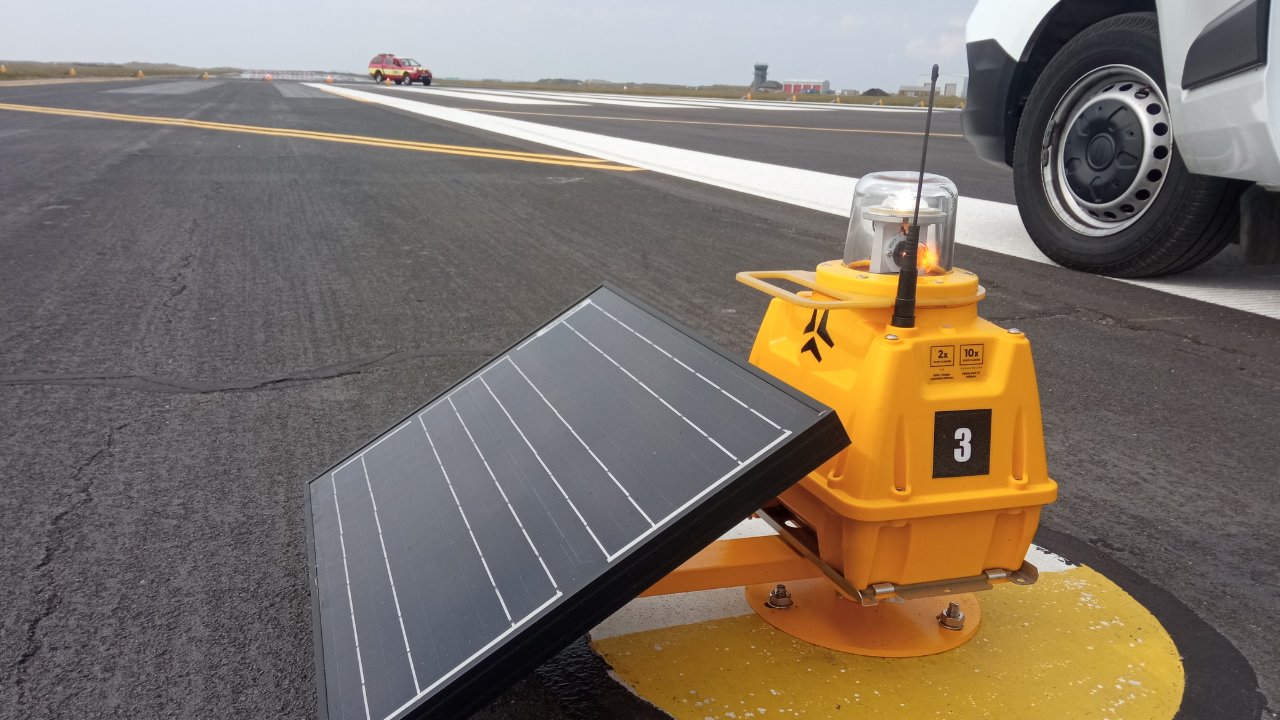
A common misconception about solar airfield lighting is that it is less safe simply because the fixtures weigh more than conventional lights.
Unlike conventional fixtures, each solar airfield light contains batteries and a solar panel. This naturally makes them heavier than lights connected to a constant current circuit. However, weight alone does not determine whether a fixture is frangible.
What matters is how the entire fixture is designed and how it behaves during an impact. A heavier fixture can still meet frangibility requirements if it is engineered to break away as intended.
In other words, compliance is proven through design validation and testing—not by comparing the weight of different lighting fixtures.
As the Laborex Research Laboratory test proved, S4GA lighting fixtures meet frangibility requirements established by the ICAO Aerodrome Design Manual (Doc 9157), Chapter 6, Section 4.9.2:
“The yield point should withstand a bending moment of 204 J without failure but should separate cleanly from the mounting system before the bending moment reaches 678 J.“
To demonstrate frangibility in practice, S4GA carried out comparative crash testing using both an S4GA solar airfield light (SP-401SM) and a conventional airfield lighting fixture under similar conditions.
The goal was simple: to compare the damage each one yields to the vehicle when struck at 30 km/h.
For safety reasons, a car, which weighed similarly to the Cessna 152, was used as a stand-in for a small aircraft.
The test showed that both fixtures performed as expected and neither caused serious damage to the test vehicle. The results demonstrate that a properly designed solar airfield light does not create a greater impact hazard simply because it is heavier than a conventional one.
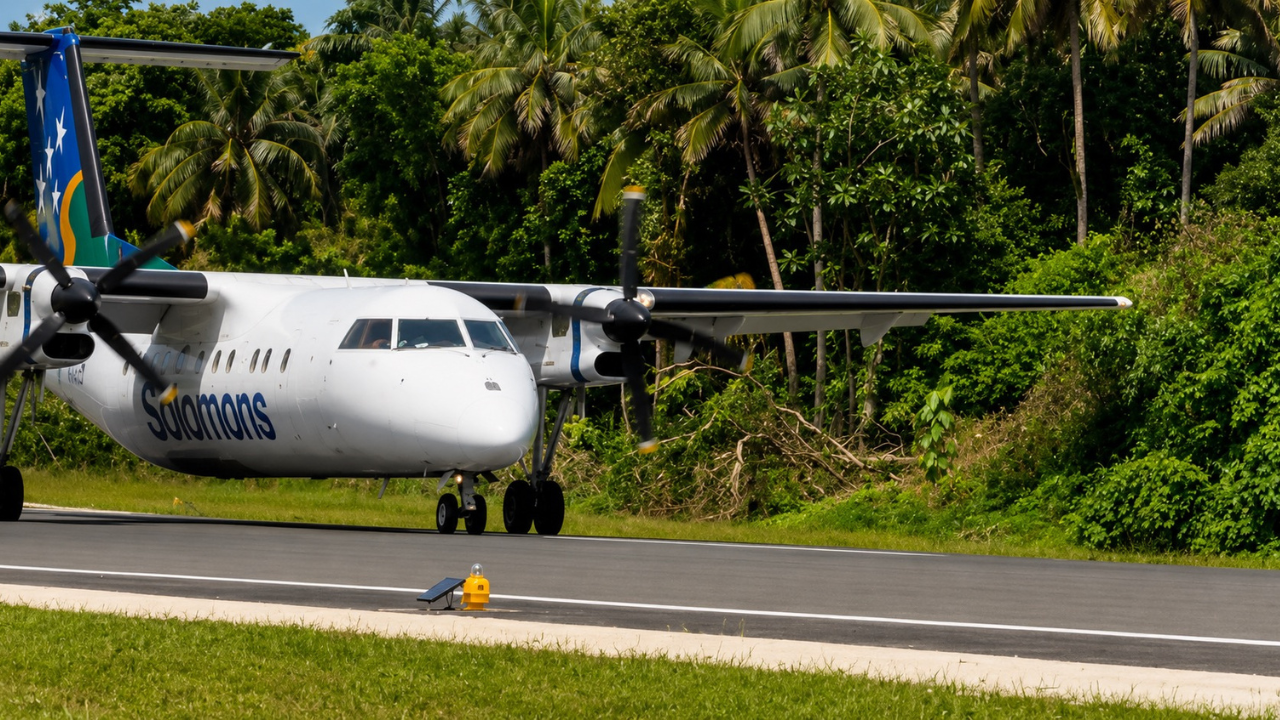
The idea that solar airfield lights are unsafe because they weigh more is a common misconception.
Frangibility is determined by how a lighting fixture performs during an impact—not by its weight alone.
Extensive testing and years of operational use at airports worldwide have demonstrated that S4GA solar airfield lighting fixtures are safe for aircraft and comply with the frangibility requirements established by major aviation authorities, including ICAO, FAA, EASA, CASA, and others. As a result, airport operators can benefit from an off-grid lighting solution while meeting the same safety objective required for conventional airfield lighting.
