

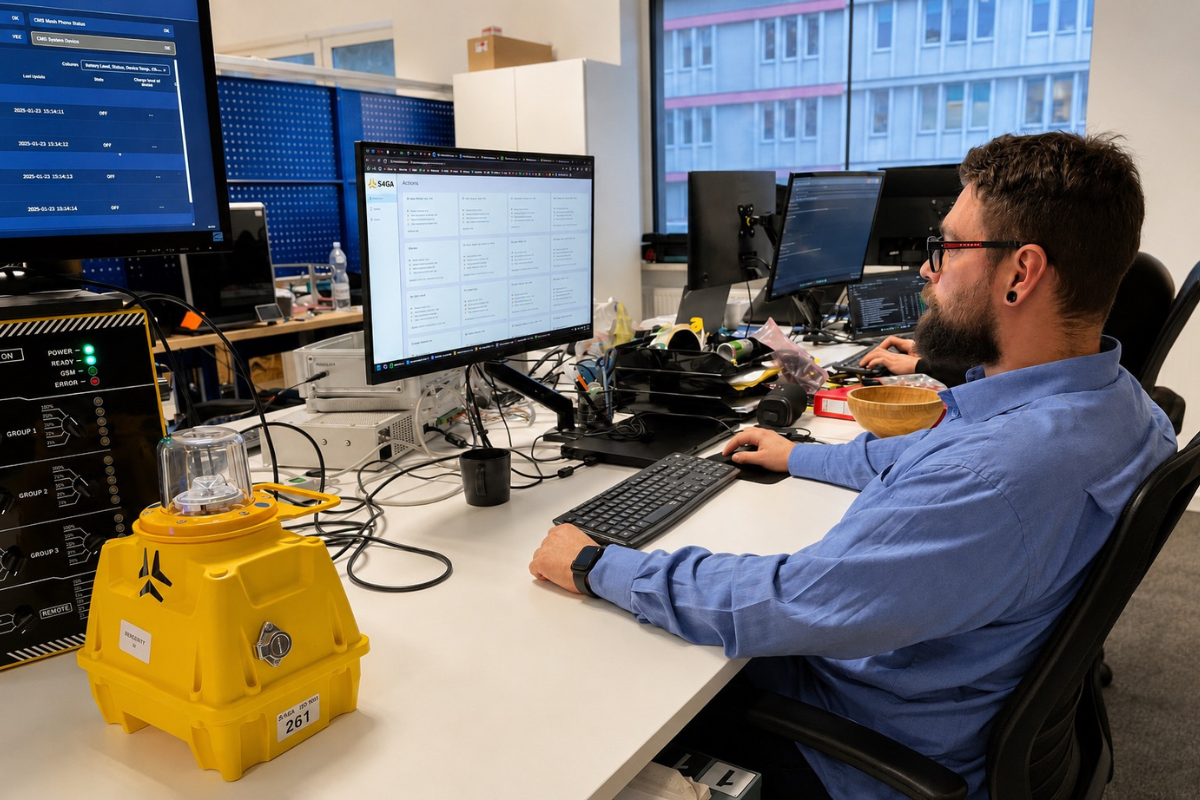
S4GA technical specialist remotely reviewing operational data from the solar airfield lighting system.
For an airport, the delivery and installation of an airfield lighting system is only one stage of a much longer lifecycle. After commissioning, the real operational phase begins — when the airport needs to keep the system visible, reliable, and ready for daily use. But what happens when the system does not perform as expected?
Without remote visibility, troubleshooting often starts with assumptions. The airport team first needs to inspect the system physically, identify which part may be causing the issue, and involve the manufacturer. This becomes especially hard in remote locations, regional airports, temporary operations, or airfields where technical teams are limited. The longer the team spends trying to understand the cause, the longer the airport operates with uncertainty.
That is why S4GA developed a Monitoring Portal — to change how the AGL troubleshooting is approached.
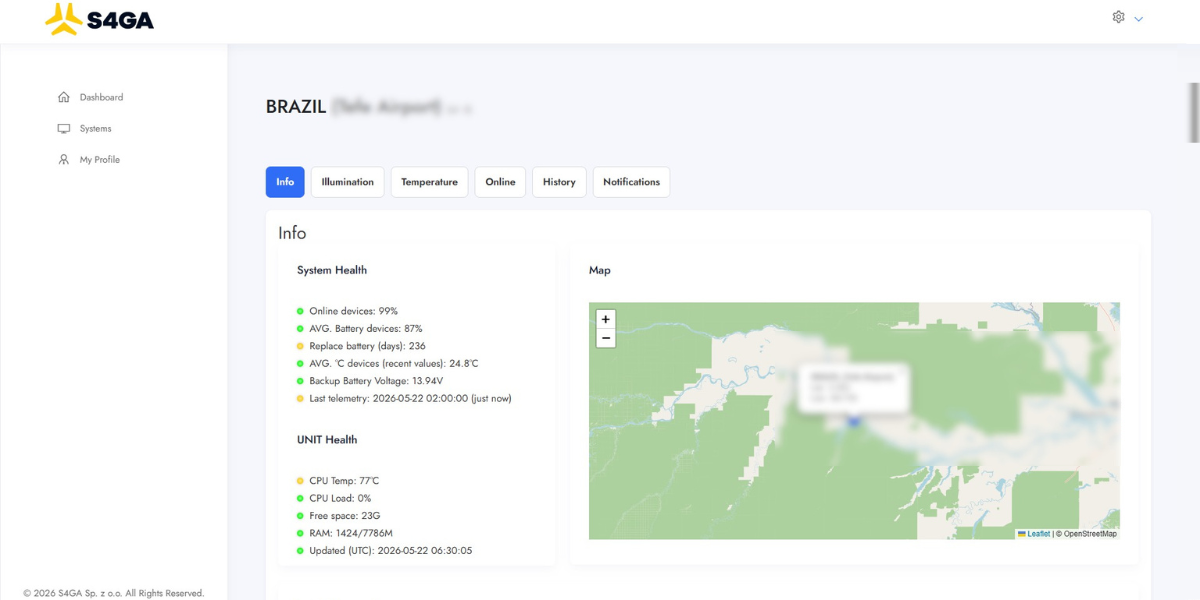
Monitoring Portal dashboard used for remote supervision and diagnostics of the solar AGL infrastructure.
Monitoring Portal is a software platform developed by S4GA for remote monitoring of solar AGL systems after installation.
It gives airport teams and S4GA specialists visibility into the condition of the system without requiring immediate on-site access. Based on technical data collected by the Monitoring Portal from each system component, they can analyse both the current condition of the solar lighting system and its performance over time.
The S4GA Monitoring Portal continuously collects information from every lighting fixture. The information is updated every minute, providing clear visibility into the system’s key operational parameters.
If the performance data of the AGL system differs from the results calculated during the feasibility assessment — for example, if the battery charge levels are lower — the Monitoring Portal enables remote analysis of the collected data to identify the cause. This analysis can be performed either by the airport’s technical team or by S4GA support specialists upon request.
The analysis makes it easier to understand what is happening within the system and to plan future operations and maintenance without relying solely on on-site inspections.
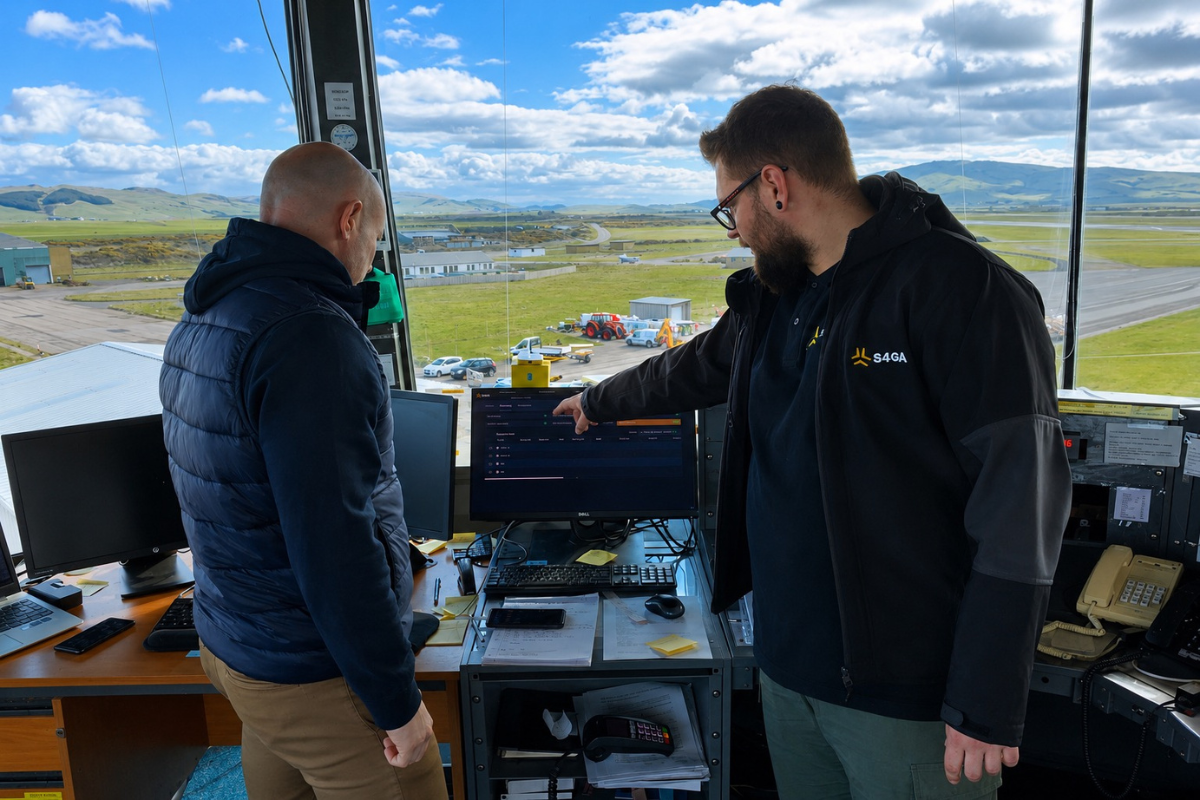
S4GA Monitoring Portal demonstrated during on-site operational review at the airport control tower.
Without a monitoring portal, the first step is often not solving the issue, but finding out where the issue actually is.
Teams may need to physically check the airfield, test individual lights, inspect battery conditions, verify communication between units, and narrow down possible causes step by step before understanding what is actually happening. In remote locations or at airports with limited technical personnel, this process can take significant time and create operational uncertainty.
The S4GA Monitoring Portal gives airport teams direct visibility into the condition and behaviour of the solar AGL system without requiring immediate on-site access. Instead of relying entirely on physical inspections across the airfield, teams can remotely review system data, identify irregularities faster, and maintain a clearer overview of system condition at any time.
Historical operational data helps airports understand how the system performs under different local conditions throughout the year. Teams can review how the solar lighting system behaved during rainy periods, seasonal weather changes, or periods of higher-than-usual operational activity.
This improves predictability. Airports gain a clearer understanding of how the system behaves in real operational conditions and can plan future lighting usage and maintenance activities with greater confidence.
The S4GA Monitoring Portal continuously collects information from every lighting fixture, with data sharing enabled only after the airport’s consent.
The Monitoring Portal also allows S4GA technical specialists to analyse the system remotely and respond much faster when questions arise. In many cases, the system can be reviewed immediately without waiting for on-site inspections or travel arrangements.
As a result, troubleshooting becomes more targeted and efficient. What previously could take days or even weeks to investigate can now often be assessed within hours, helping airports save time, reduce maintenance costs, and avoid unnecessary operational disruptions.
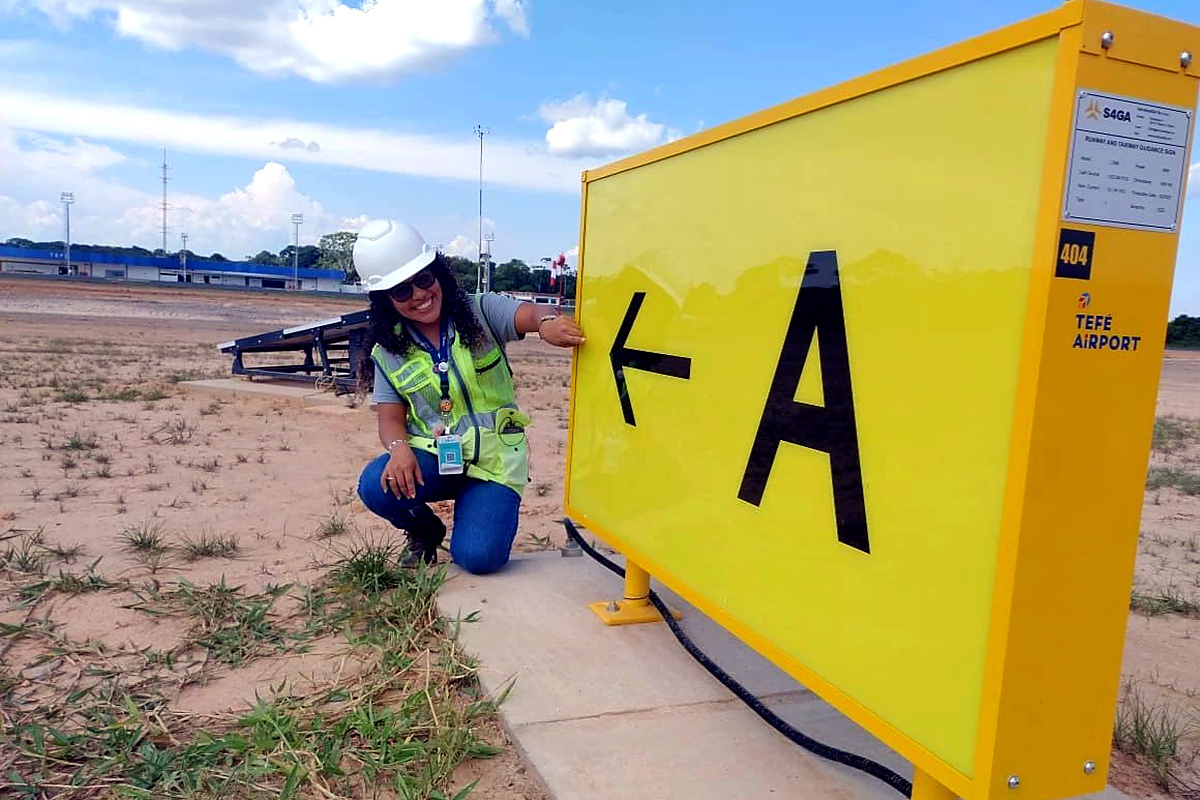
Tefé Airport, Brazil — airport team after successful remote support from S4GA during solar AGL system operation | Patrícia C Almeida, VINCI Airports
The S4GA Monitoring Portal demonstrates that maintenance of solar AGL systems can — and should — be much simpler, faster, and more cost-effective than the maintenance practices commonly used in today’s AGL industry. This is what sustainability means in practice: reducing complexity, minimising unnecessary site interventions, and giving airports better control over their systems throughout the operational lifecycle.
With S4GA solar AGL systems, this approach is not theoretical. It is already implemented and actively used by airports worldwide.
Contact us to explore how S4GA can support your airport project for seamless operational handover.
