

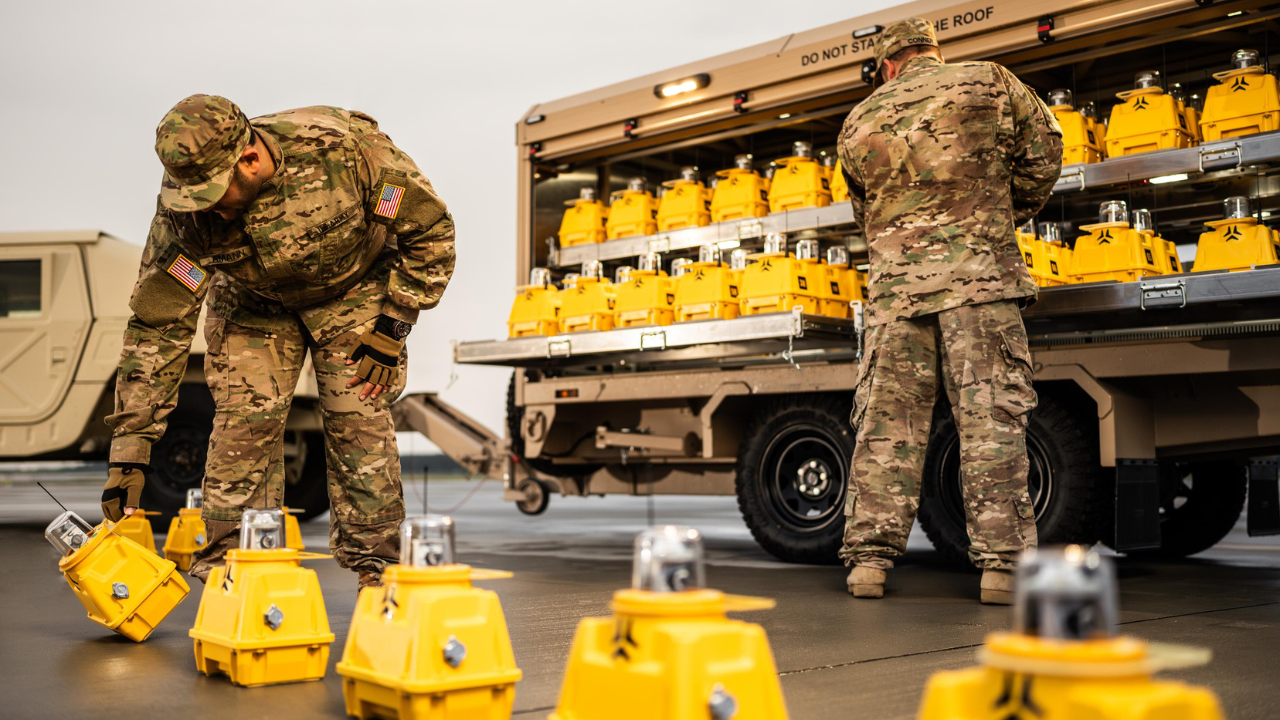
Time is critical in military operations. The deployment mobility can determine whether a system is actually useful in the field, and airfield lighting is no exception.
Military personnel need to quickly transport the lighting from point A to point B and put it into operation with little or no existing infrastructure. This makes the design of the system important. The faster the equipment can be transported, deployed, powered, and controlled, the sooner the airfield can be ready for use.
A mobile airfield lighting system intended for rapid military deployment should provide five key characteristics:
These features reduce the number of steps, equipment, and infrastructure required to get the runway operational.
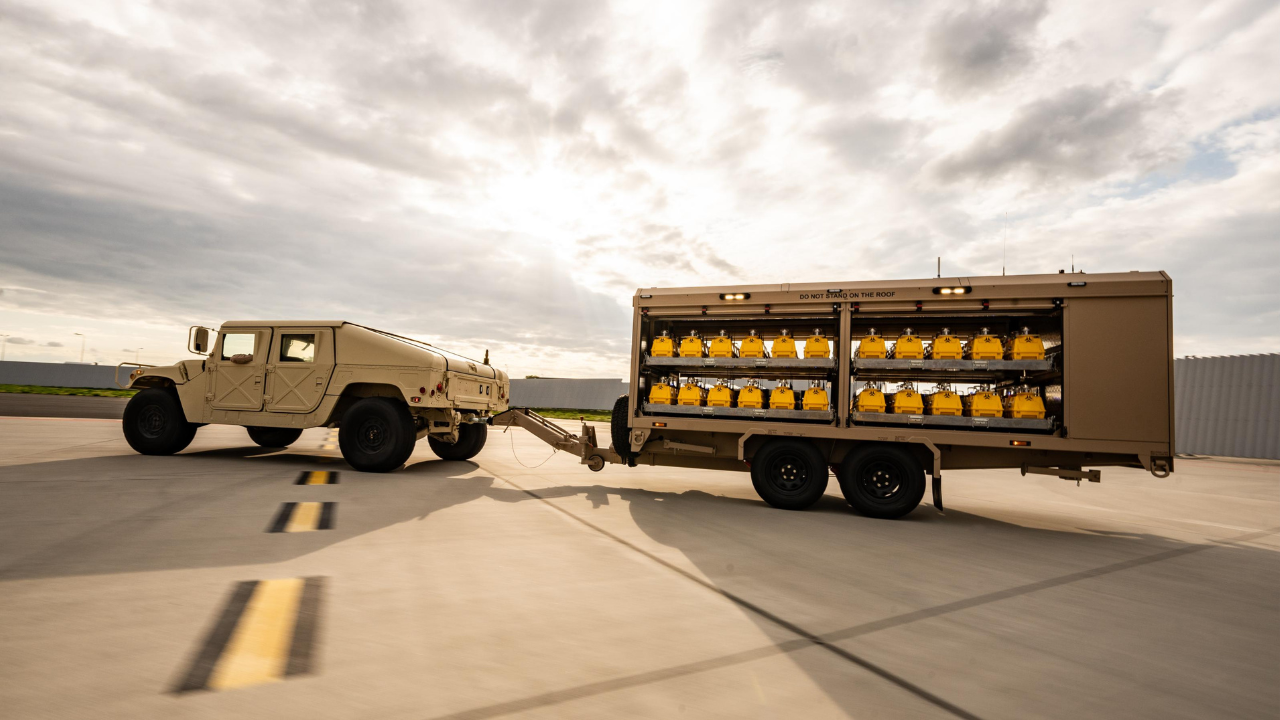
A mobile lighting system should be easy to move to the required location, regardless of how it gets there.
In practice, the transport method can vary: a light tactical vehicle, an HMMWV, different types of aircraft (C-130, C-295, A400M, CH-47, etc.), a 20-ft shipping container, or other variants with STANAG 2413 lashing points.
This means the system should be designed for different types of transport, rather than around one specific vehicle or delivery method.
There are practical limitations to consider. An oversized trailer may require special permits for road transport. A system spread across five trailers needs five times the transport capacity and more space for handling. Equipment that does not fit standard shipping container dimensions may be difficult or impossible to move by sea.
A well-designed mobile system gives operators more options. The complete setup can be kept in a single towable trailer, attached to a pickup truck, loaded onto a truck, secured on a transport platform, placed in a standard shipping container, or loaded onto an aircraft.
Another option is a dedicated truck such as an Iveco, with the complete system carried in its cargo area. The principle is simple: the equipment should be ready to move, without requiring a special transport solution for every deployment.
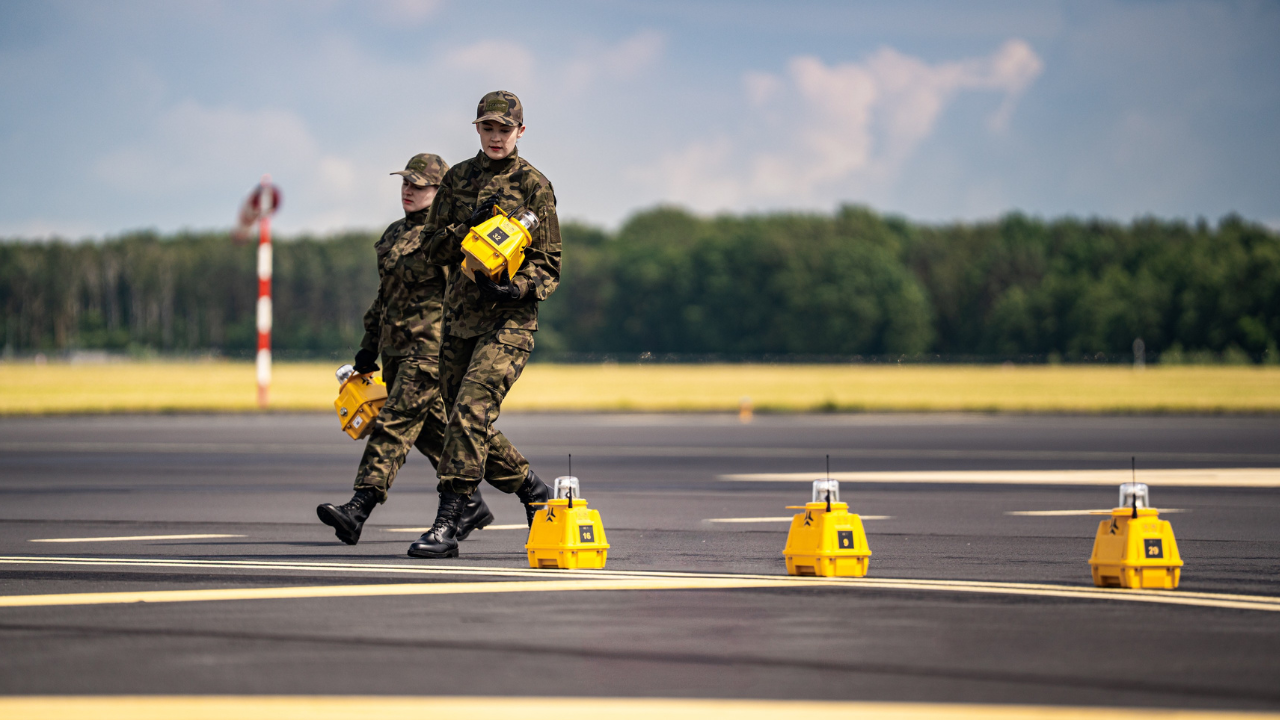
Once the system reaches the airfield, setup shouldn’t take hours.
Temporary cabling, external power distribution, and complicated installation procedures all add time to deployment. Ideally, a military mobile lighting system should minimize these requirements.
Battery-powered lights eliminate the need to connect each fixture individually, making the whole runway quick to set up — 20-60 minutes, according to STANAG 3534 requirements. This is particularly important when the available time and personnel at the deployment location are limited.
Convenient handles on each light make it easier to carry and position fixtures. Solid construction designed to withstand multiple deployments means they can be placed quickly without treating every unit as fragile equipment. A light that needs to be handled carefully takes more time to deploy than one designed for fast, practical handling.
Storage can make a difference too. If every light has its own platform on a pull-out shelf in the trailer, operators don’t have to search through stacked equipment.
The same principle applies to activation. One-button activation for the complete set of lights removes another repetitive step from the process.
Together, these features determine how quickly a mobile lighting system can go from being transported to being ready for use.
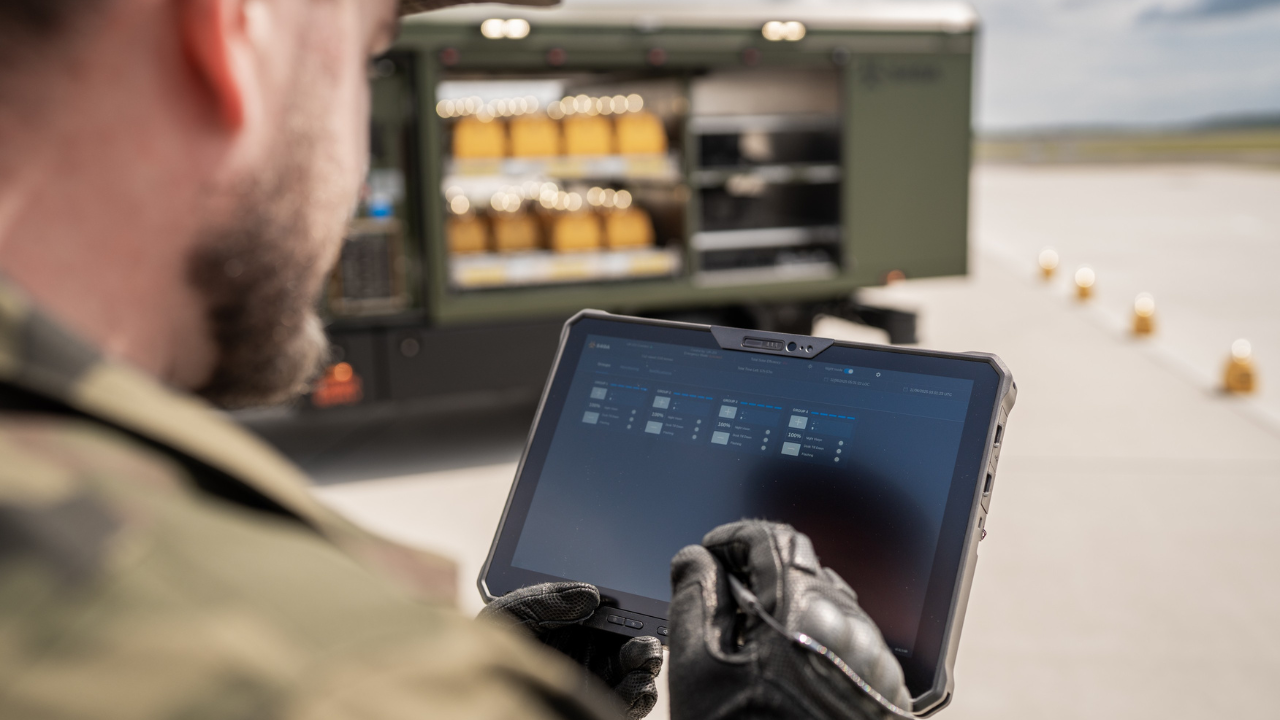
Controlling the lights should be simple enough to learn quickly — and reliable when it matters.
For military teams, personnel may change between deployments or rotations. A lighting system that requires extensive training or detailed instructions can make each handover more time-consuming.
Intuitive wireless control keeps basic operation straightforward. Personnel can use a handheld controller to remotely switch and control the lights without navigating complicated procedures.
At the same time, wireless control should be designed to withstand electronic warfare in the field. Encrypted communication, resistance to jamming and a layered control structure help maintain control when the radio signal is disrupted or targeted. AES-256 encryption helps protect the communication channel from unauthorized access, while manual override allows the lights to be operated without a network connection.
Military operations often take place at locations without permanent electrical infrastructure. If the lighting requires generators, external power connections, or regular charging during deployment, standard operations take additional equipment and preparation.
However, a system capable of up to 14 days of operation without charging, depending on configuration and conditions, can remain deployed without requiring a separate power source to be brought to the airfield. This makes the lighting immediately more practical.
And, when it’s time, recharging should be simple, with no unnecessary cabling involved: just place the fixtures on a drop-in charging platform in the trailer, and they’re ready for the next deployment.
A mobile system should not create unnecessary work once it is in use.
Maintenance should be straightforward: components should be easy to access and replace or repair when needed, while routine tasks should require as little time and equipment as possible. The simpler these tasks are, the easier the system is to manage in the field.
The equipment should also be designed for the conditions in which it will actually be used. Rain, snow, standing water, temperature changes, transport, and repeated handling should not turn into additional tasks for the personnel responsible for the system.
In practice, good mobile airfield lighting should mean less to worry about once it is deployed: the lights can stay outside when conditions change, withstand repeated use, and be returned to the trailer for storage without any damage.
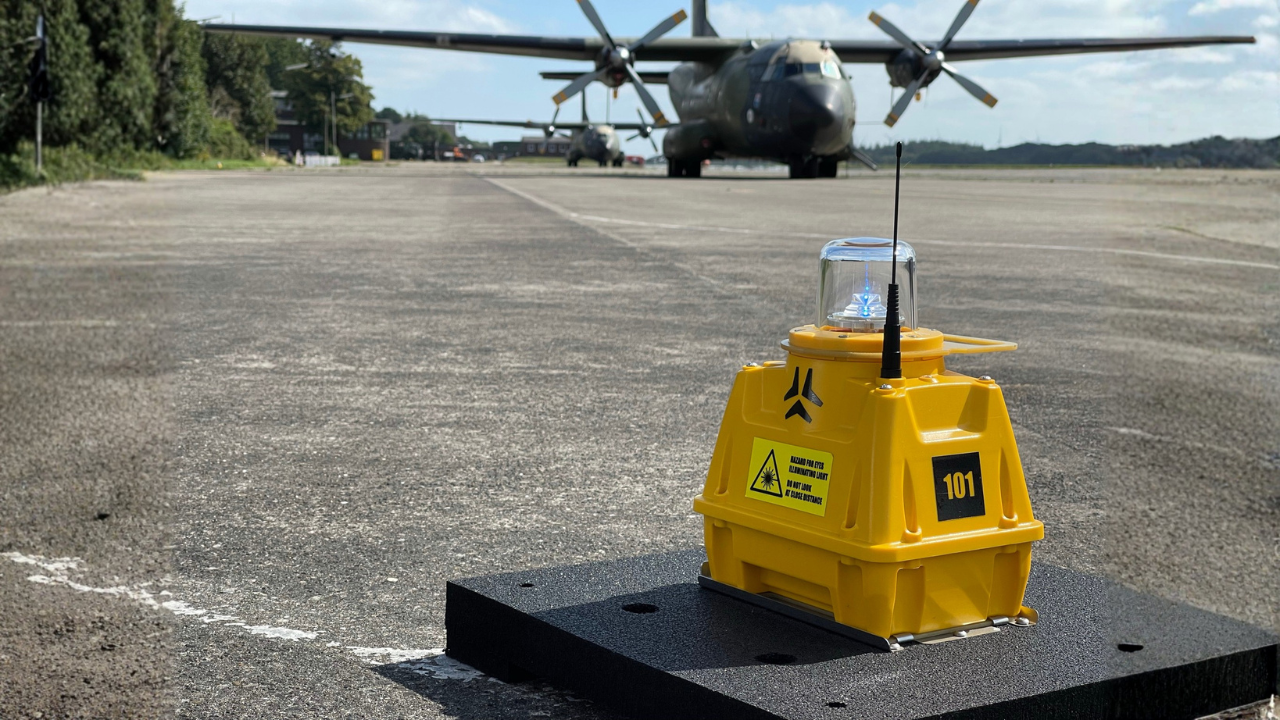
More than a decade of communication with military personnel around the world has helped S4GA engineers identify the requirements that matter in field deployments. These requirements have been incorporated into the design of its mobile airfield lighting systems, from deployment and transport to control and operation in demanding conditions.
The result is mobile airfield lighting used around the world by the U.S. Air Force, Bundeswehr, NATO partners, and other military forces worldwide.
