

When airports consider solar airfield lighting, one of the first questions is often: “Which system configuration is the right choice?”
The answer is rarely straightforward. There is no single solar airfield lighting solution that suits every airport. From regional airfields to busy commercial airports, different environments require different levels of lighting infrastructure.
Understanding these variables is the first step towards selecting a system that fits the airport’s requirements.
No two airports work in exactly the same way, so their airfield lighting requirements differ as well. Factors such as traffic levels, aircraft types, operating hours, and regulatory requirements are equally important when determining the appropriate lighting system.
For this reason, comparing airfield lighting systems based on price or specifications alone can be misleading. Two systems may be designed for entirely different operational requirements, making a direct comparison difficult. The first step is to determine what the airport actually needs the lighting system to do. Only then is it possible to assess which solution is the right fit.
Some airports require permanent low-intensity lighting for occasional flights, while others need medium-intensity systems with additional monitoring capabilities to support busier environments. These differences are why solar airfield lighting exists in different configurations rather than as a one-size-fits-all solution.

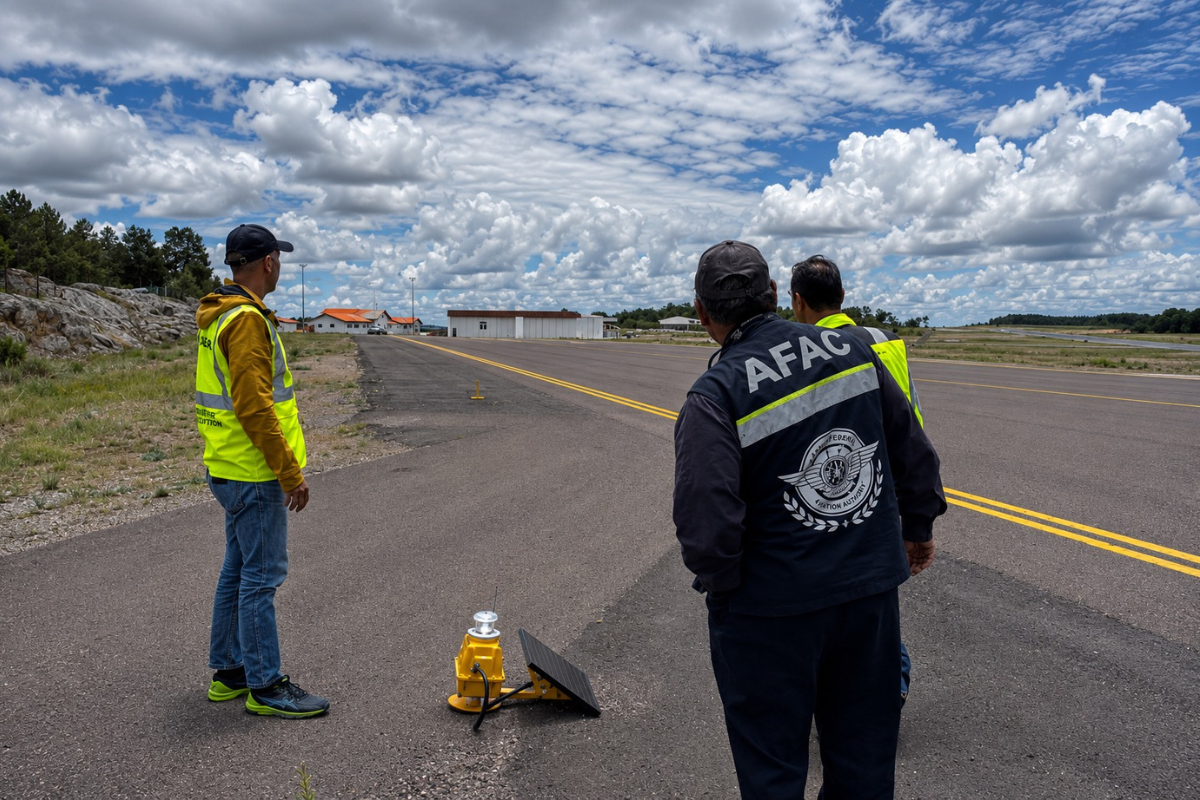
For many regional, municipal, private, and remote airports, the priority is to provide permanent, compliant runway lighting while keeping installation, maintenance, and long-term costs under control. The requirements are minimal, and they don’t necessarily need an advanced airfield lighting system.
In these situations, a self-contained solar system like S4GA’s Solar Standard can eliminate many of the complexities associated with conventional airfield lighting. Because each light has its own power source, there is no need for trenching, power stations, or extensive cabling. This can reduce the scale of civil works during installation and remove infrastructure that would otherwise require ongoing maintenance.
Solar Standard is intended for these types of airports. It provides permanent low-intensity lighting that complies with international aviation standards while remaining straightforward to install and manage. For airports with relatively simple requirements, it offers the necessary functionality without introducing additional system complexity.
As an airport grows, managing the lighting system becomes just as important as the lighting itself.
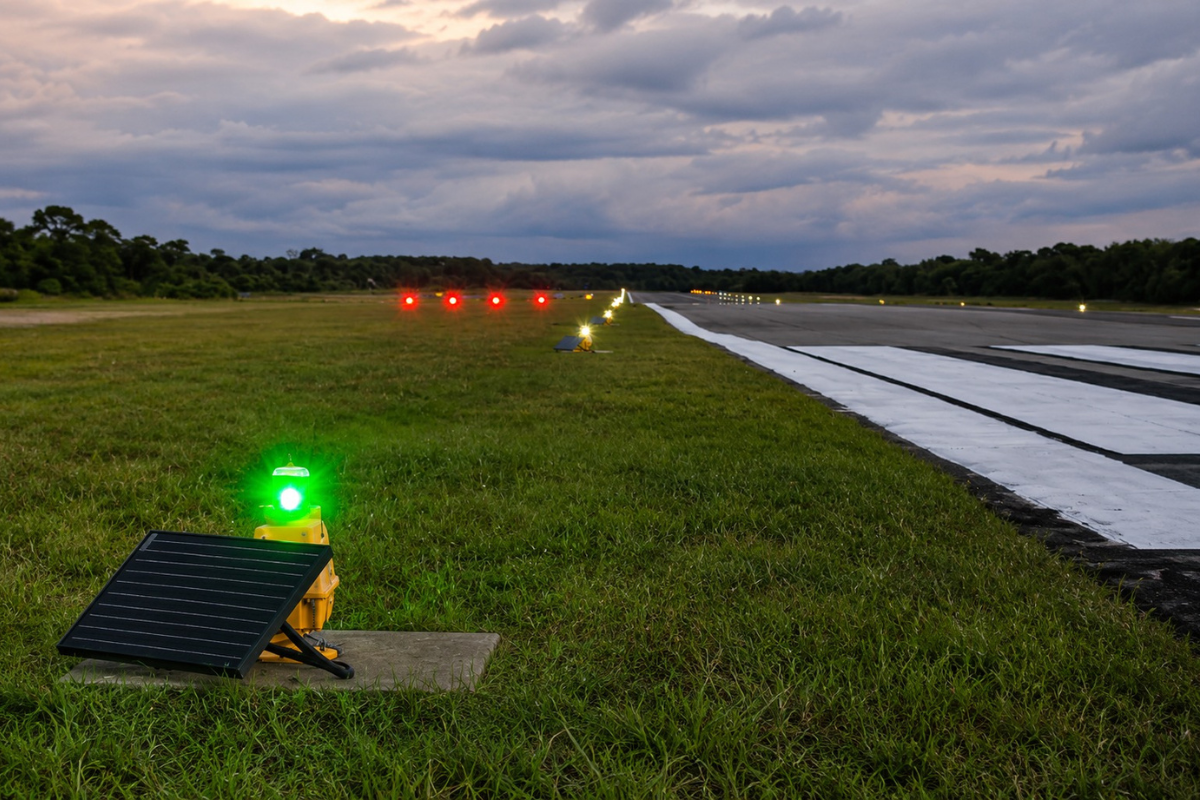
A larger number of lights, more frequent aircraft movements, and higher operational demands increase the importance of understanding the condition of the lighting infrastructure at any given moment. Instead of waiting for faults to be discovered during inspections or operations, airports can benefit from knowing the overall state of the system in real time.
For these environments, Solar PRO combines medium-intensity lighting with Individual Light Monitoring through the Airfield Lighting Control and Monitoring System (ALCMS). The system provides a real-time overview of the entire airfield lighting network, including the status of every light, battery, and solar engine, together with an intuitive interface for controlling lighting groups, adjusting intensity levels, scheduling automatic operation, and more.
Continuous monitoring gives operators confidence that the system is functioning as expected while also helping maintenance teams identify performance changes early, making maintenance planning more predictable and reducing disruptions.
Today, S4GA Solar AGL is installed in more than 70 countries and is used by airport operators, including VINCI Airports, Fraport, and the United States Air Force.
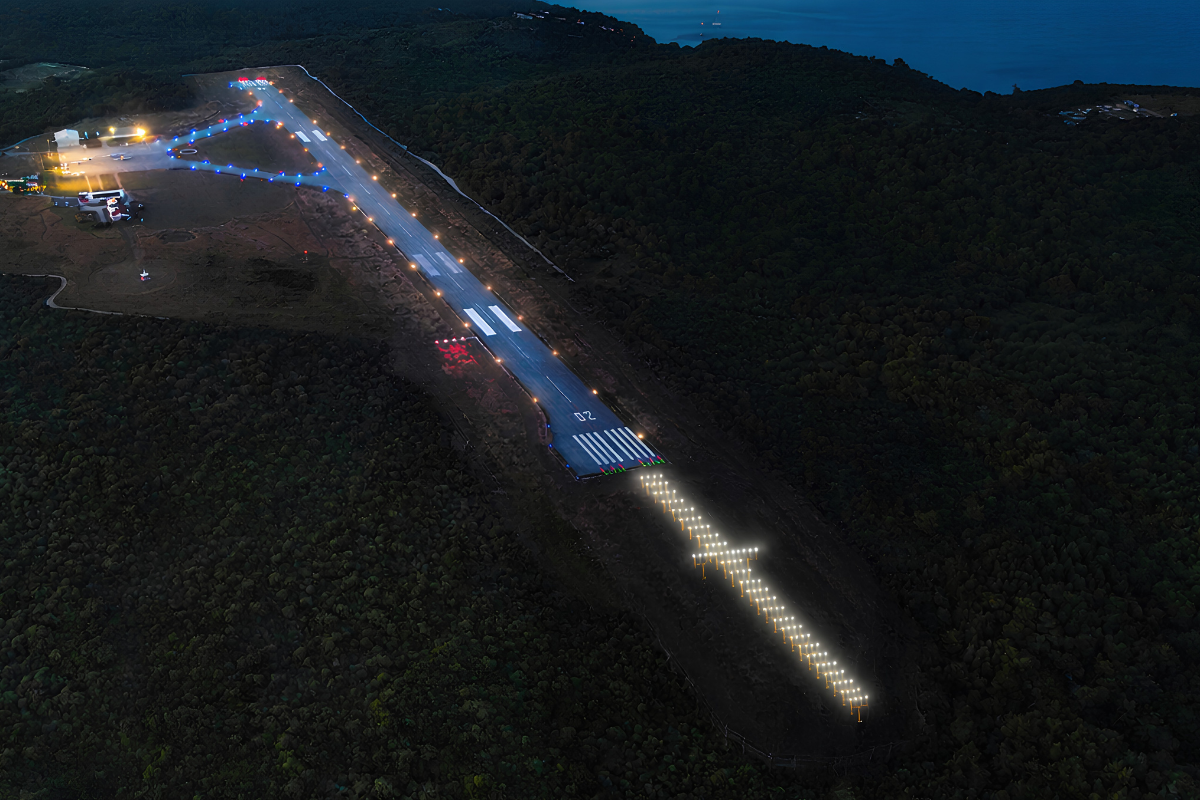
Airports supporting precision approach operations have a different set of regulatory requirements than those using low- or medium-intensity lighting.
For these applications, S4GA developed Solar CAT I, an ICAO-compliant high-intensity solar airfield lighting system for Category I precision approach runways. It applies the same off-grid method while meeting the requirements of precision approach operations.
Every airport has different requirements. Selecting the most appropriate solar airfield lighting system begins with understanding those needs. The following questions can help identify which type of solution is the best fit:
The answers to these questions form the basis for selecting the most appropriate lighting system.
At S4GA, every project begins with a SALA Feasibility Study, which evaluates the airport’s operational requirements, local weather conditions, solar energy availability, and regulatory constraints. This structured approach helps determine whether solar airfield lighting is suitable for the site and identifies the most appropriate system configuration before implementation.
The feasibility study is followed by on-site testing, allowing airports to validate system performance under real operating conditions before deciding whether solar airfield lighting is the right solution for their needs.
Selecting an airfield lighting system is ultimately about matching infrastructure to operational requirements.
An airport that only requires permanent low-intensity lighting is unlikely to benefit from capabilities designed for larger, more demanding operations. Likewise, airports with higher traffic volumes may find that additional monitoring and maintenance visibility help reduce interruptions and make long-term infrastructure management more predictable.
Rather than asking which system is “better,” the more useful question is which level of infrastructure best supports the airport’s current functions—and its future plans.
